
Let me preface this post by saying that I spent 40 years being professionally fussy and organised for myself and my patients and then 8 years trying to cope with someone else’s retail stock chaos after that – 48 years of honourable organisation without tipping over into clinical OCD. It was good preparation for my time here at the retirement computer desk and out at the retirement modelling bench.
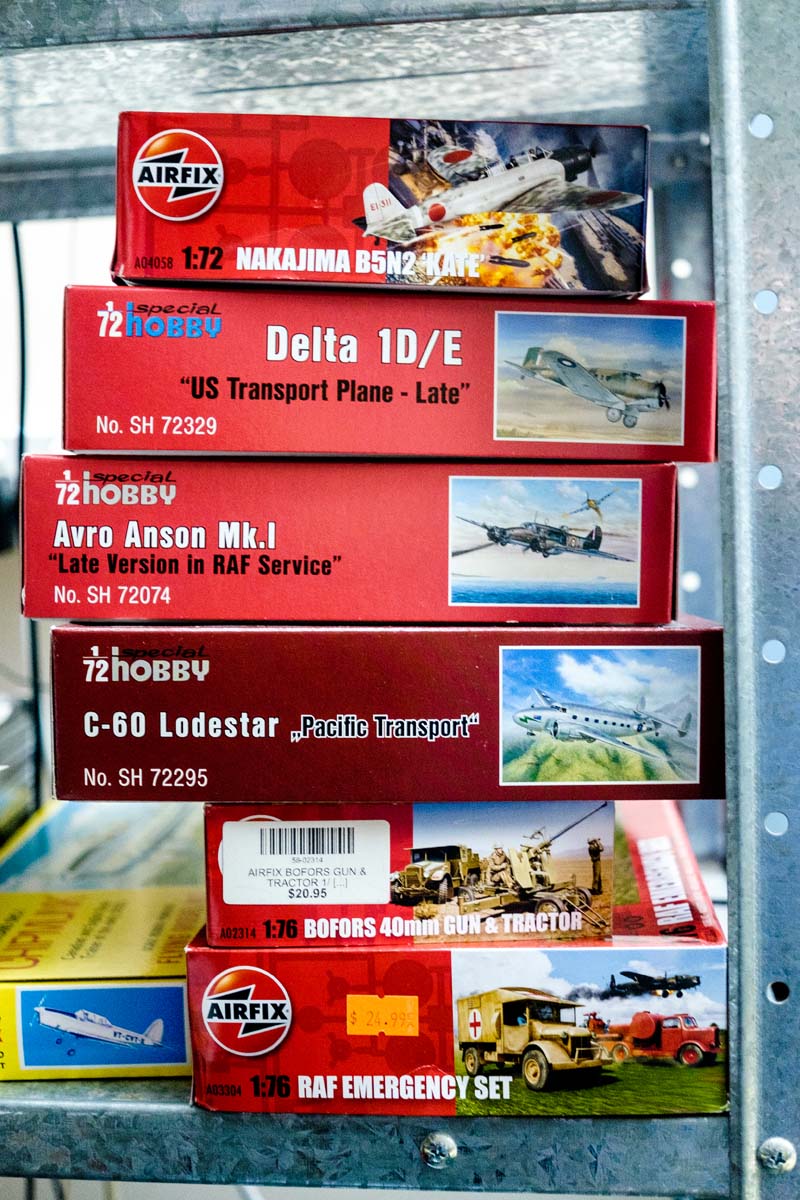
But it did not prepare me for contact with modern hobby shops and their shelves, and I am learning to retrain my powers of observation.
A hobby shop and a battleship magazine are similar places – lots of expensive and dangerous items to be stored and made ready for either sale or bombardment. Success for the shop assistants or the gunners only comes when the goods are delivered and fired off safely. Subsequent explosions can take place at a long distance away. The naval gunners have an advantage in that their targets rarely come in and request a warranty repair on a dud shell.
The key to being able to do the business is organisation – the racks of shells and the shelves of retail goods have to be arranged so that the crews can find common shell or model kits readily to hand in the thick of things. No good trying to dig through piles of stuff while the customers are waiting. The organisation has to be methodical, thorough, done well beforehand, and done repeatedly as stocks rotate. It is also vital that the organisation is not changed weekly at the whim of the commanding officer…but that is another story.
This agreeable state of affairs applies to very few of the hobby shops I’ve visited. Most range from semi-arranged to completely chaotic. I would particularly commend Train World in North Brighton, VIctoria and my local Hobbytech in Myaree, Western Australia for having their stuff categorised and easily available to the customers. They separate paints, kits, parts, tools, and all the myriad of sales goods very well. In my recent visits I was able to fill shopping lists easily – provided the goods were available for sale – without having to flap about searching for misplaced items. The fact that each section is visibly separate doesn’t prevent the customer from grazing around and developing more expensive ideas – and this is the very essence of a good retail set-out. If you don’t believe me, go through the main doors at Myers or David Jones and look at the way that the labyrinth of colour and counters has been planned.
My one request to all hobby shop owners is that they give thought to hiring a shop display assistant who is mildly OCD. Make it their task to separate all kits via scale, and then to further subdivide them by maker and theme. And to display the best end of the box so that the buyer can see the stock at a glance. I know it will be a repeated task as the customers disrupt the shelves, but that’s what the shelfman is there for. And done well, it can lead to the customer deciding to get four kits and five cans of paint instead of just one.
 The Little World
Leave a comment