

If I were a spray painter on a full-size airplane I’d have no troubles spraying a fine line between colours. A few sheets of newspaper to screen off the overspray and away I’d go matching up the instructions. But I am working in 1:72 scale and I don’t think that my hand skills are such to try this – hence the masking of the models between colours.
The Brewster Buffalo win RAAF colours represents an experiment in metal masking. I’ve done aircraft with a masking tape job, one with a torn-paper mask, and this one sees me venture into a metal mask. The material was free and the surfaces of the ship are regular enough not to challenge me.
The idea came from remembering how we sealed off plaster models in the dental laboratory to pack acrylic plastic in them. We were making dentures and the porous surface of the plaster would be invaded by the acrylic when the denture flasks were pressed together and boiled for hours. Some sort of separating medium was needed, and in the earliest days this was thin tinfoil burnished into the crevices and contours of the model jaw. It was expensive stuff and slightly distorted the shape of the inside of the denture, but there was no risk of plastic creep. Later in our training we switched to liquid alginate separating medium that could be painted on – it was considerably faster to do and a lot cheaper. Not as good a barrier as the pink acrylic plastic sometimes breached it.
My reason for trying this was because foil has enough stiffness and memory to be burnished onto the surface of the model airplane, but can be cut cleanly with scissors. As well, once it is down and taped on, the edge can be slightly lifted and bent back with a LeCron carver to allow for a very slight intrusion of the second paint colour. I hope to produce a fine soft edge rather than a hard line.
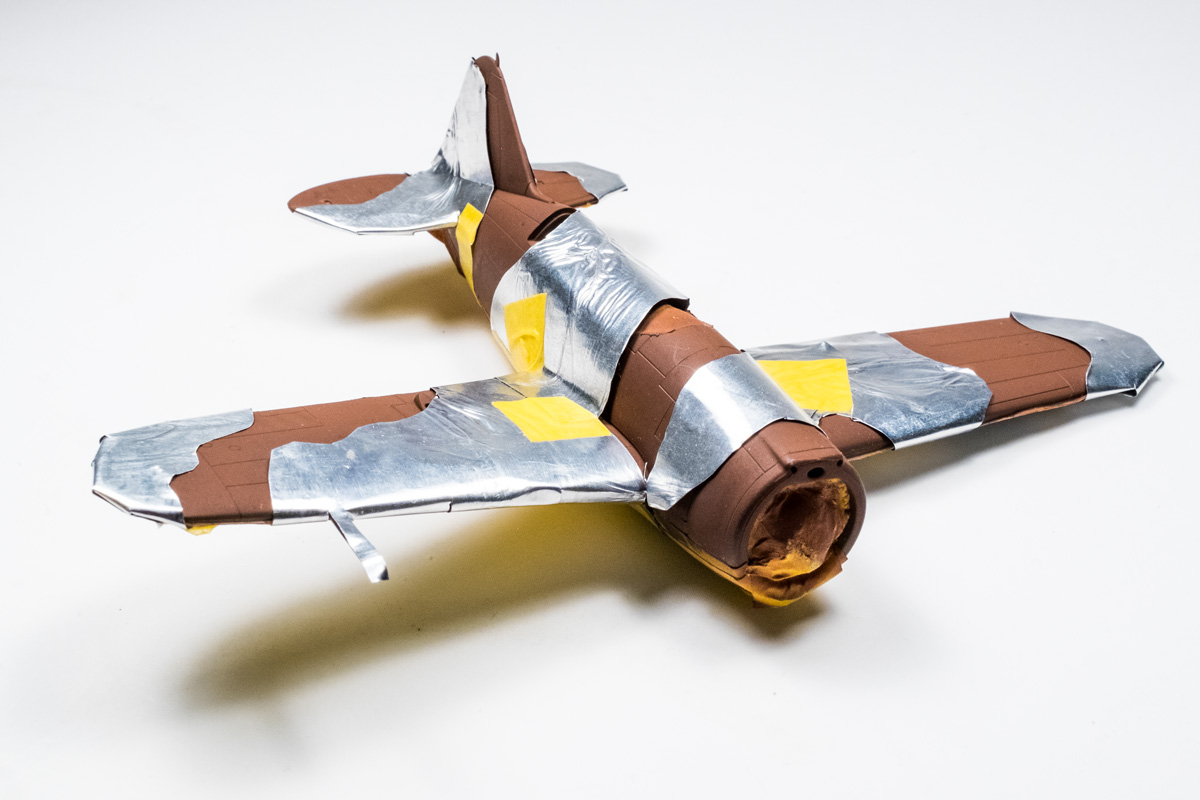
No tinfoil…haven’t seen any for 52 years…but I did have a sheet of aluminium foil left over from a disposable baking tray. It flattened beautifully using a glass paint bottle as roller and then was easy to cut. It wrapped well, and could be secured with thin double-sided tape if it was a shape that didn’t wrap.
The paint spraying was normal and the result:
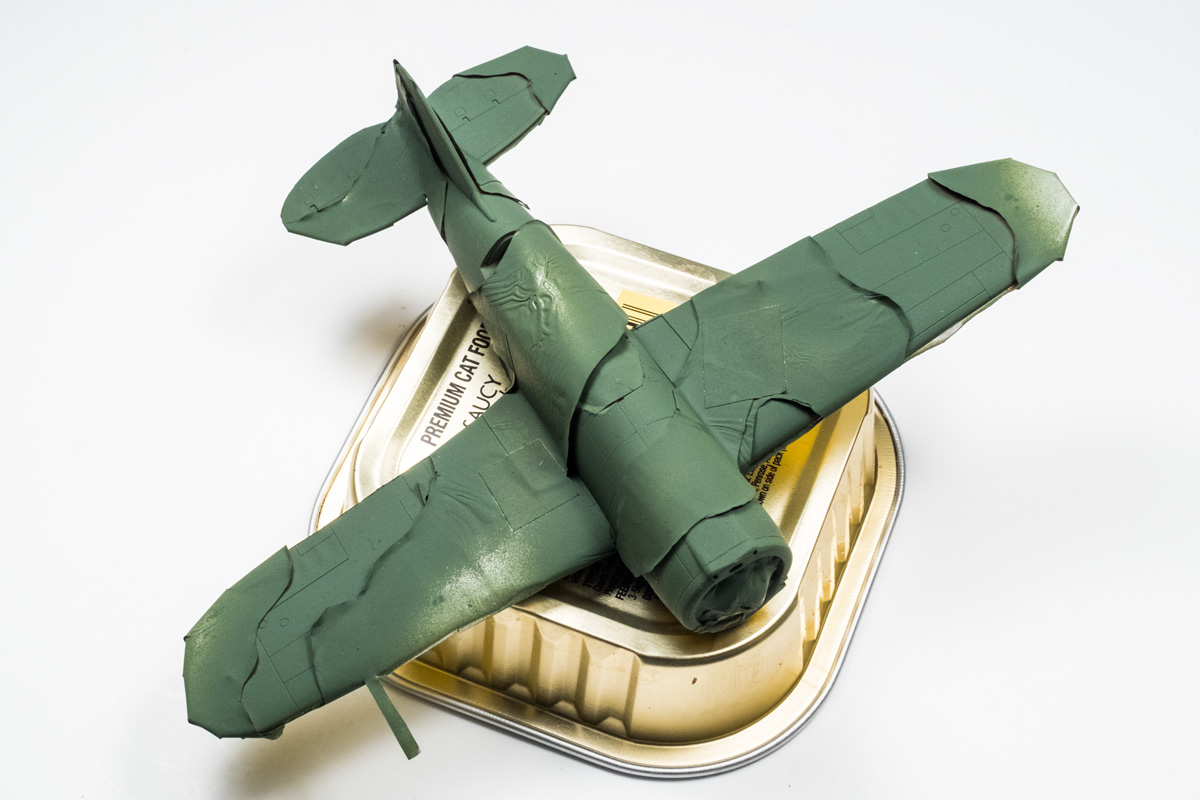
Actually, I think we have something of a winner. The edges of the green/brown are nice and soft and there is minimal overspray. Now to give it a gloss coat to deal with the decal application, and then possibly a semigloss finish.


 The Little World
Leave a comment