Note: in this test I used the Tamiya acrylic paints, but I could slso have used the Creos Mr. Hobby acrylics as well – they can interchange thinners and brush cleaners.
Well, as the Avro Anson MkI was slowly being painted and cured, I decided to fill the time with two other kits – a Hobby Boss Brewster Buffalo in RAAF markings and an MPM Douglas A-17 Nomad in RCAF markings. Both of these kits were a lot closer to what I want to work on as far as complexity and materials, but the point of the exercise – as well as getting models for my 1:72 airfields – was to test acrylic work vs enamel.
The Brewster has been reported in other posts but the success of using a leftover mix of Tamiya/Mr. Hobby browns, Tamiya Nato Green, and a boosted Tamiya Sky was most enjoyable. The camo sprayed well, the decals went down without silvering ( thanks to a spray of clear Tamiya coat after the colour ) and the final result is quite acceptable. Those who think it too specular are reminded that it was a test bed for the decals.
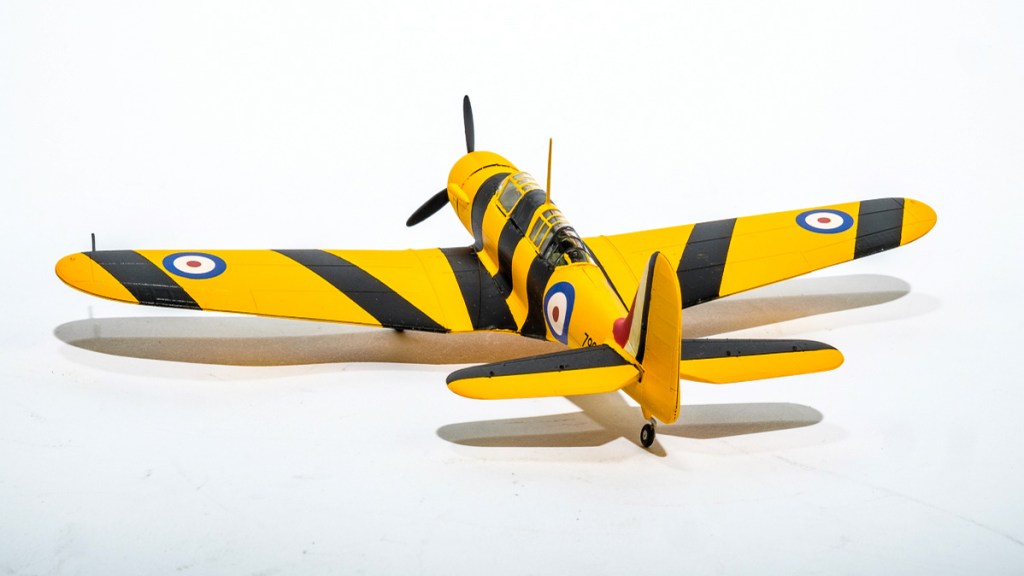
The Nomad was the closest to the Anson as far as actual basic appearance, though in this case I found drawings of the original aircraft out of Ontario with a bumblebee stripe that proved irrestistable. But I did lay down the basic Trainer Yellow and the black stripes in Tamiya acrylic. In this case the variable was to use gloss yellow acrylic plus a few drops of red as the colour coats to see if one could get to a smooth decal-able surface without a gloss spray.
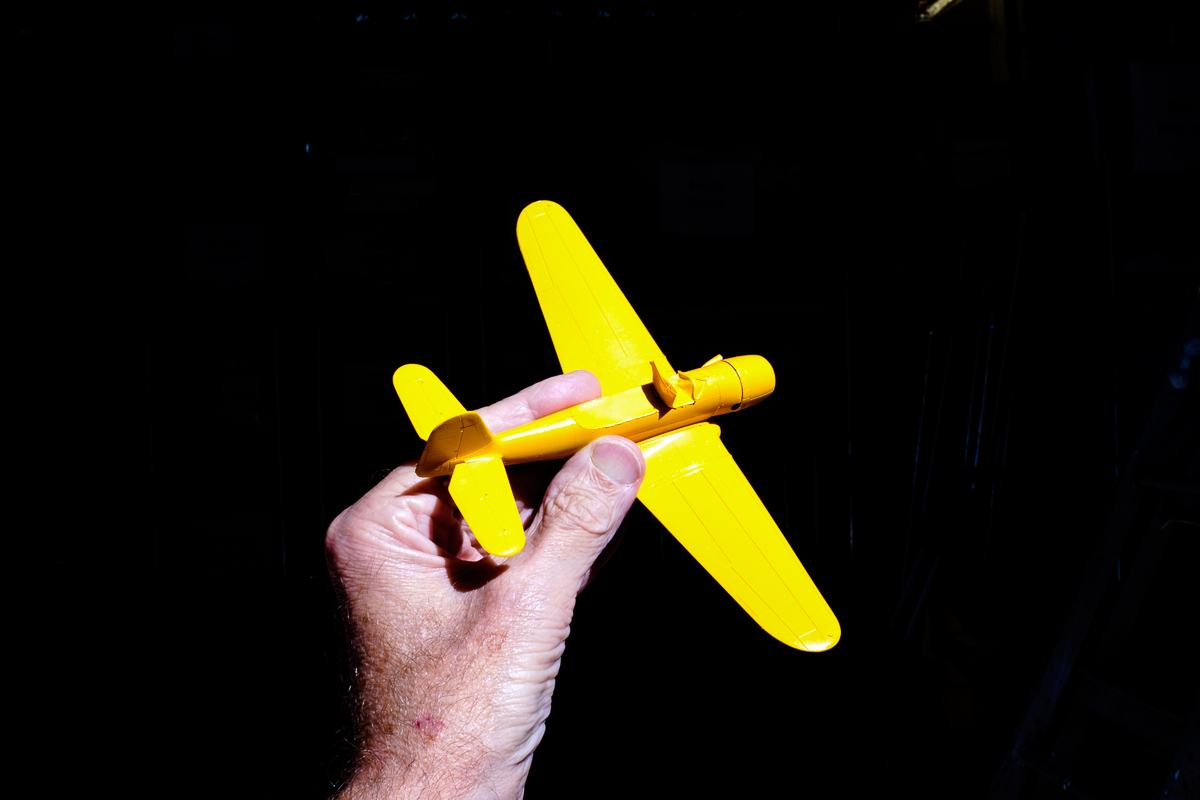
The basis was Tamiya white undercoat rather than grey. Almost immediately I saw this was the best way to undercoat for yellow, as I really only had to do two colour coats to get solid coverage. At my pressure and nozzle, the surface specularity was not as glossy as the Humbrol enamel equivalent, but the appearance was superb. The drying time was about 1/4 of that needed for the Humbrol enamel.
Decalling was equally as good as the Humbrol experience. I use Microset for most of my work, and there was no silvering or bubbling.
The last bit of the finish, however may puzzle some – I did not use the bottle of Tamiya semi-matt varnish that I have in stock – there are too many suspicious floating chunks in it to risk through a nozzle. I took the punt and risked spraying the Humbrol Satin Cote as the final finish…and I think it worked – the finish is as good as that on the Anson but the base colour is just that little bit brighter.
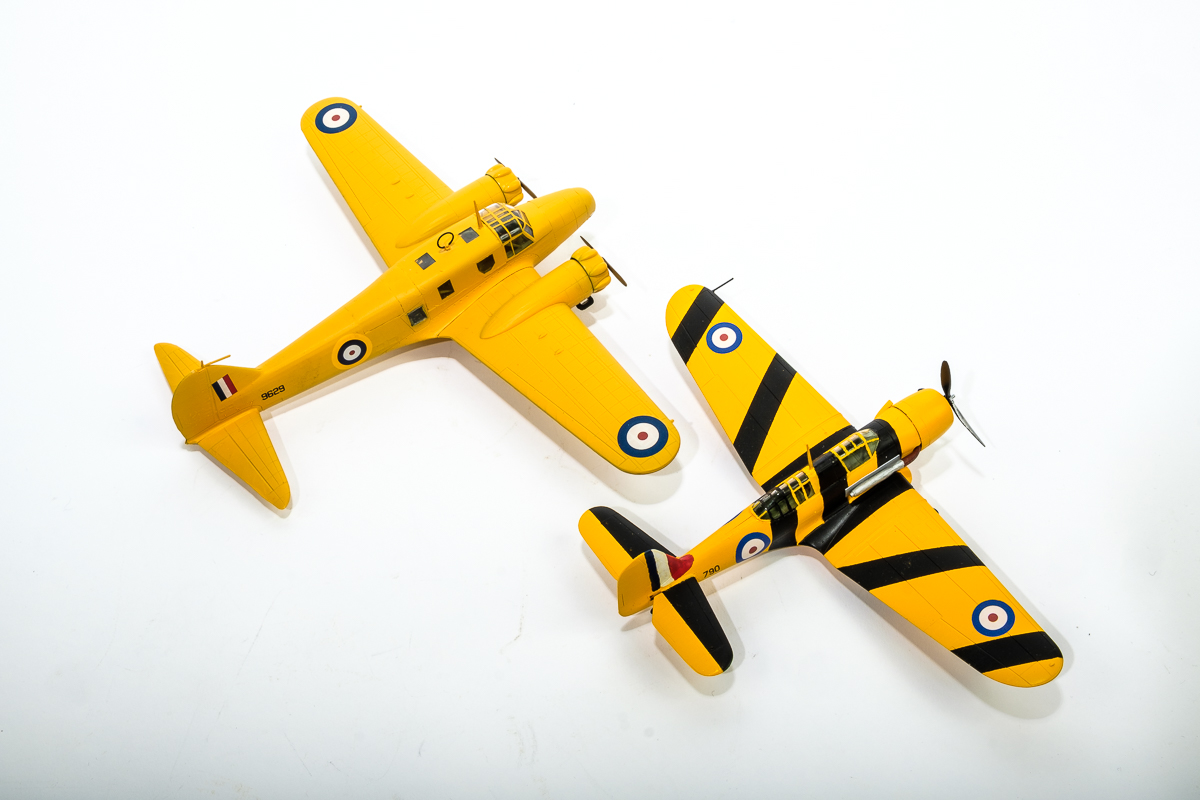
Considering my experience with the two systems I think that the Tamiya/Mr. Hobby system wins on ease of use and drying times. But the experiment is still going. Next build will involve use of the acrylic system but substitute Tamiya Acrylic Lacquer thinner for the X-20 standard alcohol thinner. I have been assured by YouTube classes that it works and gives even faster results. I am not troubled by the working time needed for the acrylic/alcohol thinner system but I do want to see what happens with the other.
 The Little World
Leave a comment