
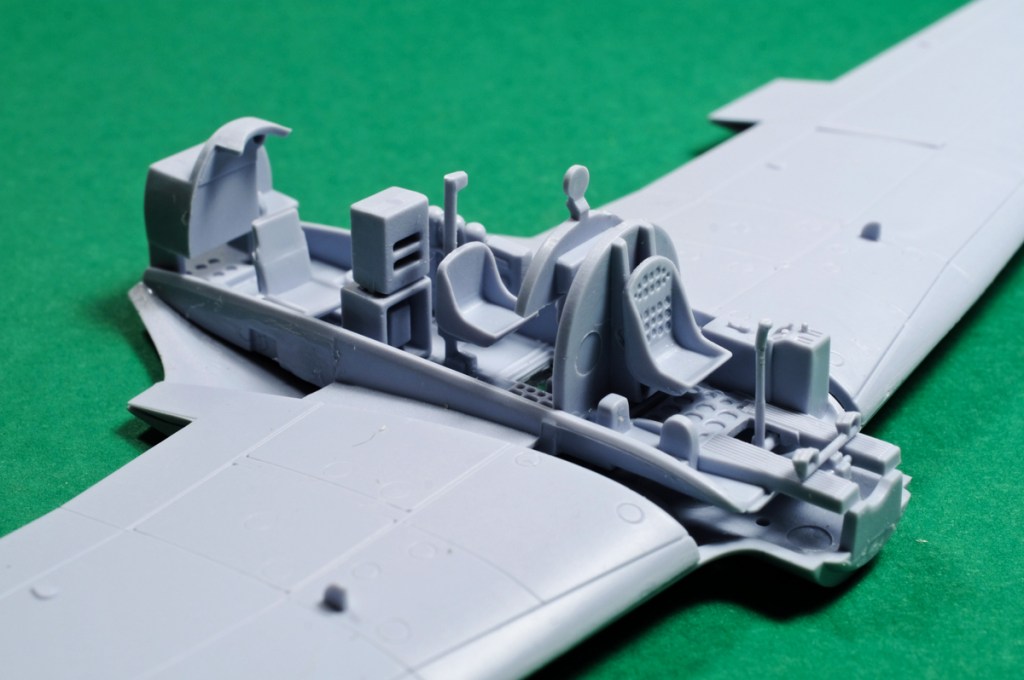
I once wrote that there are always some areas of model building that are a chore – something we approach with a groan and leave with a cheer. And it’s different for each modeller. Well, the same applies to certain stages that are a real pleasure. Oddly enough, for me it is completing sub-assemblies.
It’s humble work, you might think, but in a lot of cases it has been the sort of thing that has been the most interesting for me because it can be the stage of a kit that is the most instructive. It took me some time to realise this, and to see what it was doing for me.
Way back when I was a lad and building my first Revell, Aurora, and Monogram kits, they were possessions that were a treasured experience, but treasured in series – I never had enough money to build more than one kit at a time. The interval between them sometimes stretched out a fair while so I took my time dealing with the kits before any glue or paint went on them. In practical terms this meant dry-fitting and trimming everything for weeks before the assembly started. None of that time was boring, because I was learning by practical feel the shapes of the aircraft, ships, and vehicles. At least practical to the extent the accuracy of the models at the time could provide – I had very little other knowledge of what it was I was building.
And this eye-hand coordination set me on the road to success in the surgery later on, so none of it was wasted effort.
These days I can afford more Airfix models than before ( though I do mourn the passing of the 50¢ plastic bag kit…) and I needn’t spend weeks playing before starting – but I do appreciate the precision and thoughtful engineering of the modern kit. The modern injected kit, I hasten to add, and the kit that has enough potential sale to justify some good mould-making.
The Airfix ‘ Kate ‘ falls right into this. One evening’s cutting, sanding, and gluing has given me a small pile of sub-assemblies that will start to get their paint next week. The fit is superb and the balance of detail vs buildability is just right for me. And here is the best part:
I now know what the interior of a Nakajima ‘ Kate ” looks like in three dimensions. I can go back to scenes from ” Tora Tora Tora ” and relate to them. I can look at museum pictures and recognise parts. I can translate what I see in those pictures to this model…always bearing in mind that museums can sometimes show real live actual mistakes that they believe are correct. And woe to the enthusiast who attempts to tell the museum staff anything different – you get short shrift.
Kudos to Airfix for providing two options for the Japanese torpedo – open water and shallow water versions – though they do not alert the builder to this fact. You need to Goggle for a while to find it out. As mine is to be a Pearl Harbour visitor, I should have chosen the shallow water type.
 The Little World
Leave a comment