Having overcome Part Two – the warp factor – I set myself the task of assembling the Hampden, and was pleasantly surprised by how well it cobbled together.
The wing tabs were tight, but a little sanding loosened them and a little more sanding snugged the wing roots in close enough to the fuselage to avoid any filler. The tail went together well and sat without shimming.
The crew were trimmed and painted, then trimmed some more to fit into their positions. I kept one gunner back for future builds – this one is a training aircraft and would not have flown with everyone armed for bear hanging out the windows. I undercoated, then bottom coated ( in Sky Grey – a look drawn from a period photograph of this aircraft performing a torpedo run near Vancouver island.) and looked out the dark earth and green for the upper side.
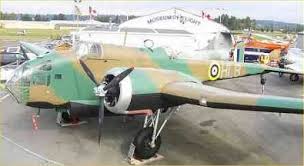
Note: There is a real Hampden being restored in British Columbia and there are good colour pictures of it on Google. It is not being restored with period paint, however, so I am going to persist in my own assessment of the camouflage scheme. I’m prepared to accept the brown and the black but I reckon the green came straight off someone’s back porch in Nanaimo.
At this point I decided to do some thinking about camouflage masking. You’ve seen some of the techniques tried out here on the Little World columns before – paper masks, tinfoil masks, etc. I always found that the complex curves required when the British camouflage pattern crawls up over the fuselage from the upper surface of the wing to be the tricky bit – getting the mask to stick was the problem. I toyed with the idea os:
a. Rubber dental dam sprayglued on one side and stuck down over the curves. I got a sheet, sprayglued it, and watched it curl up into a sticky tube. Bad idea.
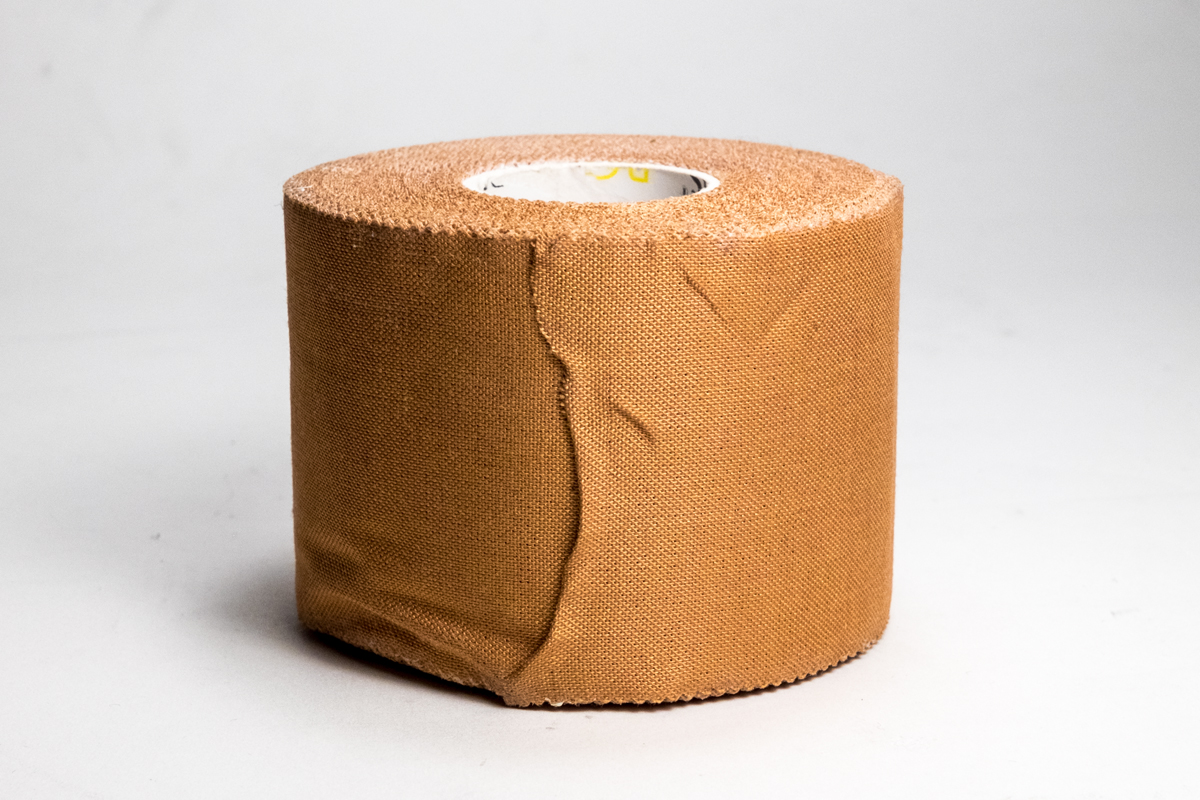
b. Cloth elastic sports tape. Cut well, stuck well, released well. Thought it was going to be the real deal. Then sprayed a test piece and found that as it is a woven tape, the holes between the weave let paint though to the underside. No amount of painting to seal up the weave was successful. Bad idea.
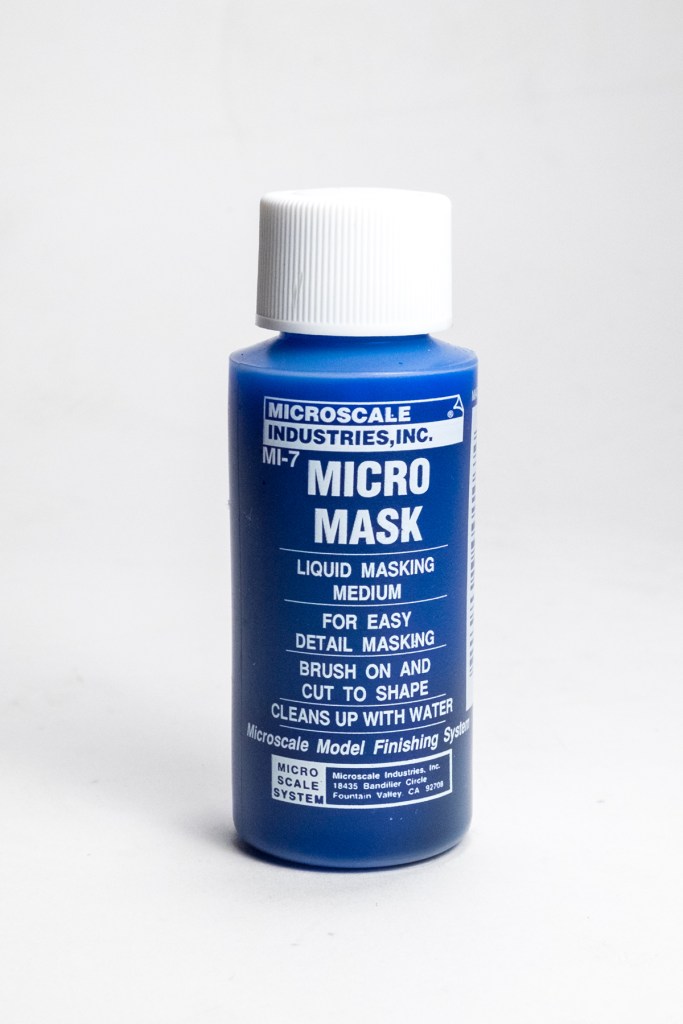
c. Micro Mask – the blue masking gel made for modelling. Applies easily, looks great, goes over any curve. But when you hit it with an alcohol-thinner acrylic paint it develops cracks in the coverage and leaks the paint through. Might be fine for oil-based enamels, but for acrylics…Bad idea.
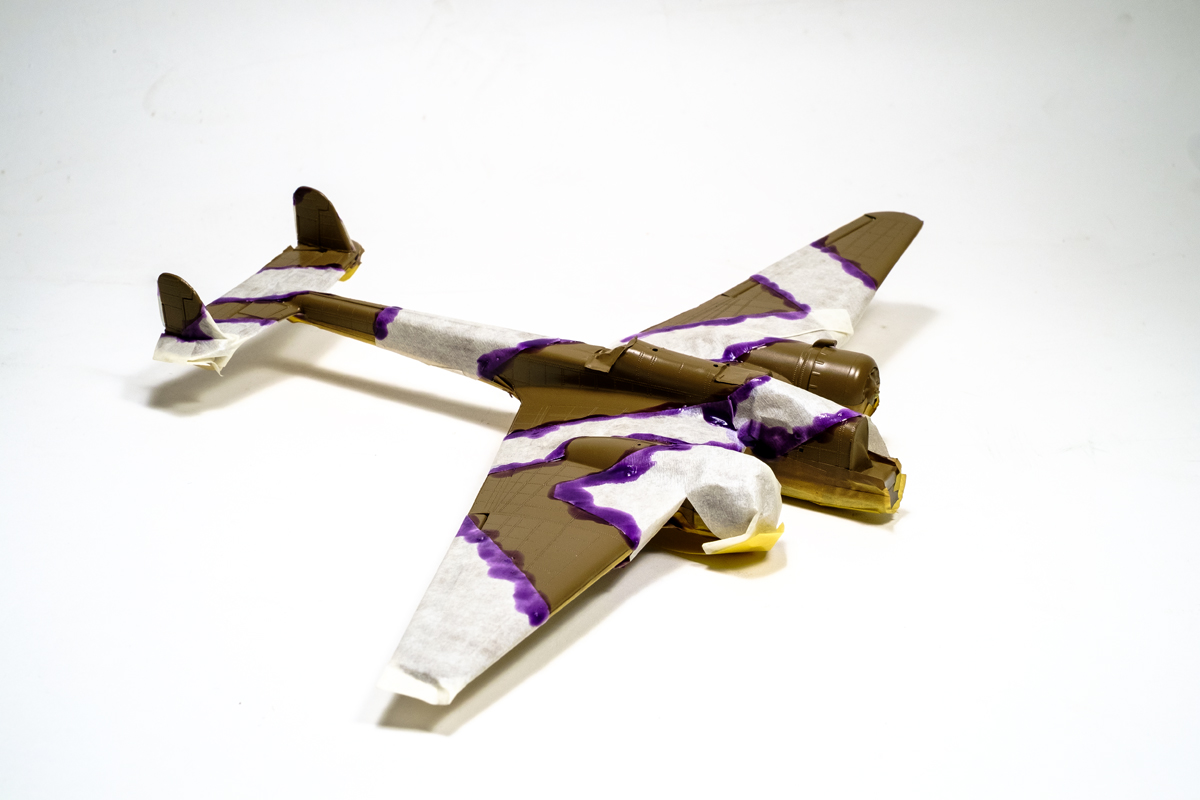
d. Humbrol Maskol – well, it’s not daunted by acrylics – I’ve used it before with success, but that’s a lot of surface to paint on a 1:72 light bomber. So I decided to try a combo – masking tape masks with simple shapes and the complex edges added with Maskol. It was fairly simple to do and went quickly.
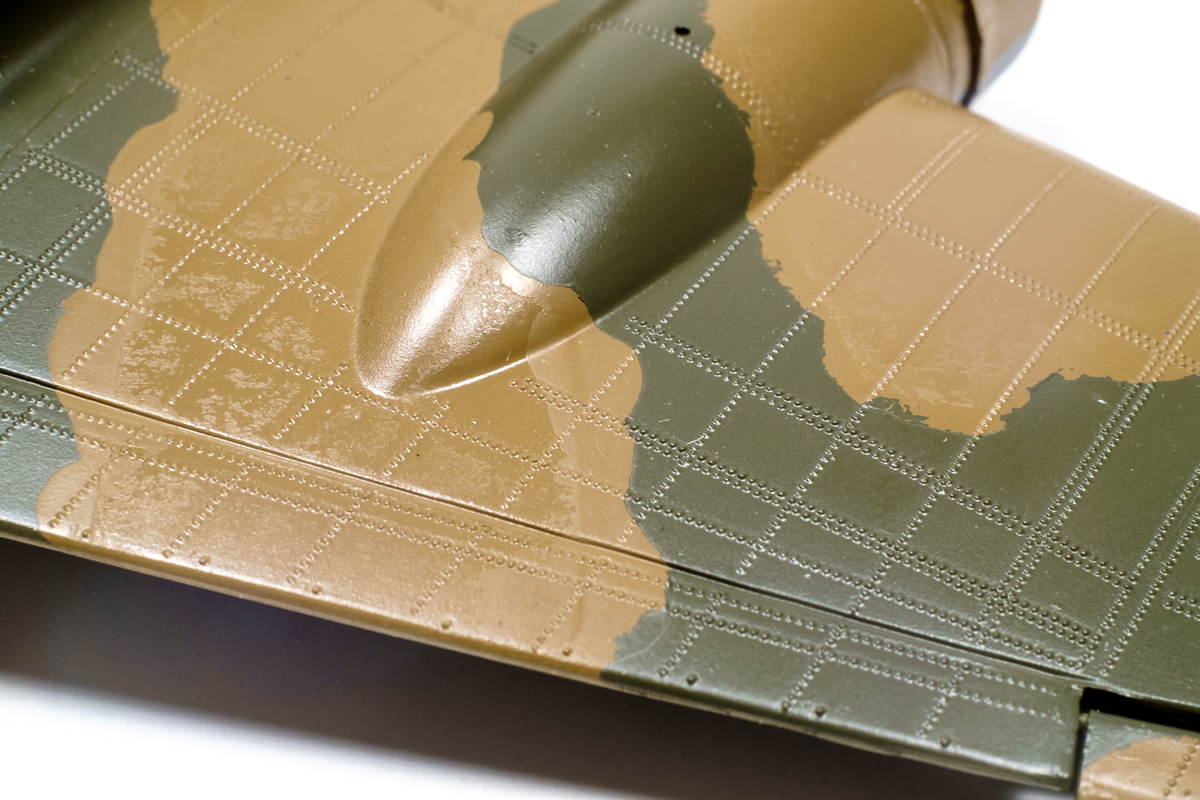
The basic brown undercoat was Creos Mr Hobby Dark Earth cut 2:1 with Tamiya Lacquer thinner and I was delighted with the way it sprayed and held a semi-gloss. The dark green was also Creos and went on equally well…but when I pulled the masking off I found that the tape had popped some of the shine off the surface. The Maskol was not the chief culprit.
Not happy, Jan, but not discouraged either, Tonight’s coats were Humbrol Gloss Cote and all the imperfections are gone. I breathed a sigh of relief.
Still searching for what Quentin Crisp might have called the Great Dark Mask.
 The Little World
Leave a comment