
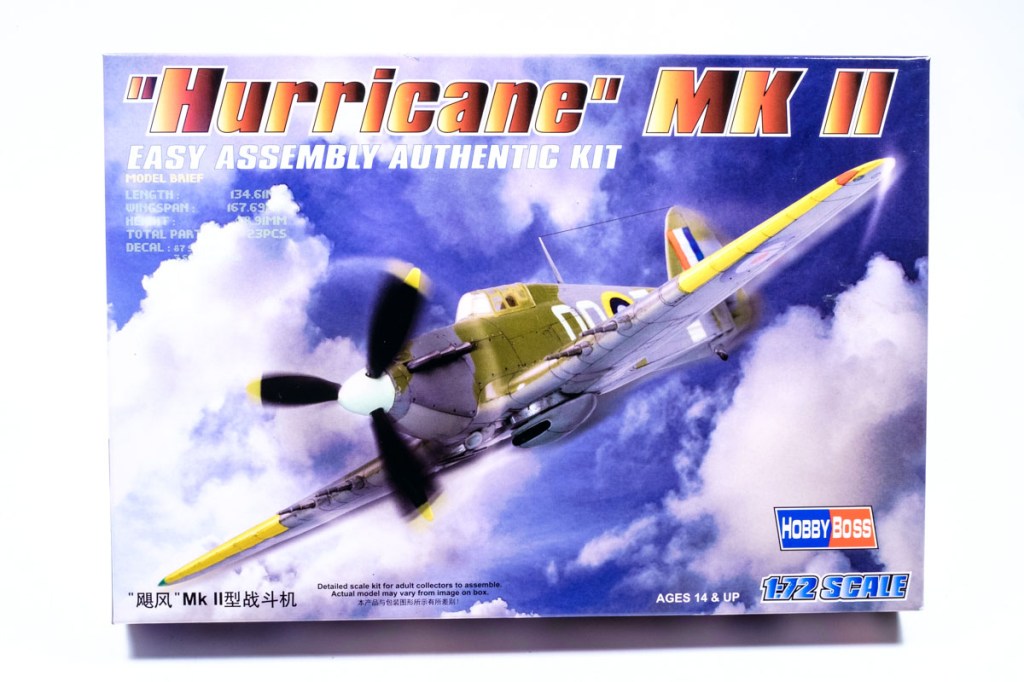
It must be increasingly difficult for planners in the Chinese model making industry to think up what their next move is going to be.
a. Which model shall we make – an old favourite in a new box for another 3 years of decreasing profit or a new venture that might become a cash cow for the next twenty years?
b. What do the damned round-eyes want this time? Do they ever know?
c. Come to that, what would sell here in China? We’ve got the numbers. Do we pitch it cheap or expensive?
d. Who ever heard of this airplane? is there one in a museum? Is someone yanking our chain?
The short answer to most of these questions is to make another Mustangspitfiremesserschmitt in a new box and name it ” True Wonder Fighter Plane ” and sell it for $ 5. When enough $ 5 bills have accumulated, run for Macau or Vancouver…
Or just buckle down to it, make a good mould, and sell the things as far and wide as you have contacts. Hobby Boss seem to have adopted this business model and produced another variant on their Hawker Hurricane kit. This one has all the parts on the main sprue that make up to other marks ie. the tropical air filter – but you are allowed to ignore them. A different box top and painting diagram in the instruction sheet plus a new set of decals makes it a new item that will sell at an attractive price point.
It certainly is attractive – under $ 15 for a good base model – and a chance for me to copy an illustration in my Canadian Avia book. In this case it is a model of the Hurricane that is distinctly Canadian fitted out for a duty that was connected to a specific locale.
The Hurricanes made by the Canadian Car and Foundry Company that got past British regulations and orders ( they were all slated for the UK until local pressure managed to get some retained for North America defence ) were distinctive in the spinner – there was none – the big props were bare. The ones that were detailed to respond to German submarine attacks in the Gulf of St. Laurence flying out of Torbay, Newfoundland. They were fitted with small A/S bombs or depth charges. I don’t think they ever sank any U-boats but that doesn’t exclude them from history or from Stein’s Air World. And there is one flying photo showing a D/C on the starboard and a bomb on the port. That’ll be a novelty.
Another saving grace is the fact that they flew with standard RCAF colours and single call letters – easy for me to find some in the spares box.
The actual kit is pure Hobby Boss – cheap and cheerful, but with a sound basic structure and good execution. I am delighted with the presentation in the box – even if it is a simple model, the packaging makes sure you get what you pay for with no rattle damage. The extra effort to enclose each item in the tray pays off.


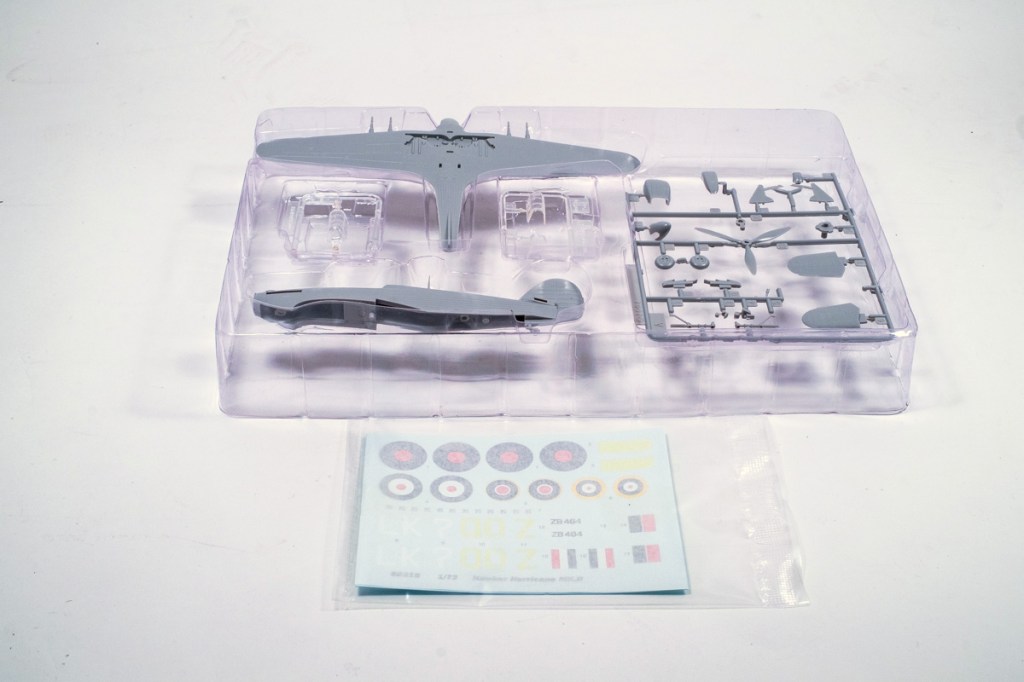
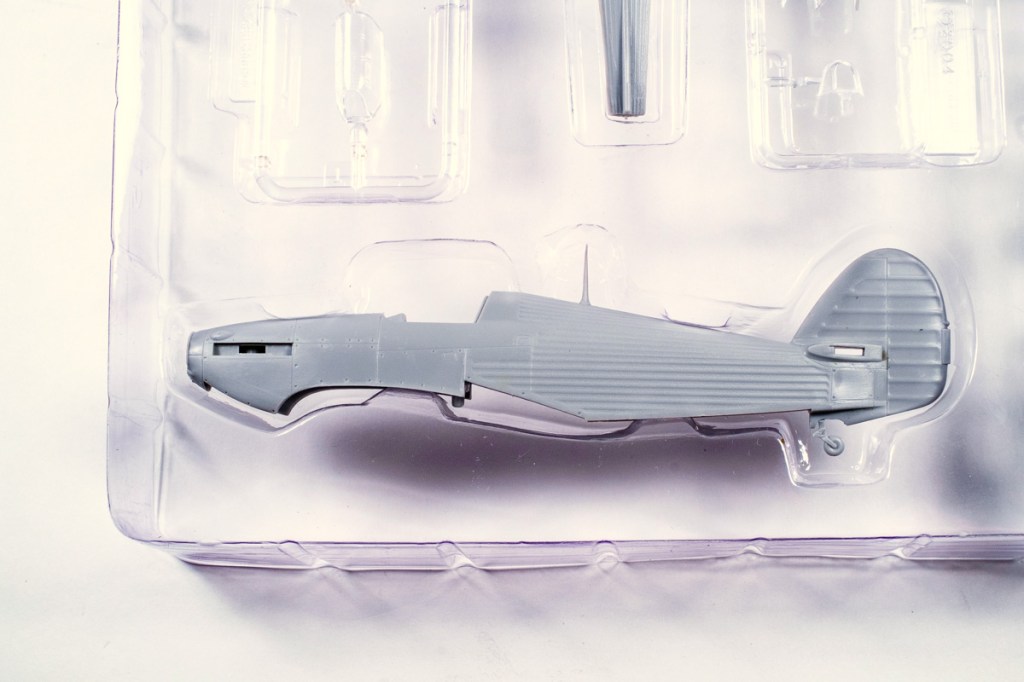
Construction has already started with the cutting away of the 20mm cannon and associated wing bumps. The horizontal tail pieces are coded as to inserting and are curing in place even before the fuselage joins the wing. It is one of the exceptions to my rule of one model at a time, sharing the paint shed with the Macchi C200.
Note the amount of detail in the wheels and the wheel wells. The cockpit’s moderately bare but the underside makes up for it.
I suppose at some stage of the game Hobby Boss is going to start recouping their investment by raising their prices. But I’ll try to add all the relevant ones from our local hobby shop into the stash before that occurs. They are cheap enough to serve as paint mules for number of variants and experiments.
 The Little World
Leave a comment