
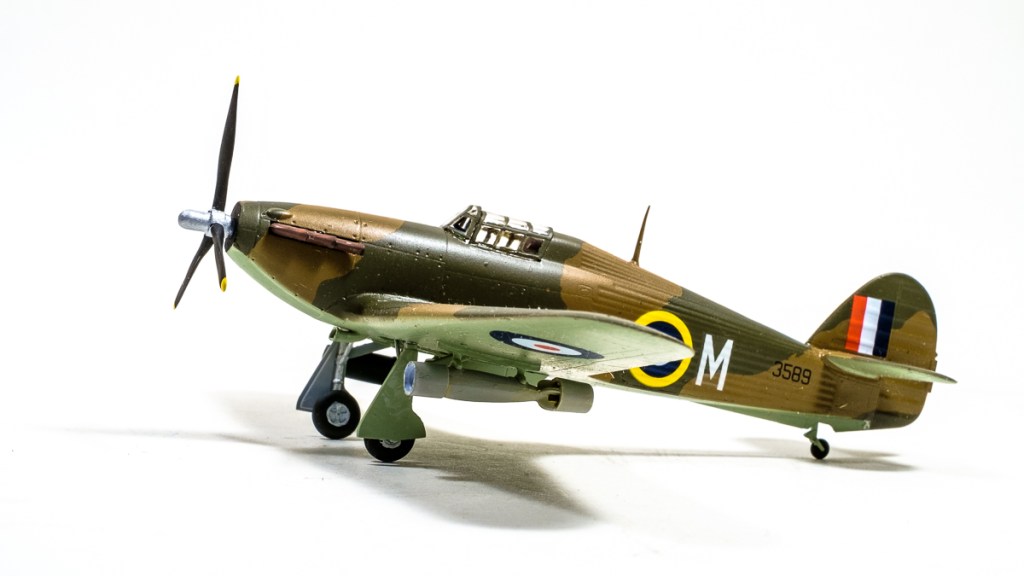
Those of you from the Dominion of Canada will know I speak with affection about Newfoundland – The place where this Hawker Hurricane was based. Specifically at Torbay in 1943 when German U boats were feared. They had successfully sunk ships nearby in the previous year and the RCAF needed to have a quick-response answer. The answer was to fit bomb racks to the Hurricanes and then try them out with 250lb water bombs and small depth charges.
The actual aircraft used were Hurricane Mk XII’s that could take the armament. They flew for six months on this sort of A/S patrol but eventually were taken off it and sent off to the European theatre as a proper fighter squadron.
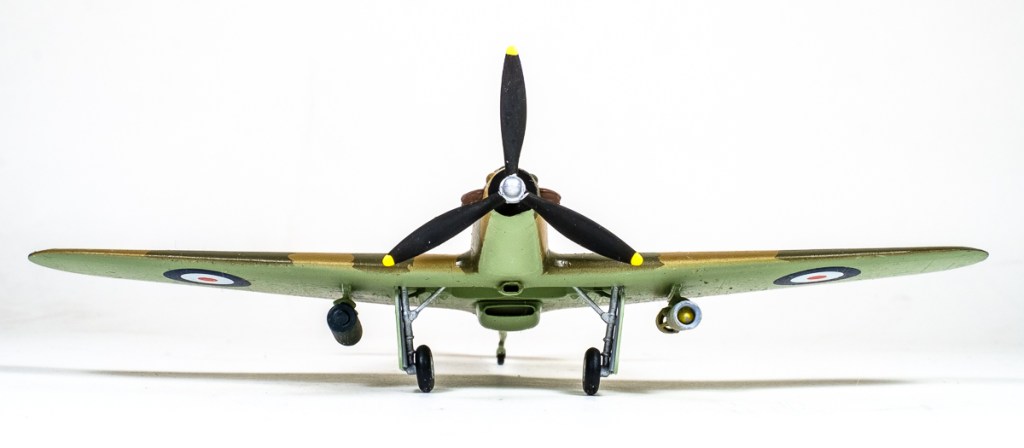
The bomb racks that went under the wings of the Hobby Boss kit started life in the spares box as Japanese Nakajima items, but could be cut down and paired up. The Avia book illustration shows a D/C on one rack and a water bomb on the other so I just followed suit. Probably not authentic, but fun.
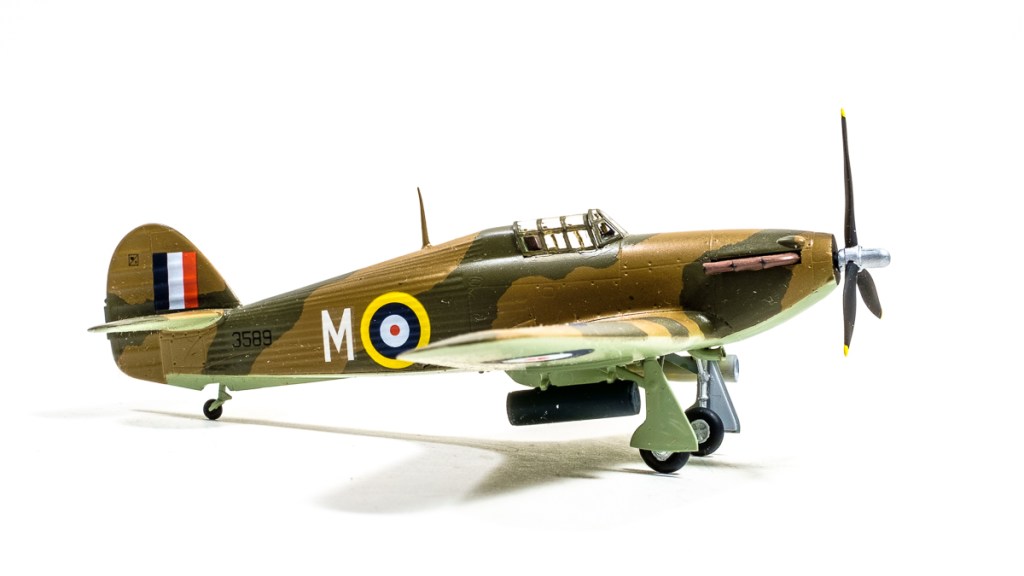
Also not authentic is the way the Hobby Boss kit landing struts slant in – they are fitting correctly in the locating holes in the wing, but are certainly different from the period hangar photographs. But in view of the fact that the spinner was successfully made and the armament is unusual enough I let it pass.
What I cannot forgive, however, is no fault of Hobby Boss – it is an error I made.
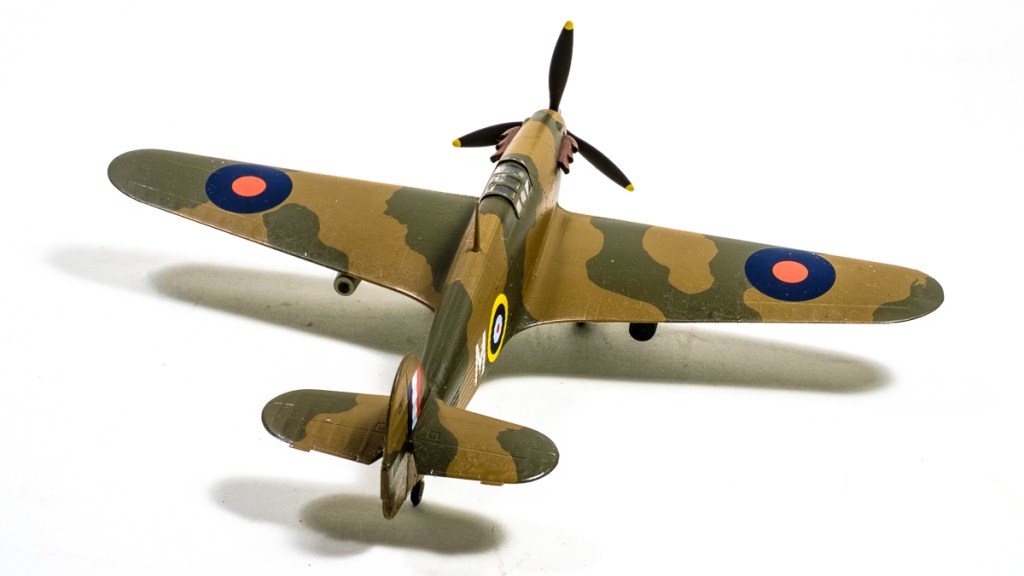
After the undercoat was set I put on the brown, and then the green. The Humbrol Maskol worked brilliantly – just as it was meant to. The Gloss Cote and decals went on very nicely, albeit I knocked over the Micro Set and lost half a bottle. What really went wrong was when I thought to ensure a clean surface for the final Satin Cote, and brushed the whole aircraft over with a soft paintbrush. Unbeknownst to me I was charging it up with static to attract dust…and the end result is a very lumpy and murky surface.
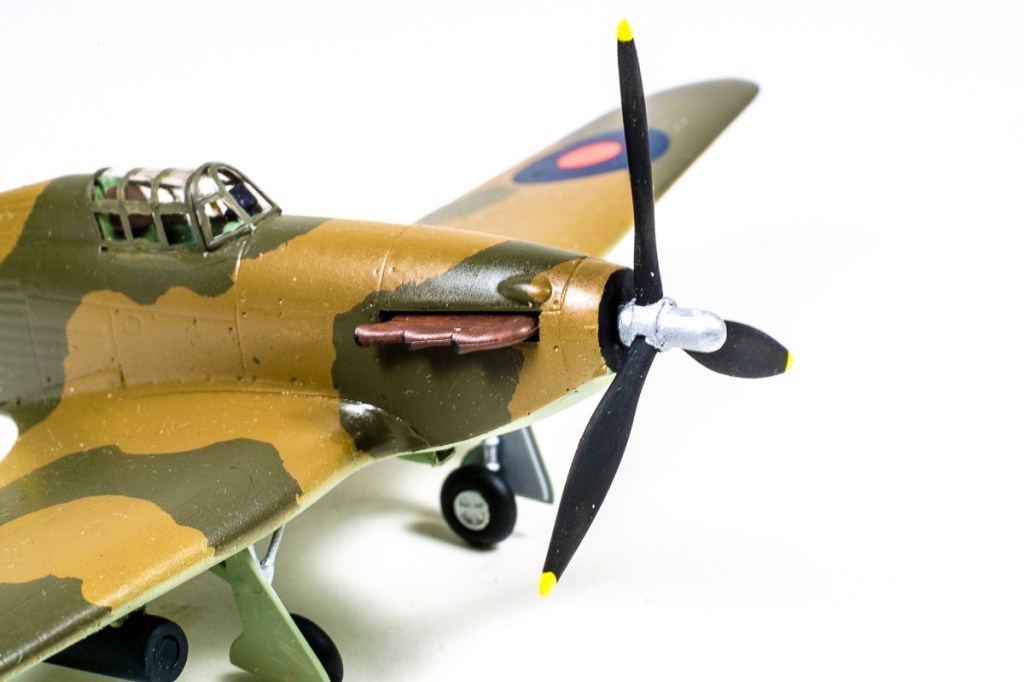
The saving grace would be to heavily weather it…but I’m not at that stage of skill yet. So it will sit in the Canada’s Skies section of the Air World alongside the Dakota and just look dirty for the time being. It was most discouraging.
But nothing ever fails to teach. I cleaned the workshop thoroughly, and undertook the experiment of spraying paint mules to see if I had solved the mystery. A Tamiya rattle can coat on a smooth wood surface – then into the curing box for an hour. Then a light sand and a second coat. Once this was set I had a clean surface to see if I could spray Satin Cote to a good standard. Thank Goodness, it came out perfect – I got my mojo back.
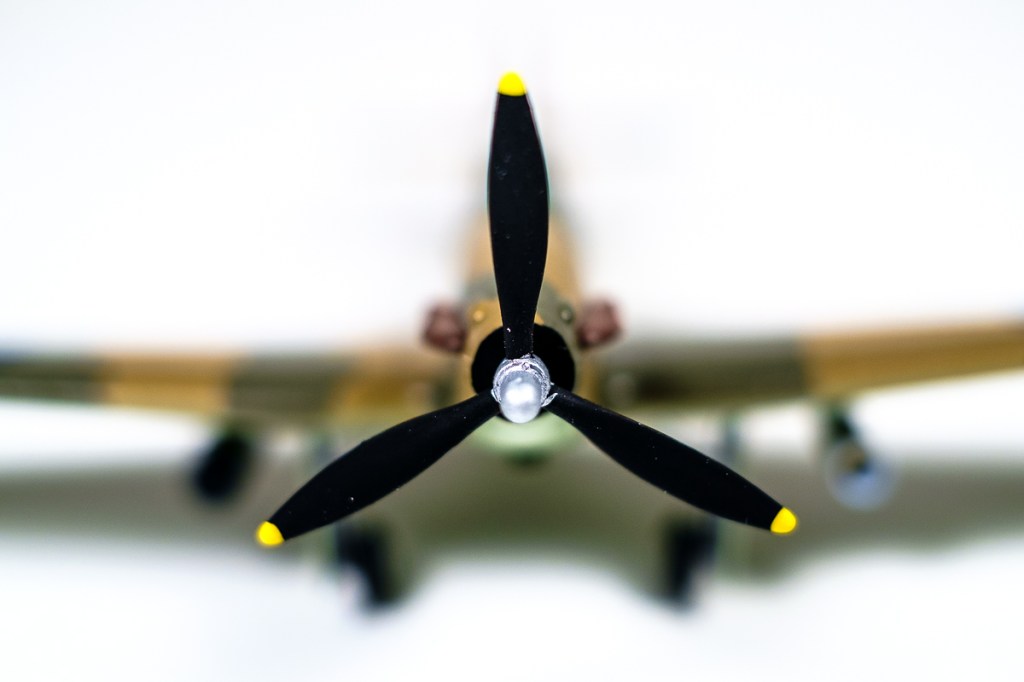
My mate Warren came up with the good idea of using a microfibre record cloth to do the final wiping before a finish coat – and I think he has a good idea there. I will get a fresh one from the shop and keep it wrapped up exclusively for this task.
 The Little World
Leave a comment