

The markings day has become a day of challenges. Of mistakes and discoveries. It has seen the finishing of the model, but not quite in the way that I expected.
a. The markings for the squadron code were nowhere to be found in my stash of decals nor in our local shops. T,W, and Z in night fighter red were going to have to be a custom job – decal or paint – any way I looked at it. The basic printing on Testor’s decal sheet didn’t look all that appetizing, so I decided to use some draughtsman’s clear masking sheet to make a pair of stencils.
These were simple to lay out once I found a suitable font in Photoshop and printed up a guide sheet for the stencil cutting. It was remarkably easy to do, even in this tiny scale. I then put a green tape spot on the side of the fuselage at the roundel point to let me space the stencils, peeled them off the plastic backing, and applied them.

The thinned red acrylic paint was put on at the lowest pressure air setting and in a number of dry coats. It dried quickly, and then I made my first disheartening discovery – when the clear mask was peeled off it left most of its adhesive on the surface of the gloss coat…
An hour of careful rubbing out with turps substitute on cotton wool pledgets was needed to clear the mess, and it was still slightly mucky in the details. There was language. I hoped the final matt spray would treat it kindly.
b. The cockpit canopy looked daunting but was easy to paint with thinned acrylic using Grandfather’s old bow pen. I may never mask a canopy again.
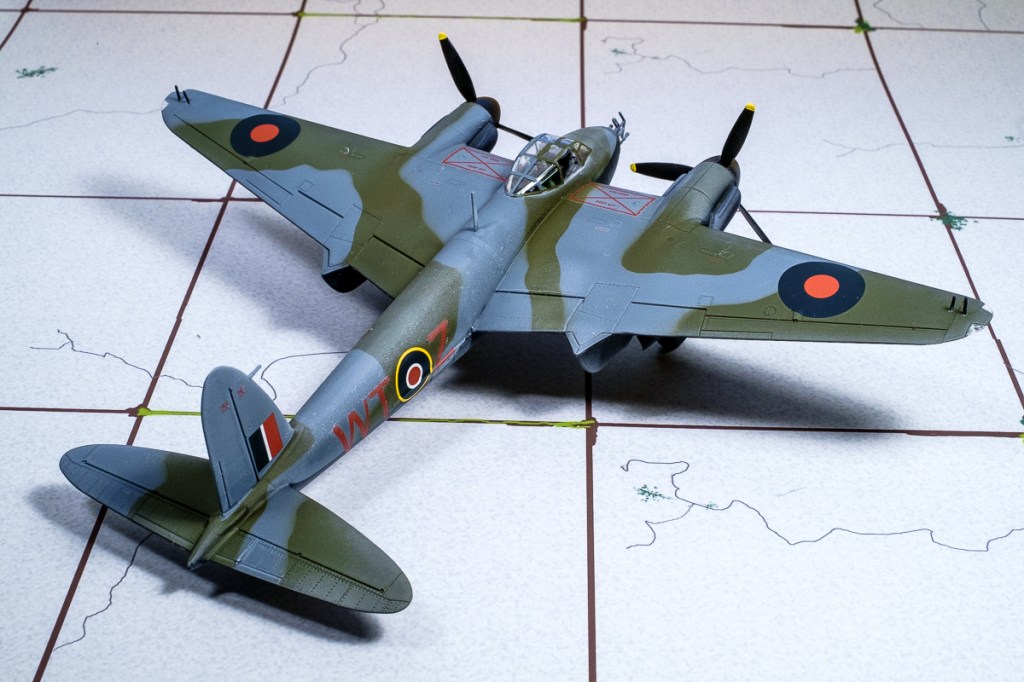
c. The Tamiya decals are sturdy things that take some soaking to slide off, but are in no danger of disintegrating. All the major markings needed an hour of Micro-sol to settle in. Still, the right side roundel coped with a massive strake.

d. The final coat – the service matt finish – that was supposed to make everything look good was a Humbrol acrylic spray can. It applied like a dream, but the end result has whitened out a number of areas – not a good look on the underside of a night fighter – and worse still, pulled apart in several areas like a dried crust. I think this was my fault for putting it in the warm box to dry – that and doing too thick a spray layer. I recoated it to disguise the crust cracks but this further whitened things out and started to make some of the details disappear.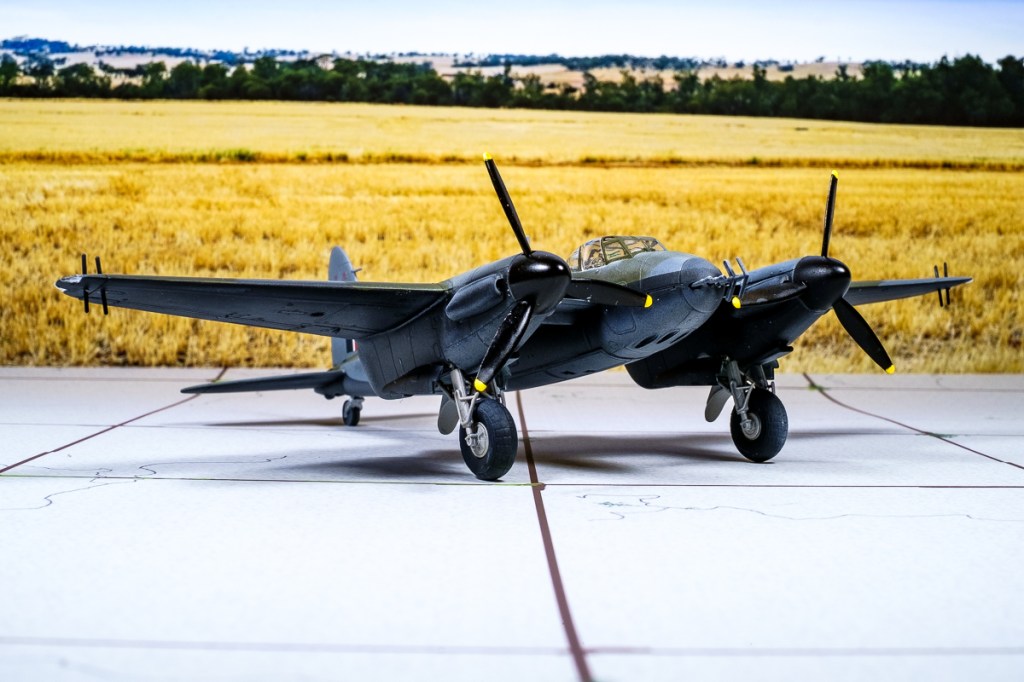
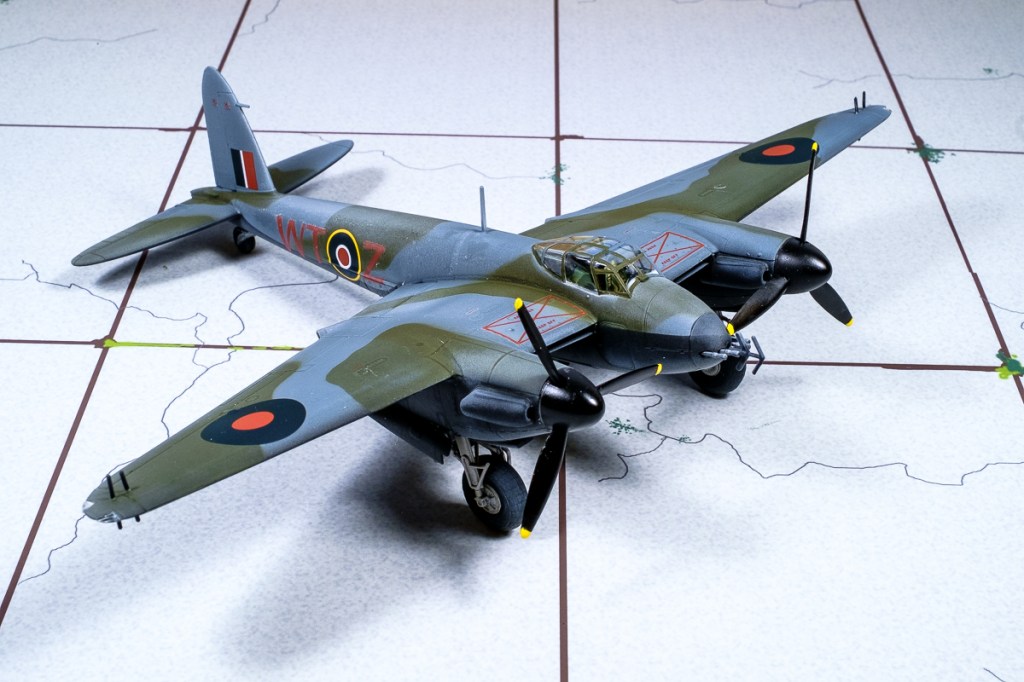
It is a success, but a flawed one. This is no criticism on my part of the Tamiya kit – it was the most precise one I have so far made, and encourages me to get more of their products. Nor can I really look askance at Humbrol – all their products up to the final spray can worked well…that last bit of trouble may have been operator error. I shall try it on a paint mule to see how to avoid the problem in future.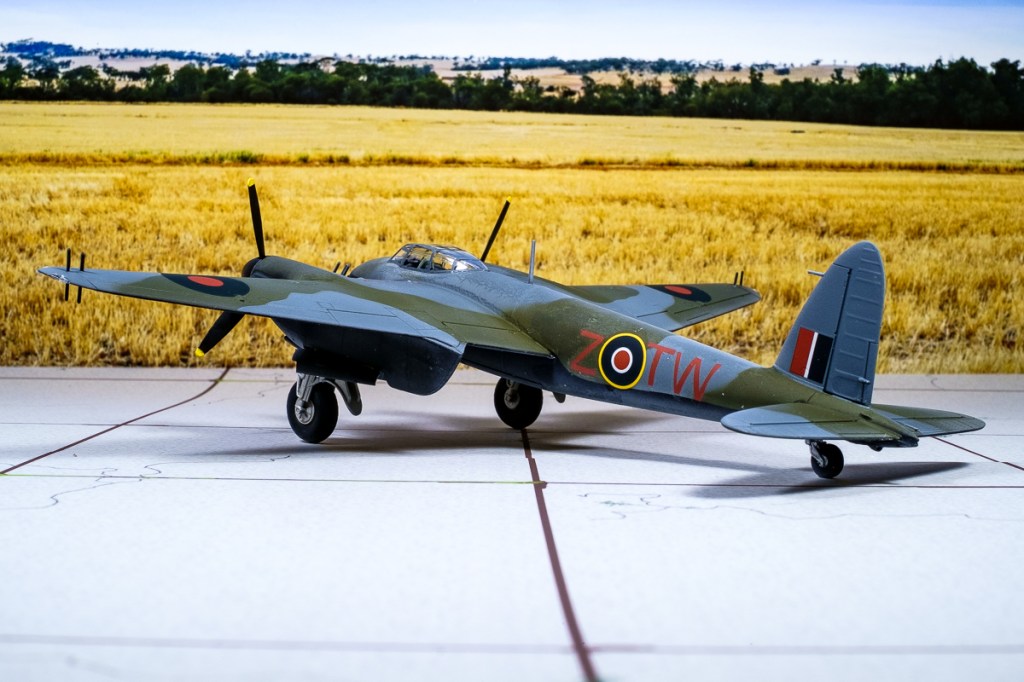
The masking of the code lettering was a good idea gone wrong in the material. If I do this in future I shall use a low-stick paper tape from Bunnings or a wide modelling tape from the hobby shop. The expensive roll of German masking film may be fine for layouts in the graphics art industry, but I won’t put it on a model again.
 The Little World
Leave a comment