
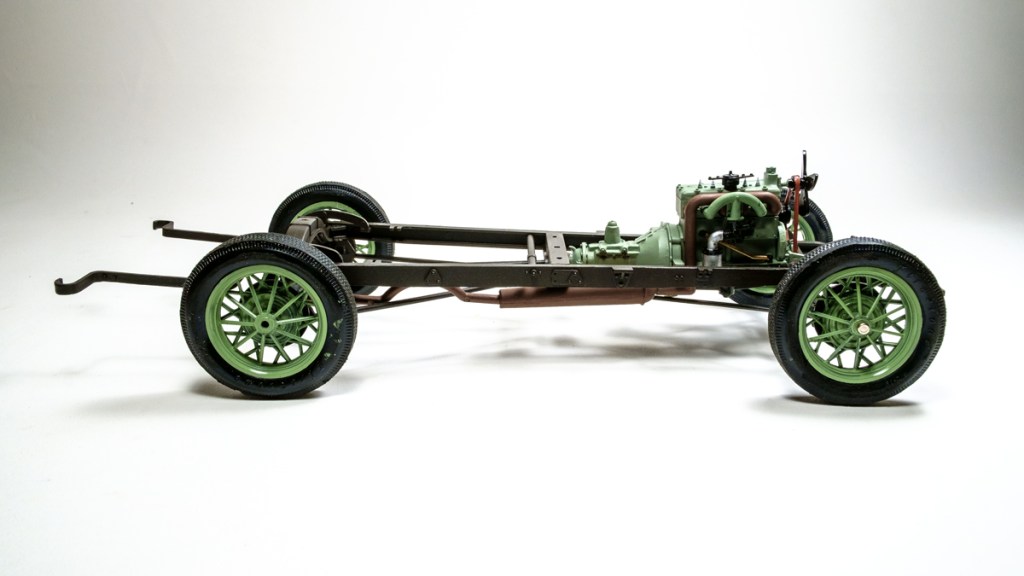
I was always surprised as a kid to read of motor cars being supplied in body-less form. It seemed like selling skeletons – frightening and unsatisfying. I had never seen a motor car in the 1950’s stripped from its chassis – and in a few years it would have been impossible to separate a unibody design into outer shell and inner workings.
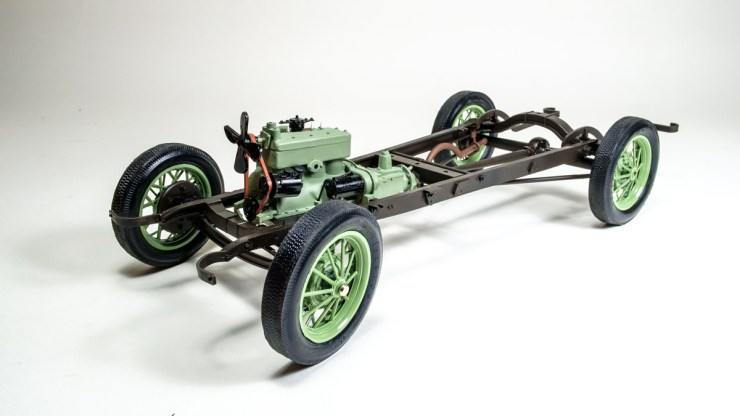
But indeed it was the case for many American cars coming to Australia in the 20’s and 30’s – they arrived as a rolling chassis and local coachbuilders constructed a metal body round them. In some cases the body panels were imported and welded together and in others just the stamping moulds were sent. Some custom coachbuilders worked from drawings or took liberties and supplied their own take on a famous brand.
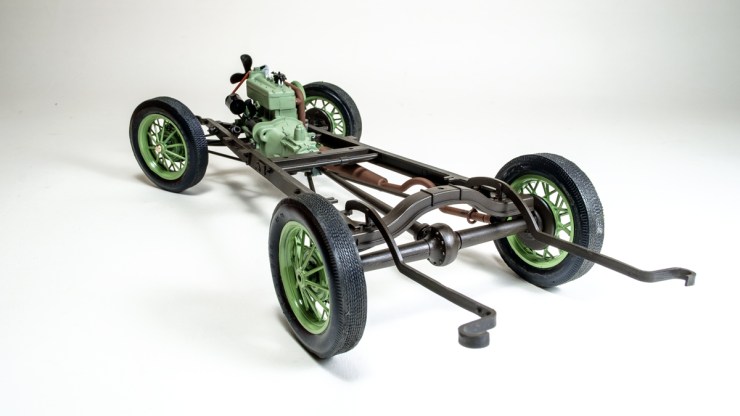
I was reminded of this as I rounded through the day and hung progressive layers of mechanics onto the basic frame of the Model A. At every step I could see the genius of Henry Ford in being able to attach the flimsiest of parts to inappropriate places and yet come up with a balanced device. I cannot say I would have liked or respected Henry personally, but you have to admire the boldness with which he attached struts to transmission housings.
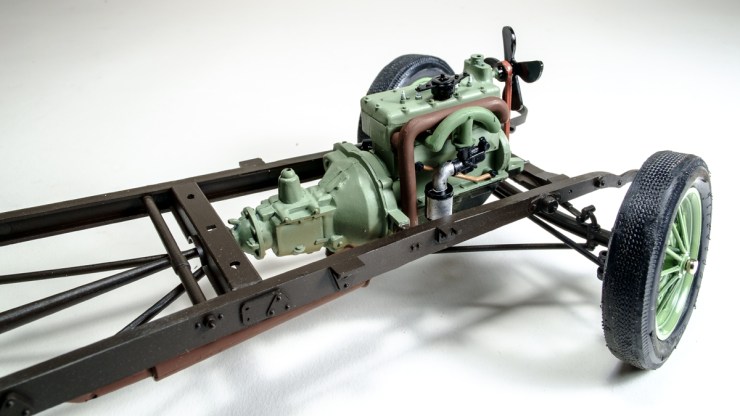
The basic spindliness of a Ford design – from the minimal castings to the stamped parts – must have been a blessing and a curse to the mechanics who would be repairing and maintaining them. And the persistence of Henry with mechanical brakes in the face of the hydraulic designs must have been terrifying.
But enough of flogging Ford. I am enjoying the build, and look forward to fouling the nest with dust and mud all over. Not too much, but enough. Montana produces dust for export.
 The Little World
Leave a comment