

When my friend Terry paid his bill in model helicopters I was initially going to make a yellow and red RCAF rescue – sauvetage machine of the modern era – the bright colours were the attraction. The Italeri kit is an excellent structure to do this on – it fit together with minimal trimming of the interior panels and nothing was lost visually. I closed the big openings on the sides with paper and Maskol and started to google to see where the yellow and red would go.
Then I stumbled across a man who had built a 1:72 chopper from a much older kit – something that had raised rivets and no interior. What riveted me was not the surface texture but the colour scheme and the name painted on the tail. It turns out to be the CAF-FAC UH -1 B that was the rescue copter at CFB Cold Lake in the 70’s…exactly perfect for my Wet Dog Regional Airport of the same era. The idea of yellow and red flew out of my mind.


This is also another of the new generation of kits that are getting their main paint job with the Mr. Color lacquer paint. Oh, there are a few very minor details that are still aqueous Mr. Hobby or Tamiya, but the bulk of it is the faster-drying lacquer…and the gloss finish that it imparts is perfect for modern and civil aircraft.
The decals are nowhere near anything that you can obtain here in Australia. I do look out for any Canadian markings in my scale whenever I am at fairs or in shops but they are as rare as rocking horse droppings. These are the result of a fruitful afternoon spent on this computer with the Photoshop Elements program and a sheet of Testor’s decal paper in the inkjet printer. They’re tacked in place with Micro-Set and protected with Mr. Hobby Aqueous gloss clear.
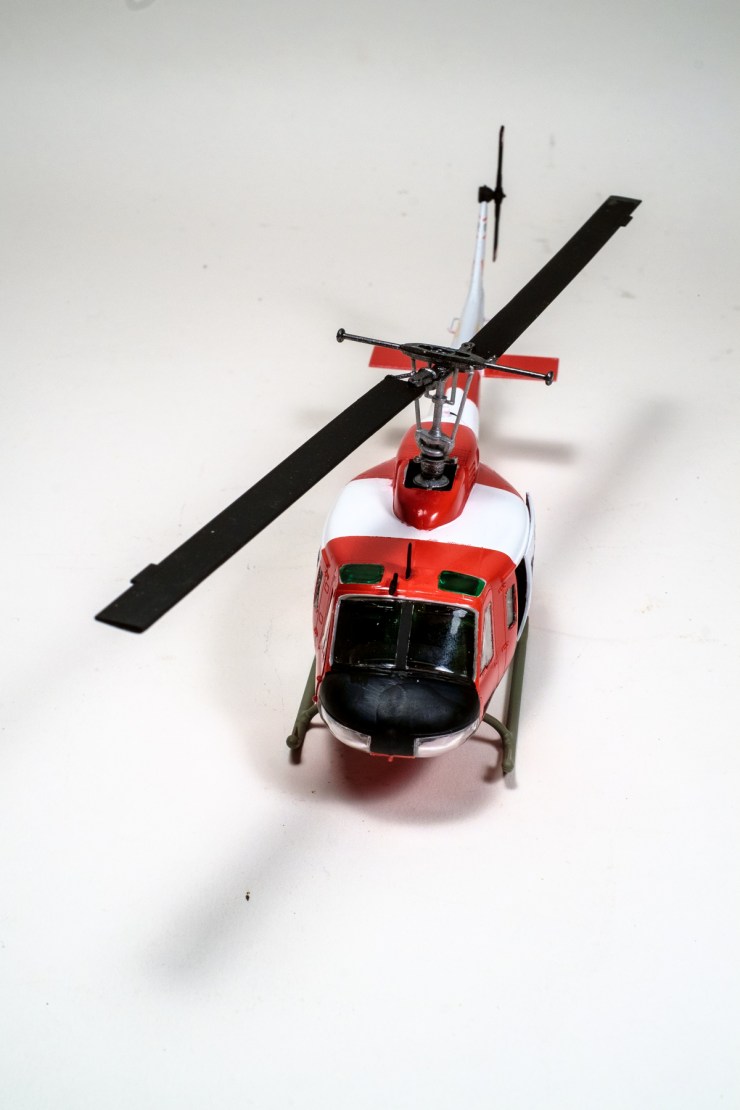
I had a bad moment when I realised that I had not tested to see whether it was to be a tail-sitter…but the weight of the rotors forward make it set on the skid properly. There were a couple of breakages occasioned by Italeri’s insistence upon scale dimensions for the tail skid and the rear rotor box. They were flimsy. Not no more – that’s piano wire for the skid and a pinned tail rotor assembly. I think I am going to just replace all pitot tubes and thin wire aerials in the future with metal substitutes super-glued in. They look fine and stand up to handling.
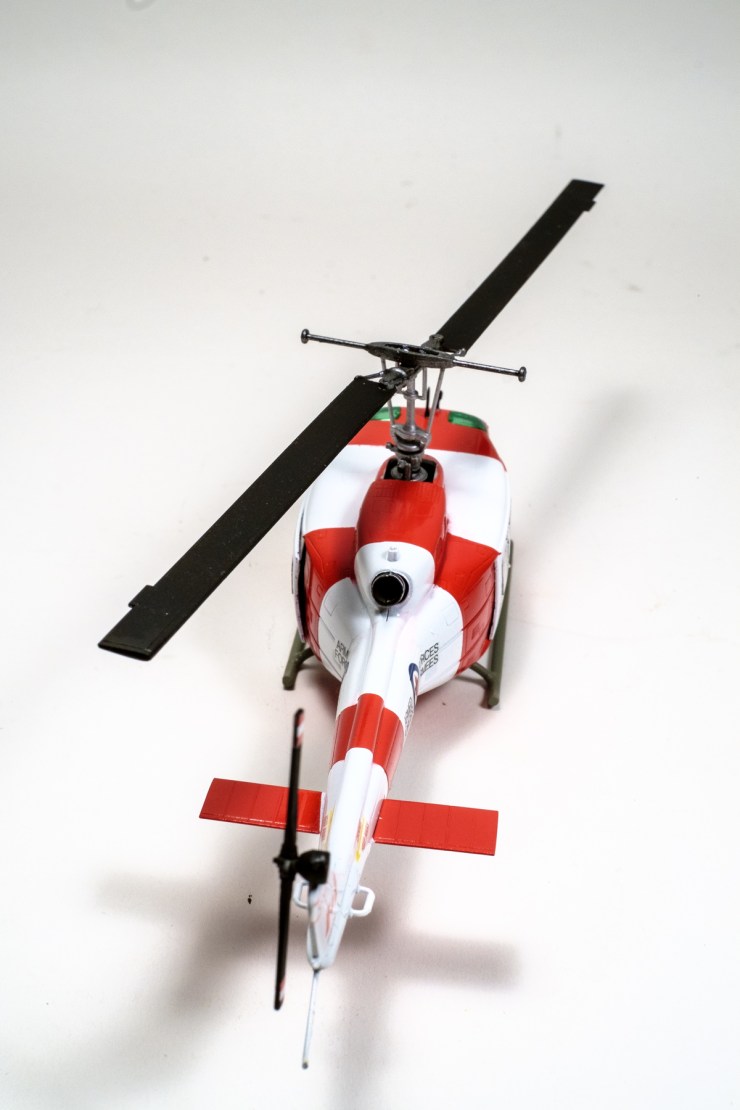
I am immensely pleased with this modern machine. It encourages me to look at some of the other classic helicopters of the 50’s and 60’s for part of my display. Thank you, Terry.
 The Little World
Leave a comment