
How tall are you? If you can smoke cigars, drink whiskey, and join the army, you are likely to be about 1.5-1.8 metres tall, with your eyes some 120 mm lower down than the top of your head. I realise there are people outside the average and I salute them, but let’s take an example at 1.6 metres with eye height at 1480 mm.
That is significant, because most people in WWII did their ground-bound photographing with a camera held to their eye. Those who were using twin-lens-reflexes like Rolleis and Voigtländers would have been doing it from waist level – camera held about 1000mm from the ground. This point of view markedly influenced what their pictures looked like and what we expect to see from modern pictures of historical subjects.
Note: Art photographers of the 30’s like Rodchenko might have sought unique angles, but the average airplane photographer of the 40’s did not.
Okay. Where should the camera be for the model shot – it should be at the same height in relationship to the scale of the model as the real one was to the real planes. If the models are 1/72, the centre of the lens should be 1480 mm or 1000 mm divided by 72 above the model tarmac. That translates to 20.5 mm or 13.8 mm.
If you are taking a picture of a larger scale aircraft – say the popular 1/48th scale types – the figures end up being 30.8 mm and 20.8 mm respectively.
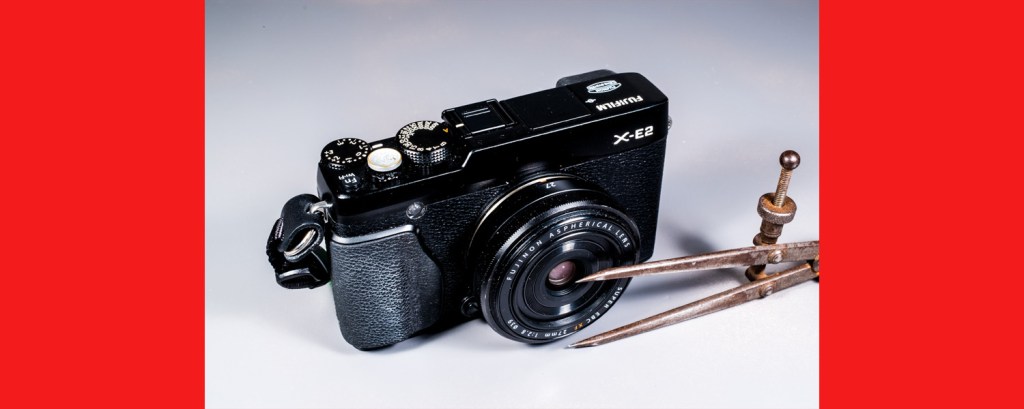
Note that I said the centre of the lens. This means that you need a camera lens with an overall barrel diameter between 27.6 mm and 41 mm for the 1/72 layout and 41.6 mm to 61.6 mm for the larger scale. Lemme tell you as an old camera collector and photo salesman that this is not easy to achieve – most camera lenses we need are considerably larger than this. If you combine this with the fact that the camera body design puts a baseplate thickness under the lens as well, you are struggling to get the lens close enough to the model tarmac to get a realistic point of view.
This, of course, eases up for the shooters who are photographing the 1/48th or 1/32nd models. They’ll have troubles getting things all in focus, but at least they’ll be able to see them from the correct height.
For now, look to your camera equipment and select a lens with the smallest barrel diameter. Remove brackets or accessory hand grips from the bottom of the camera body. See if you can do it without the additional bulk of a lens hood. And if you cant…well, look in at your local camera shop and review the situation…
 The Little World
Leave a comment