
But they didn’t say it to me.
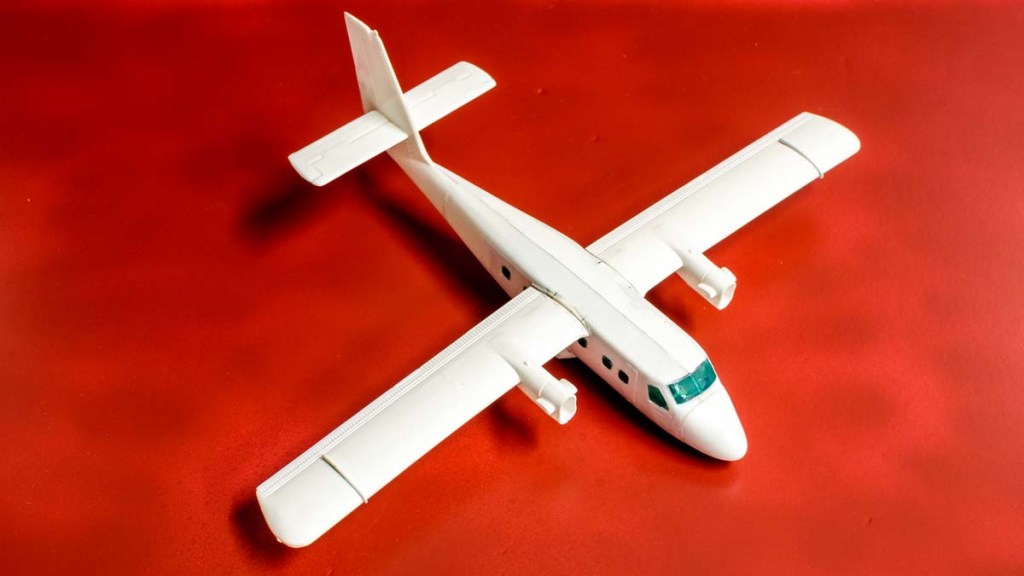
When I saw the separate wings for the Twin Otter with no tab to fasten them back onto the fuselage, I started to worry. I know modern cements can do a great deal to weld plastic surfaces together but those long, thin wings stretch out quite a distance from the fuselage and there is not that much area to cement to. I distrust cyanoacrylates anyway.
How do larger-scale modellers arrange for their big fuselages and bigger wings to mate and to come apart for transport – that was going to be the answer to the problem – and it proved to be laughably simple.
Brass tubing. K&S stuff from any hobby shop. I had lots of it in the metal spares box just sitting there. I matched it up with a suitable drill, then measured either side of the fuselage right on the mating surface of the wing root. I was precise enough with just a set of dividers and a pencil to get two channels from one side of the fuselage to the other – and then the wings could be offered up, marked, and drilled to take the outboard tubing.

If I had taken time to think about it, I would probably have been daunted by the task; as it was I just drilled and it slipped together.
The great advantage of this is that the fuselage will be much easier to paint without the wings and vice versa. When mating time comes a little touch-up paint at the joint should make it look perfect again.
 The Little World
Leave a comment