As long as it is white. Henry Ford is spinning in his grave.
Civil aircraft all seem to start life as brides in white. From the factory demonstrator to the feeder-line delivery, they all get a gloss coat of white paint. I suspect it is cheap, durable, and meant to be highly visible. As well, if the airline goes broke it will be easier to sell off a white plane than one with a complex designer paint scheme.
But what about the arctic and antarctic planes. Lose sight of a white one in snow and it can be lost in reality – forever. So snow flyers opt for extra colour to show up. The RCAF has used bright red, chrome yellow, and day-glo orange. Others have tried orange and black stripes and bright yellow. It can be more important to have this colour on the upper surface of the plane than the lower, unless you plan to ground-loop on landing regularly.
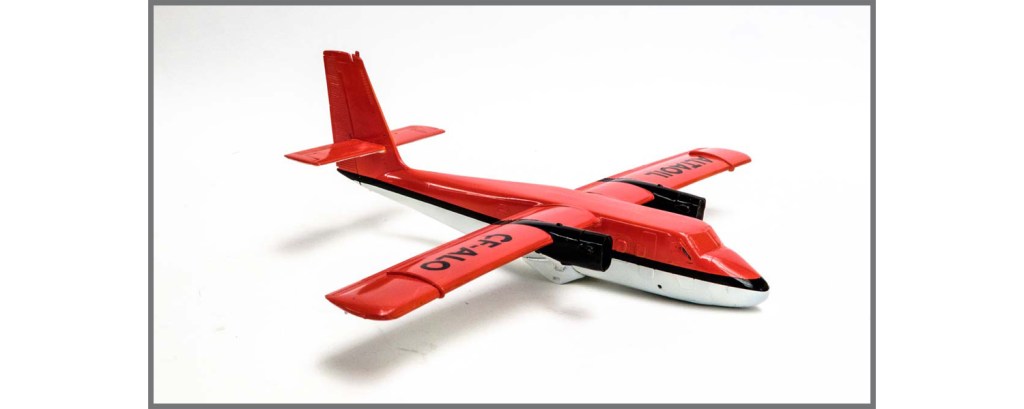
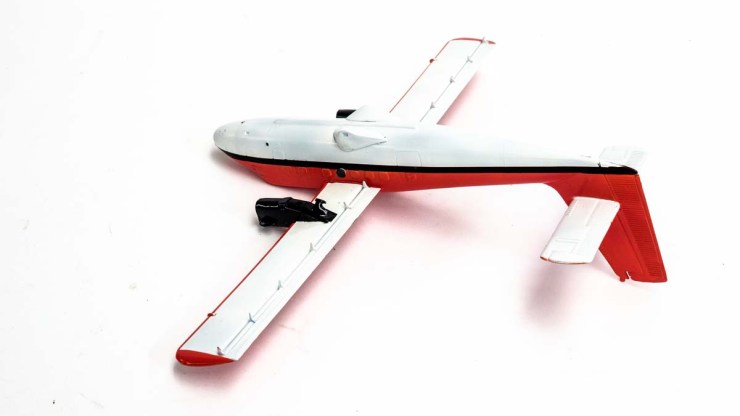
I have decided that the Twin Otter will be operated by an oil firm: AltaOil. Servicing Turner Valley, the Pembina, Lake Athabasca, the tar sands, and all points north. Therefore the clean white underside is fine but the top and wing need big letters and big colour. Fortunately the effective use of bright red or orange needs a white undercoat anyway.
I do hope that I’ll get a chance to secure some RCAF search and rescue decals for something – the strong yellow aircraft are very attractive and Heller and Italeri seem to have kitted several suitable prototypes.
 The Little World
Leave a comment