

My modelling club has a number of senior members who seem to build model armour as their specialty. I don’t know if they are former members of the Royal Australian Armoured Corps or not, though from conversations a number certainly seem to be ex-servicemen. I am envious of their kits – the modern tanks in 1:35 seem to be superb models, and I am staggered at the number of different items on offer. Coming from a childhood that could count the number of plastic kit army tanks available on the fingers of one hand, to see literally dozens of them at every show – and a complete aisle of armour at the hobby shop – is wonderful.
Still, it is not all that easy. I’ve watched a couple of chaps patiently gluing together tracks from separate links – and each link had to be assembled from four parts – this for weeks in succession. Then there is the man making the field kitchen and cursing the details that the kit maker has incorporated that will be hidden inside the casing. He could just glue the shell together and have done, but is being honourable and pursuing the whole interior.
I am also in awe of the finish that the armour enthusiasts get on their models. They never have to try to depict a propeller in motion or a wash and a wake, but they get to do nearly everything else on the surface of the vehicles. It must be a great relief that they do not have to worry as much about dust and fingerprints.
I also suspect that the kits are less prone to bad fit being seen by the casual eye – if there are slightly misaligned edges they have to do less putty filling than the rest of us. I’ll bet they try to make the filler look rough to suggest welding.
Here’s a selection of the ” Modeller’s Other Interests ” at the Model Car Spectacular:
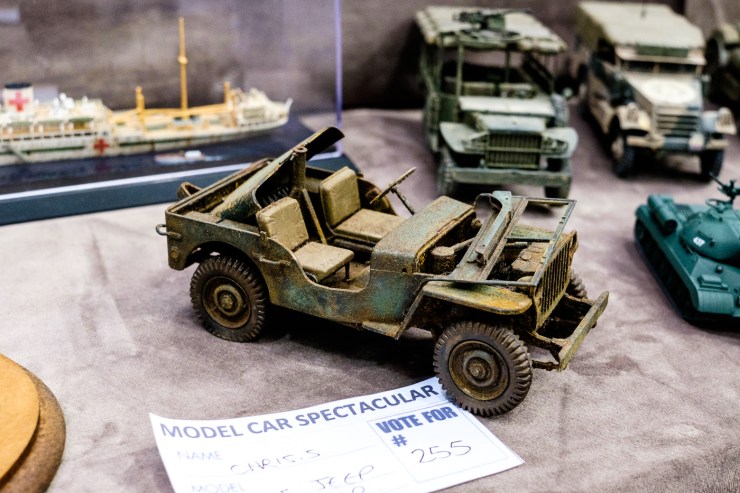
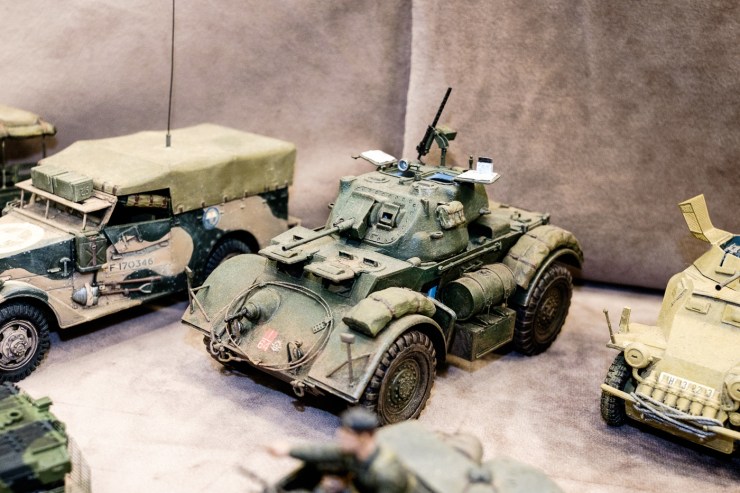

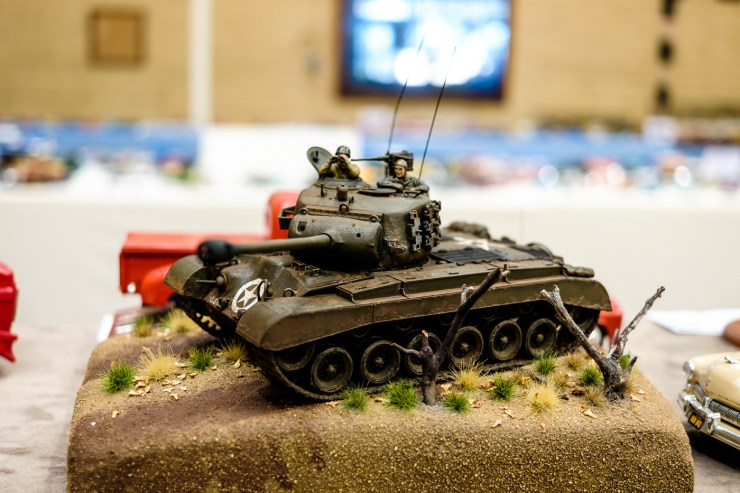
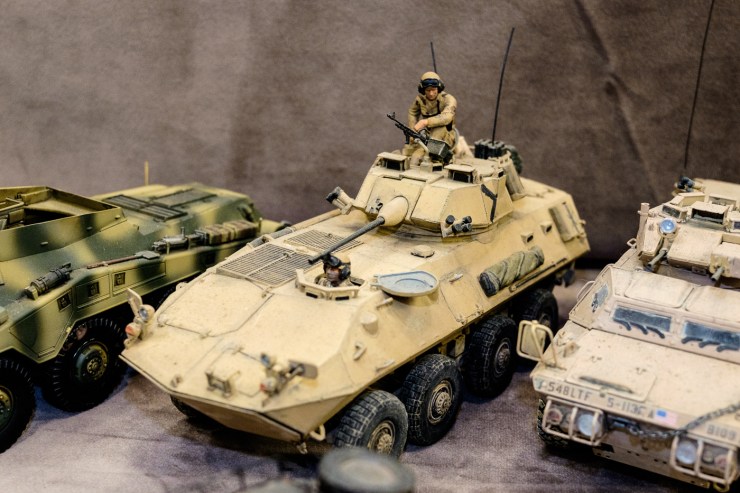
Note the camouflage scheme on the British tank in the heading image. This was designed to let it blend in with a cubist painting in case they needed to defend the Tate Gallery.
 The Little World
Leave a comment