
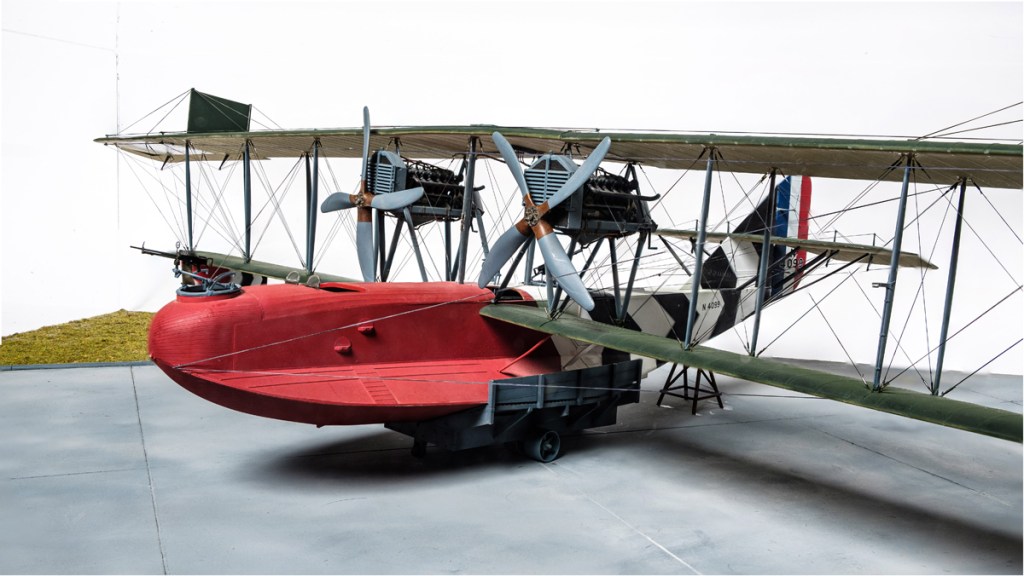
This week’s photo session at the scale model club was the first actual use of the new focus-stacking technique I’ve just learned. It is undoubtedly old hat for many, but I have a new head and it just fits me fine.
The technique is based in Photoshop 2019 and required several steps – but as they are all automated in the computer it is easy to do, The main thing is to take enough detailed pictures to feed the mechanism. That was my morning’s task.
The basic focus stacking procedure is to slice the subject into precisely-focused slices by keeping the camera entirely steady and then advancing the focus in measured steps from the closest thing to the furthest thing in the scene. You do it with the lens set entirely in manual focus.

There were two lenses tried out today – a standard Fujifilm kit zoom and a prime Tokina macro lens. The experience was similar with both but the Tokina required to be manually stopped down before each exposure. It sits on an adapter that lets it couple with the Fujifilm body but there is no way you are going to get any electrical signals through the adapter. It has the distinct advantage of very close 1:1 work if needed but then again several of the models photographed needed a wider zoom lens.
The field-finding is all done in the LCD screen with the focus assist circuit turned on. This casts a red line around whatever is actually in focus. As you turn the focussing ring you can see a rime of red pass over the body of the aircraft or hull of the ship. This works with the Fujifilm focus-by-wire lens as well as the manual Tokina and the Fujifilm one has got automatic diaphragm so you can skip one adjustment.
To make sure that there is absolutely no manual disturbance of the camera at the time of exposure, an electric release is used. You just gently turn the lens ring about 5-10 times from front to back and press the button each time you do.
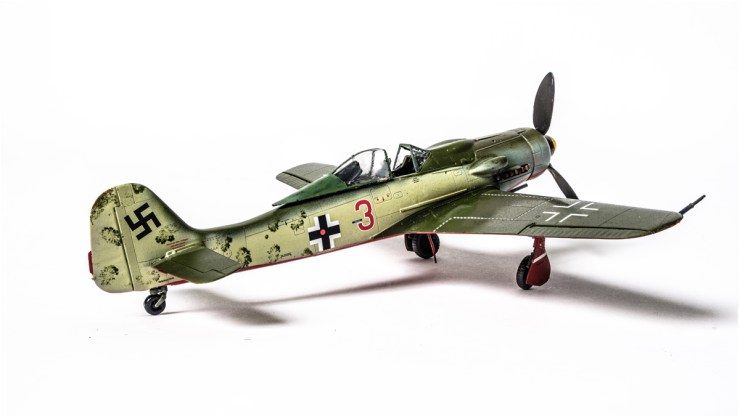
There are probably dozens of things that have been glossed over in this and finer points that are being rolled over, but the end result for the scale models is very good. You can use the ” sweet spot ” of the lenses’ aperture ramge instead of having to stop down into diffraction territory and the ISO’s and flash power can be kept modest.
There’s a few spots where the formula hasn’t worked, but I’ll figure out how to reduce these to a minimum.
You don’t get as many models shot per session and the back-time with post processing balloons – but this is a hobby, not a business.
Note: The British seaplane is inside a fixed display case so there may be a few extra reflections.
 The Little World
Leave a comment