My learning curve with the airbrush was a bit steep a few years ago. It has become easier lately, but occasionally jags upward again.
To be fair, it’s me kicking it up. I continually decide that I need to improve upon proven techniques. Even if I got a good result last time. I seem incapable of just settling down and using the same procedures this time. It is much the same with photography and sex, though to be fair, scale model painting doesn’t tear holes in the bedsheets.
The latest experiment seems to have been successful, but that doesn’t mean I can’t make it fail in the future. Just let me at the workbench and stand clear. The point that started it all was the business of getting a feathered line on the edge of a camouflage pattern for aircraft.
The small scale in which I work – 1:72 – means that there is a debate at the start – should the camo pattern have a sharp or a smooth edge? Logic says that in such a small scale the sharp masking tape edge would probably be as much in scale as anything. Yet careful masking with complex rolled edges seems to make a more pleasing result. But the amount of masking work and the sticky , awkward nature of the thing leads you to shy away from it.
I’ve done the sticky snakes and the liquid mask and the hours of torn tapes. I briefly contemplated using puff pastry sheets or dental wax as a masking method. I’ve dialled down the air pressure and tried to spray freehand. They have all been a royal pain in the nozzle.
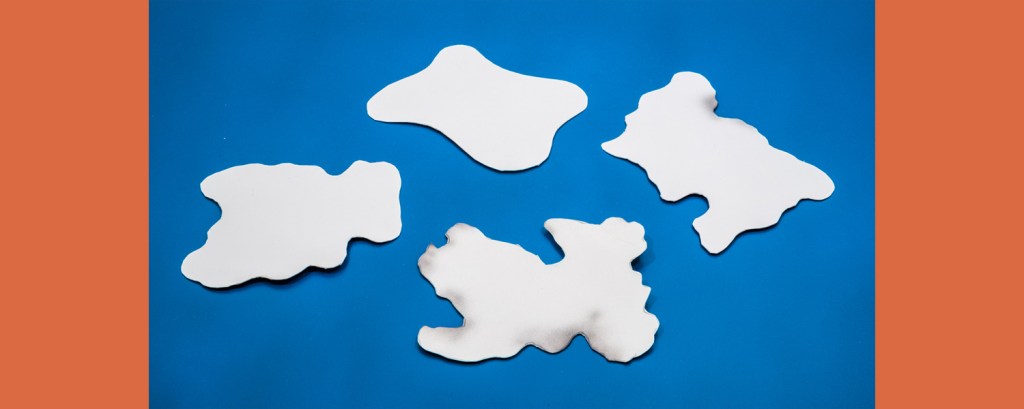
Today’s experiment is with hand-held mobile masks. I cut random, but scaled, shapes out of excess cardboard – some were the sharper curves of WWII patterns and some the smoother swoops of post-war planes. The idea is to progress over a surface, holding the mask above the area to be sprayed to allow some small amount of overspray to feather the edge. In a pinch the mask could be curved over a fuselage and just draped there. It would mean spraying an scheme in a series of stages, but as long as it was quick-drying lacquer that could be done in the one mix.
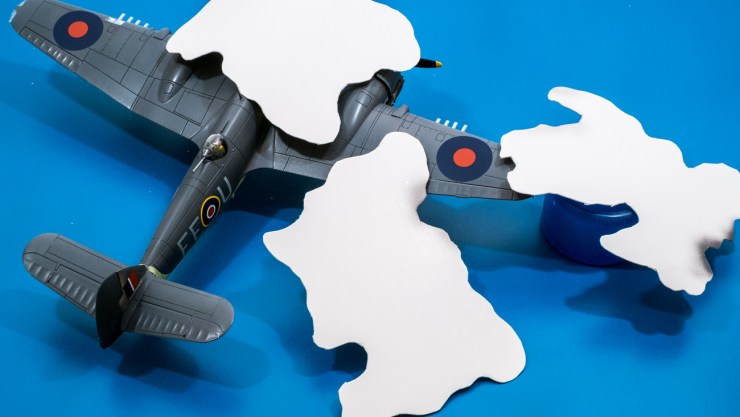
The result on the Bristol Beaufighter seemed to be quite good – not as sharp as pure masking tape and not as controlled as sticky snakes – but concentrated enough to suggest a real scheme. I will have to do it on brighter colours to see whether it is actually an attractive idea.
PS. I airbrushed it before I put on the decals. The picture is just for the idea.
 The Little World
Leave a comment