
So Ivan’s wax coat was a failure. So be it. But now a different idea.
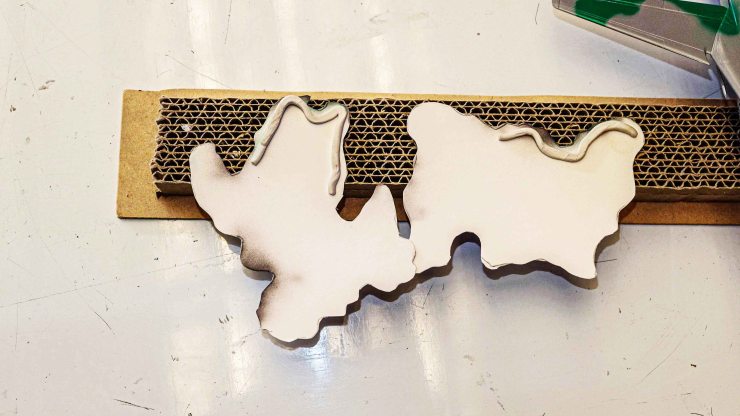
I have made up a set of cardboard masks that can be laid over a model in various fashions. The material is stiff and will not conform to the smaller contours.
For the first trial I took two of the masks and attached some rudimentary lengths of white-tack worm to the underside. This let the mask sit proud of the surface – rather like the putty worms do.
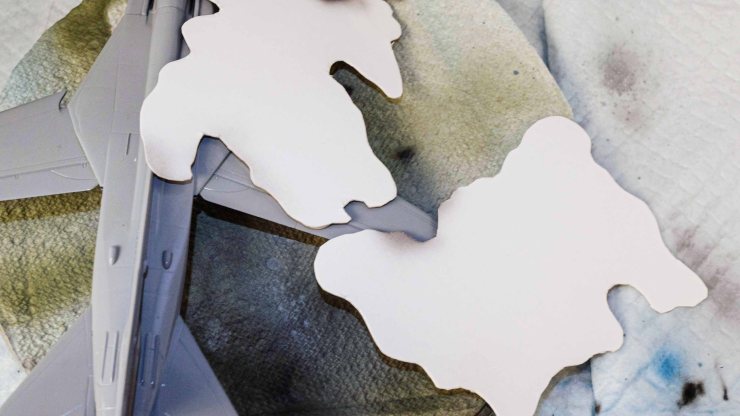
Then I sprayed a water-based acrylic from the standard airbrush at a low pressure.
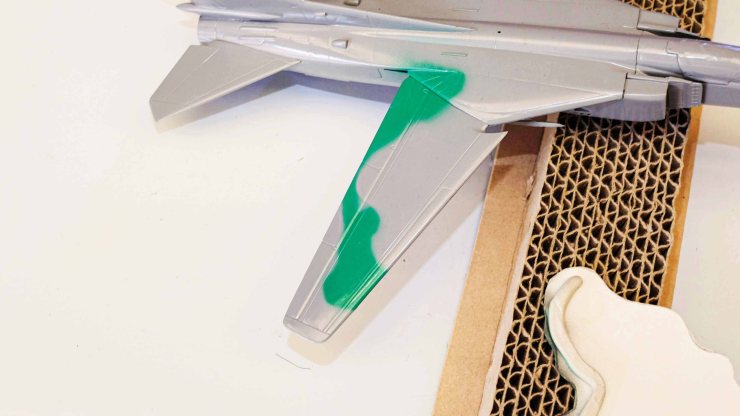
The result was nearly as good as the more complex white tack putty worm and masking tape method. A little more scatter due to the open nature of the edge of the thin mask.
For the second trial I hand-held the masks above the other wing’s surface and sprayed in the same fashion – trying not to get the spray too far under the edge.
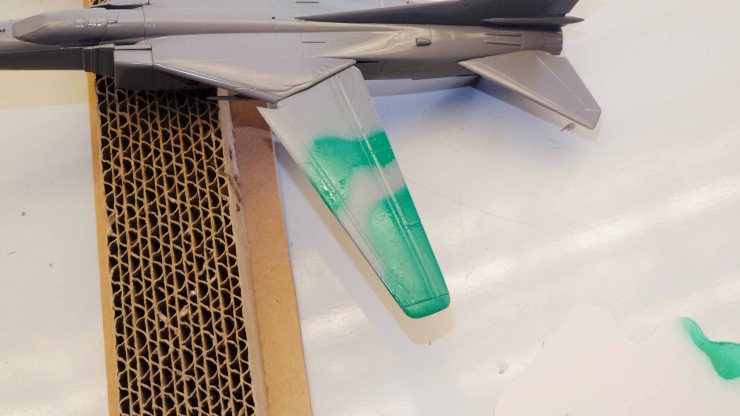
Not as good – easier than freehand but with nearly the same spatter and indecisive edge. Here’s the two sides as direct comparison.
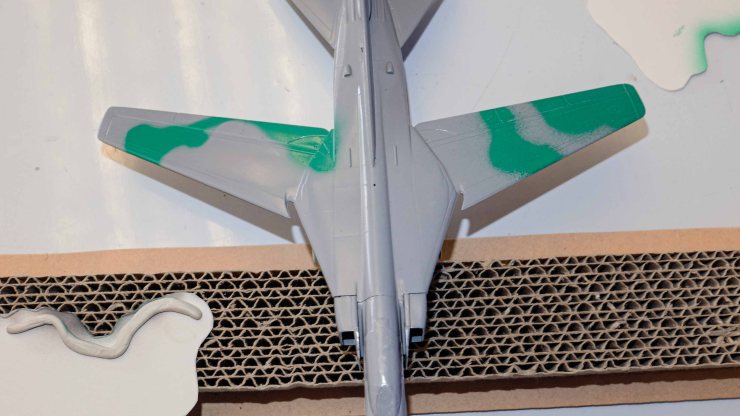
The verdict is again a qualified no – the original putty worm and masking tape process – as time consuming as it is – is still the best scale edge.
But the next test was a success – I want ed to see if the airbrush run at a higher pressure with some alcohol in the colour cup would act as a pressure washer to take the paint off again.
Does it what! At about 40 psi I sprayed cheap old methylated spirits over the acrylic paint. The colour just hosed off.
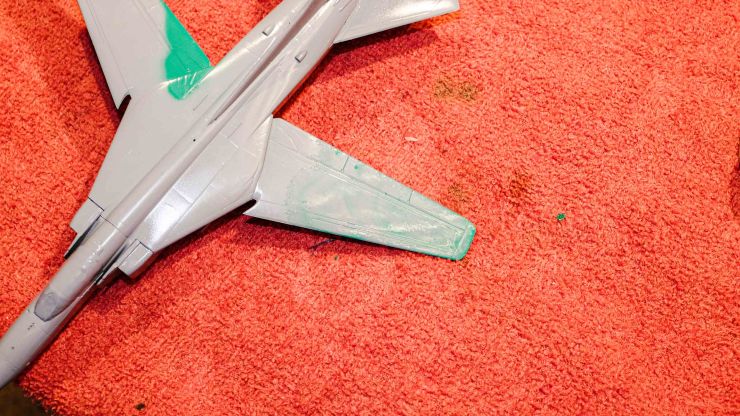
At the end there was a little disruption of the varnished surface – the meths will do that in any case – but no scratching or damage to the plastic surface. You would be good to go again.

I’ll let the starboard wing dry overnight and see if the paint hoses off that side as easily. Then it will be a case of laying down a lacquer and trying to spray it off again.
Ivan Seryy is earning his pay.
 The Little World
Leave a comment