
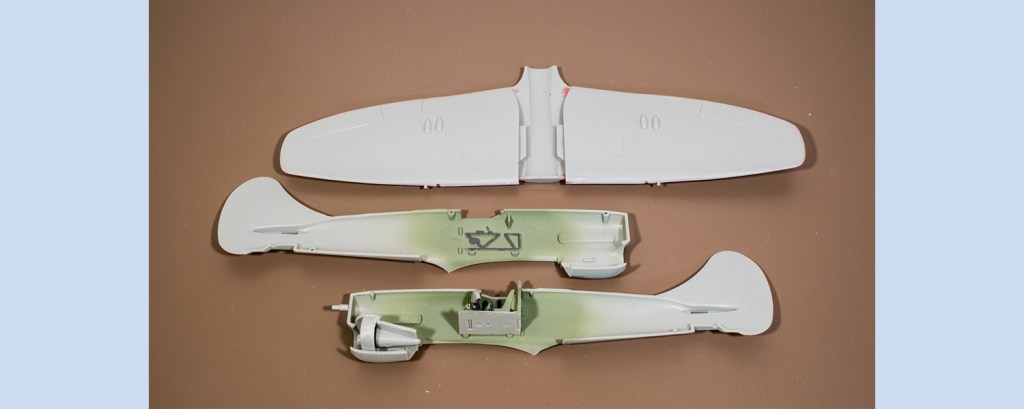
It might just as well be a Buster…and it might just as well be a Hobby Boss kit rather than an Academy product. The building experience has been just as rapid.
I washed the sprue trees for this Tempest at about 12:30 – the basic airframe enclosing a painted cockpit was ready for the photo table after tea…and we old folks eat early.
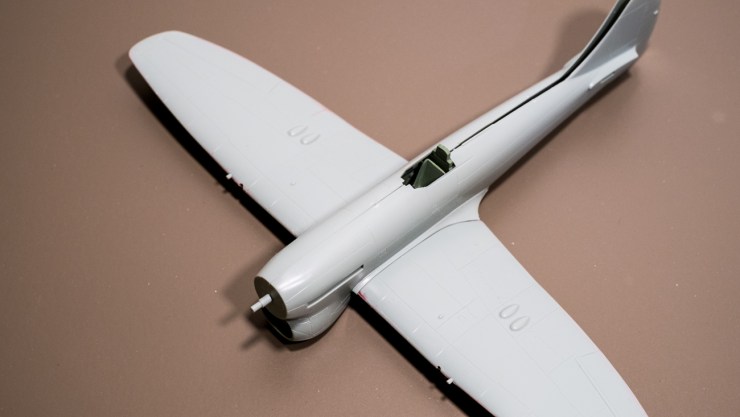
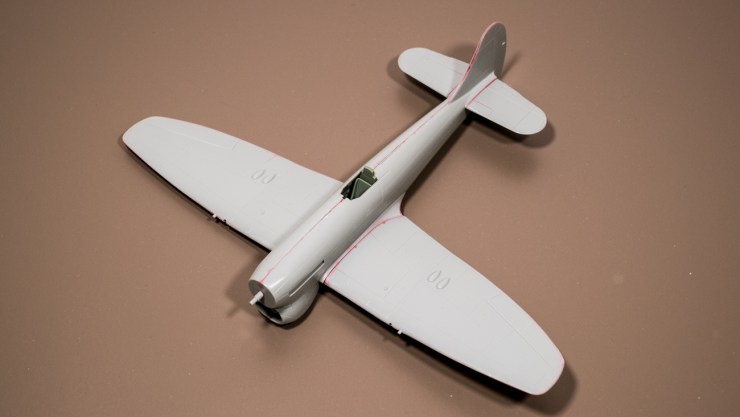
The reason for this is the superb fit of the kit parts. The casting gates are commendably small, there is no flash anywhere, and the fit of the components is precise. The merest sanding of the radiator let it slip in with no gaps to the fuselage and there has been no use of gap-filling cement anywhere yet. Even the tailplanes slid in tightly at the correct angle and were MEK’d solid with a small brush.
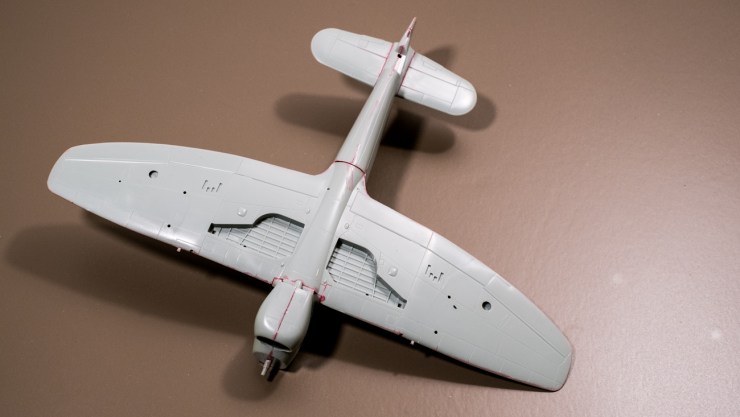
The museum example I am following has had the undercart and wells painted black – a service photo of it shows the inner parts in various silvers and bare metals. Oddly enough, I am going to go with the museum scheme as this allows me to prepare most of the ancillary parts well in advance. I have no idea whether the slightly spindly Hawker legs will fit tightly into the wings, but all the other Academy kits I’ve built have been good standers.
The museum plane has been displayed in various ways over the years and people have uploaded pictures of it as they saw it. One year they hoisted it up on wires from the ceiling and this is wonderful to show the paintwork and markings on the underside. You can’t ask for more help than that, unless it is original metal panels with the paint on them…and few museums will let you unscrew bits of their exhibits.
As it is a postwar aircraft, the roundels are brighter than wartime ones. I’m glad now that I have saved so may RAF markings from other kits and can do this one from commercial sheets.
 The Little World
Leave a comment