
I’ve written before about the RCAF’s aircraft nomenclature and how it can be alternately logical and puzzling. I’m not sure if this is because it is an armed service or an armed service run by Ottawa…
In any case, I leaped upon the KP model of the USAAF Cessna UC-78A Bobcat when it showed on a local shelf. I’d seen the same plane kitted as an RCAF Crane – with the only apparent differences being the colour call-out and the decal sheet. As this kit was local and no postage would be needed, I figured that I had enough roundels and numbers in the decal box to convert it.
I also have a colour internet image of a yellow Crane flying above a Canadian winter prairie – cold and blue – in the early 40’s. The pic is perfectly preserved and shows the winter engine shields in place – I’ll be considering this for the 1:72 plane if the engines look awful.
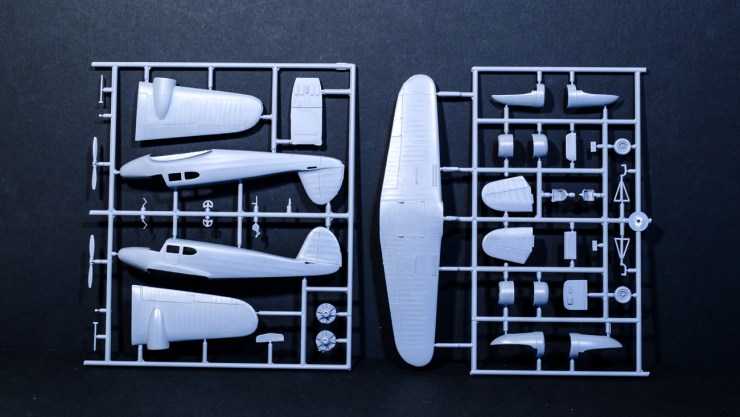
The kit’s mouldings are very clean. There’s no miserable resin or PE. The glasswork is perfect with good frame moulding. Even the landing gear legs look sturdy. And there is a full interior.

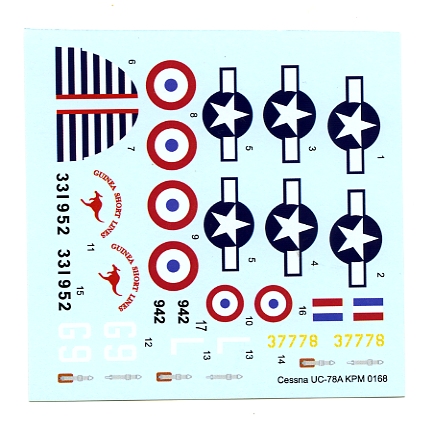
And yes, the decal stash is full of roundels and fin flashes. The only home-made would be a unit mark on the rudder.
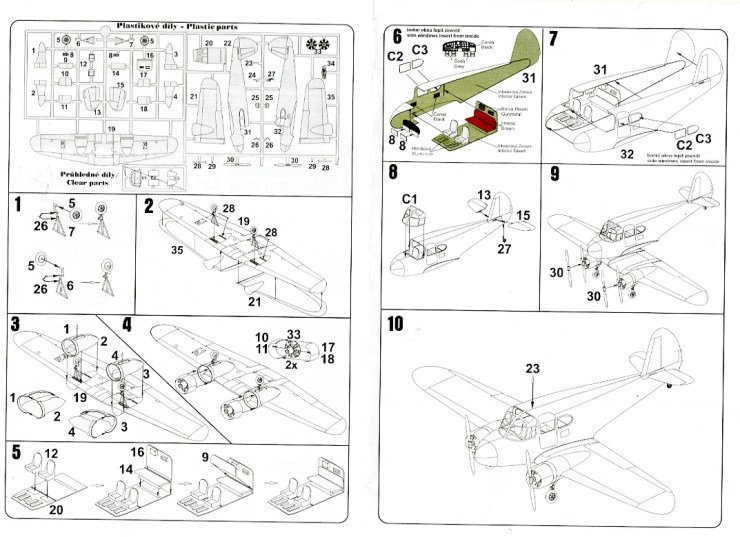
Now the name. The RCAF had a number of single engine trainers that they named after schools or universities;
Harvard, Yale, Cornell
They had a twin-engine trainer named after a university:
Oxford
And then they went off and failed to rename the Avro Anson – leaving it to commemorate a British admiral. Airplane alliteration, of course, but still they could have assigned it to another training establishment…Avro Annapolis, perhaps.
And then we have the Cessna Crane – over 500 of ’em in use by the BCATP and quite a few in my own province. But this one got the name of a water bird. That should have been reserved for the floatplanes like the Grumman Widgeon or Grumman Duck.
But that would have been logical and this is Ottawa* we’re dealing with…
* Ottawa = Canberra with maple syrup on it.
 The Little World
Leave a comment