
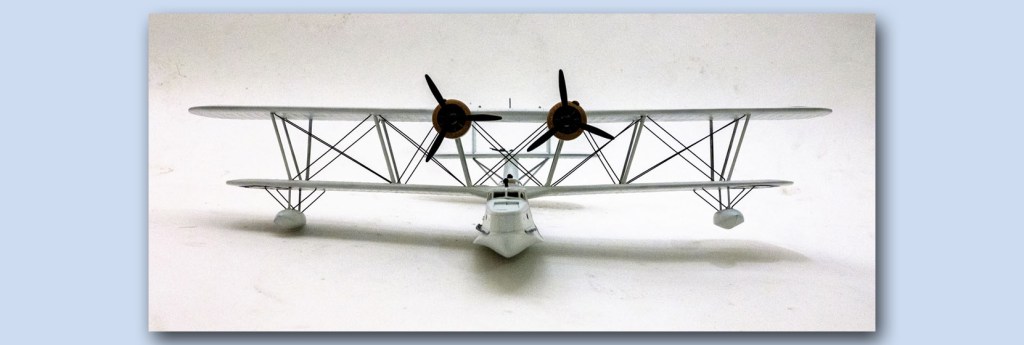
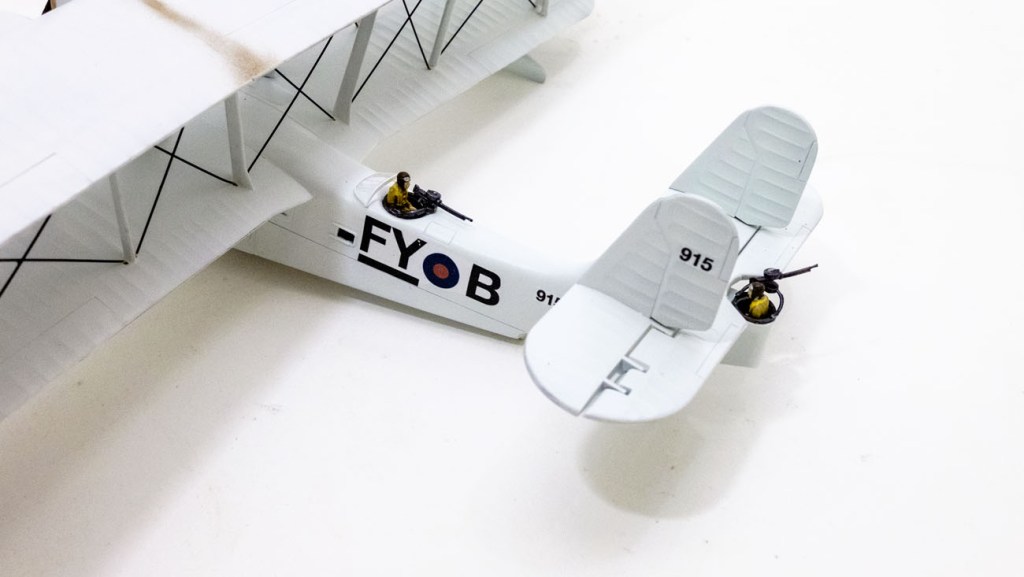
One day FY-B…old No. 915…will be bobbing off the buoy at RCAF GLEET BAY along with the other floatplanes and flying boats of the Coastal Command. I am still working out in my mind a way of displaying these ships in the water without massive sea sculptures. Wish me luck.
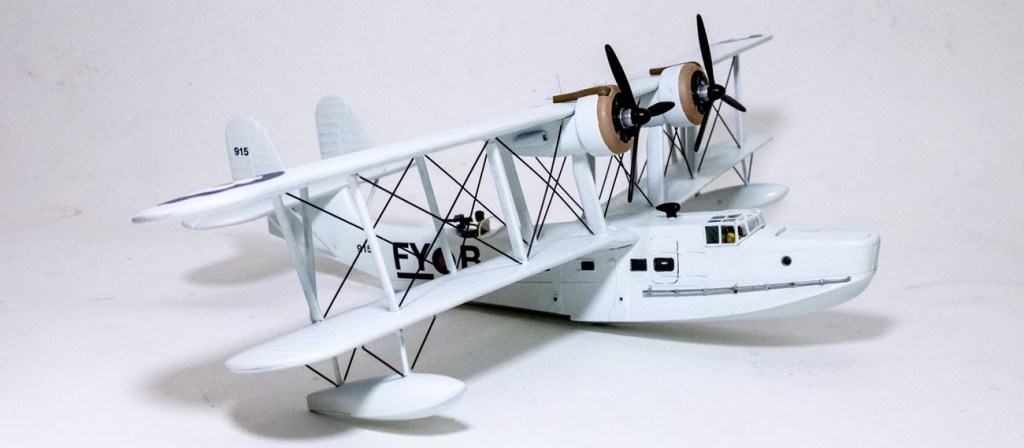
915 represents a lot of things for me – the basic goodness of Matchbox kits and the fun of Matchbox March – the wisdom of building to a sketch rather than a watchmaker’s diagram – and the level of colour and weathering I am comfortable with. And I have done some things entirely new for me.
The basic goodness was the plumb and square structure of the Matchbox mouldings. This kit sat in a cupboard cycling through a hell of heat and cold but has come through with nary a warp. The seams needed very little filler, and the wings none at all. The vile colouring of the kit plastic was neither here nor there – it was a thing of the time.

The sketch nature of 1:72 building meant that I could produce the feel of the thing without bogging down in detail. I did have an MAP plan of it in 1:72 downloaded from the net and this was invaluable.
The colouring? White turned out to be correct for 915 at one stage of its deployment in British Columbia so I decided to do that. The other choices were both more complex and a lot duller. The only weathering I did was running two dirty plumes from the exhausts over the top wing. Let the people who wish to weather everything including the seat in the john do it for themselves – I like my planes clean. I like my johns clean, too…
The first experiment was the rigging. I was going to use rubber string but forgot to borrow it…but found that I had a vast quantity of very thin brass wire. All the rigging you see is brass rods bent and super-glued in place. It is delightful.
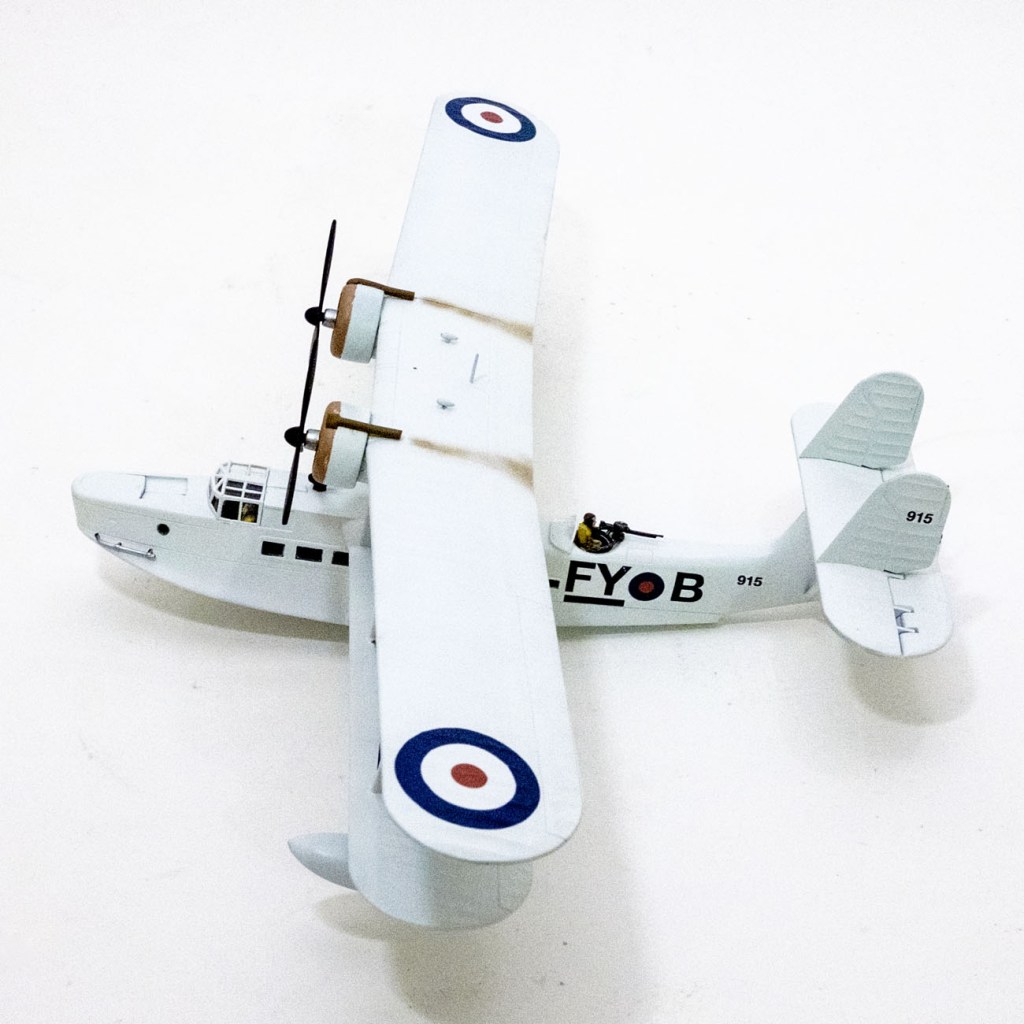
The other innovation is the decals – the kit ones were cactus but they at least gave the dimensions for a self-printed set. Nothing new there. I ran them through the inkjet and coated them with the last of a rattle can of acrylic clear. But the application was the innovation.
John Evans told me how to float decals on wet paper towelling but I didn’t grasp the entire thing when he mentioned it. I always dipped them then let them sit on the wet towel for another 30 seconds. In the case of these giant British roundels that seemed to set them curling at the edges. So I experimented with just laying the dry decal on the wet towelling and pulling it off in 20 seconds. They floated out onto the wings and went down better than any commercial ones I’ve tried. I could not be more pleased.
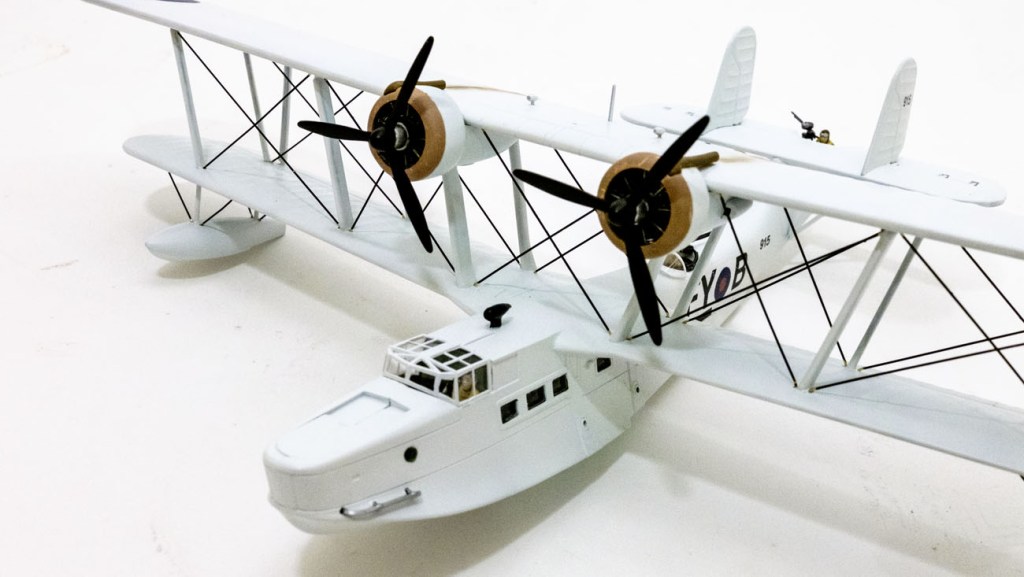
I also eschewed my normal method of bow pen painting for the canopy – this was a meticulous masking job, and I think it was worth it. The Matchbox framing was perfect.
I am going to save the Matchbox Handley Page Heyford bomber Paul gave me for next March and see if I can make as good a job of it. Perhaps I should dedicate each month to a different kit maker:
Academy April
Airfix August
Sword September
Novo November
FROG February
MPM May
 The Little World
Leave a comment