I cannot say that I look forward to masking all that much. But I recognise that it is an in-escapable part of aircraft painting in small scales. There are things you just cannot freehand with enough precision.
This is hilarious considering some of the pictures I’ve seen of ground crew respraying aircraft in wartime with nary a mask in sight. Just a roll-around air compressor, a Devilbiss spray gun, and a pot of paint. And stand upwind. I’ve seen a picture of a woman spraying Soviet stars on a DC -2 with newspaper as a mask for the shape – presumably not using IZVESTIA.
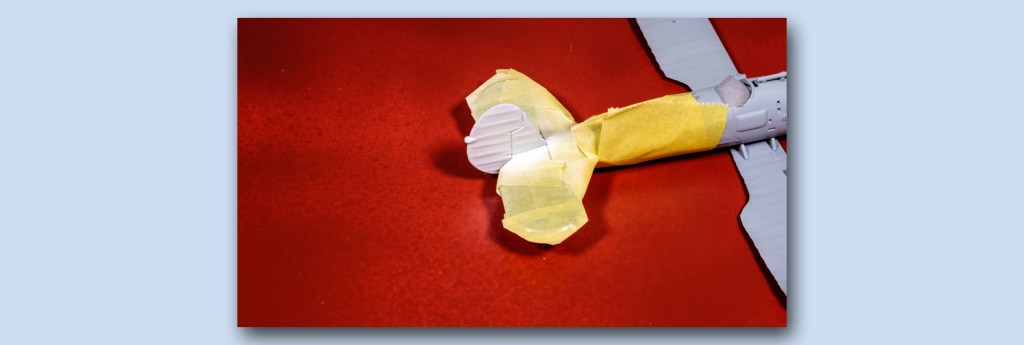
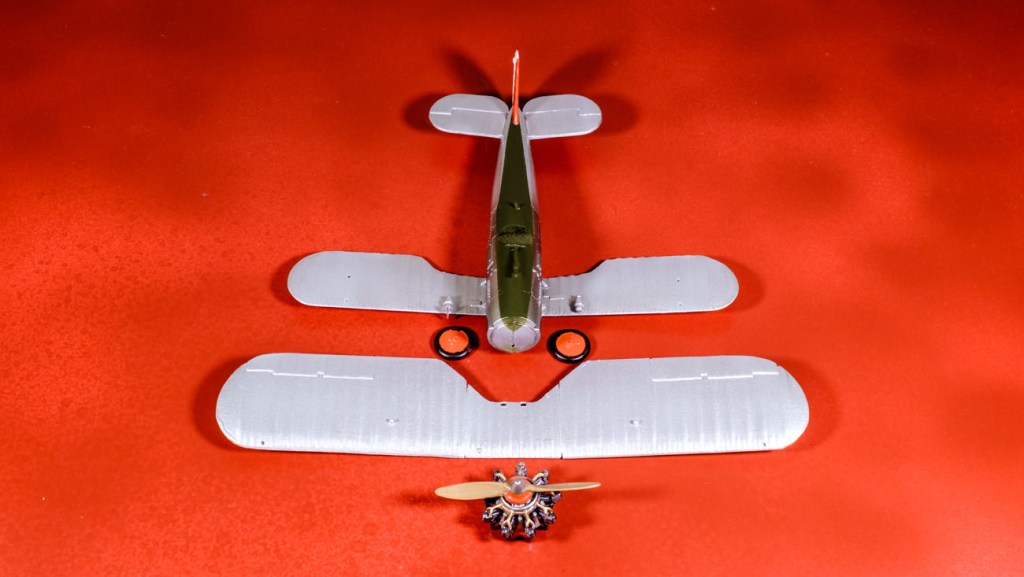
Well I needed to mask for the tail – two layers, for the two shades of silver, and the central green spine, but the thought of continually masking and unmasking was unappealing – so I resorted to the partial mask.
This is a line of tape or white-tac that clearly defines the margin you want to lay down, but then is only extended the minimal distance from this work area back to the other portions of the aircraft. Since taking a lesson from Phil Flory’s show and reducing my air pressure, pattern, and consistency of paint, I can go in very close and avoid most of the overspray that used to require heavy masking. I also resort to bagging large portions of the aircraft with plastic zip-locs and a seal of tape.
Note: Is the green dorsal patch on a British inter-war fighter there for anti-glare? Doesn’t seem that it camouflages anything.
 The Little World
Leave a comment