

The title of this column recognises that there is a certain stoutness of spirit required when you try to close up a fuselage, car body, or hull. The reality of what the plastic is going to do can be a lot different from the blandishments of the instruction sheet.
I’ve written before about what the moulders can do to amuse themselves at our expense – the warped fuselage, the disparate sizes, the sink marks and short shots….but in this case the Special Hobby people have succeeded in giving me a fuselage that closed with no gap and no steps. There were no registration pins. of course, but equally there was no need to sand the mating surfaces flat.
I’ve learned to do that after being saddled with warped ones. It sounds drastic but a little from each side on a flat sheet of sandpaper can make all the difference between what flopped out of a hot mould on Friday afternoon after lunch and what actually has to close.
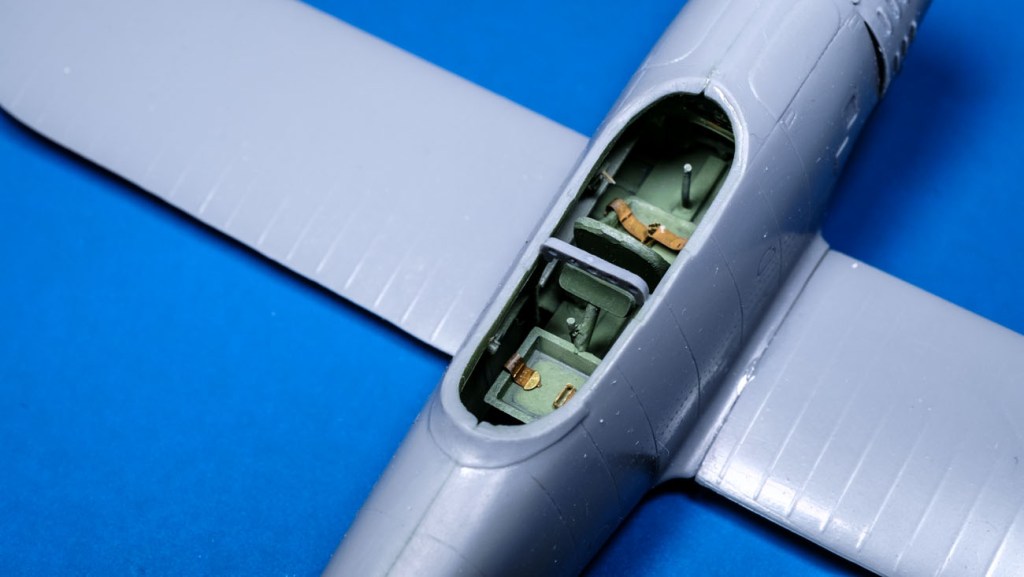
I’ve also learned to progressively cement these parts. Unlike wings and tail surfaces that I try to do on a plane jig, the fuselage needs to handled and turned all the time that the cement is working. There is still no one universal clamp that will mechanically duplicate the human fingers – but there is a vast opportunity for an ergonomic designer to make one. My bet is the best one is going to look like a rubber-jawed clothes peg but with a much wider gap in the jaws and a variable degree of grip that you can progressively increase once it is on the parts.
Would I pay for one, or for several? Shut up and take my money.
 The Little World
Leave a comment