
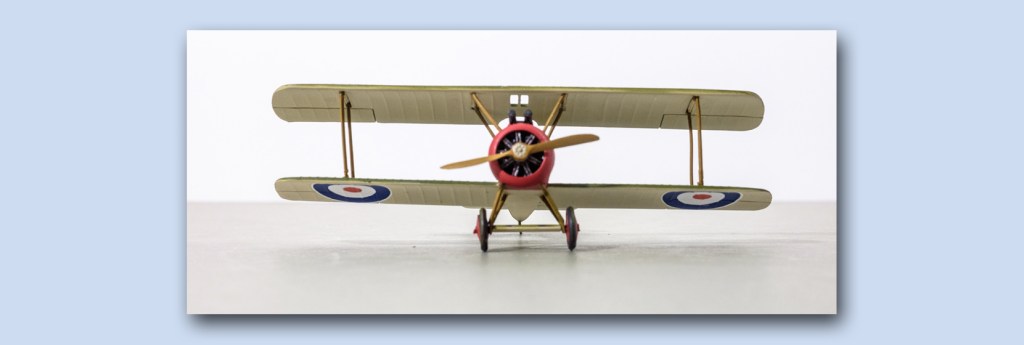
But a nice finish…Old vaudeville joke. Laugh now. Please.
The Revell kit was never going to be a show-winner, but then that was never going to be me anyway. And I am happy to say that it has turned out rather pleasingly.
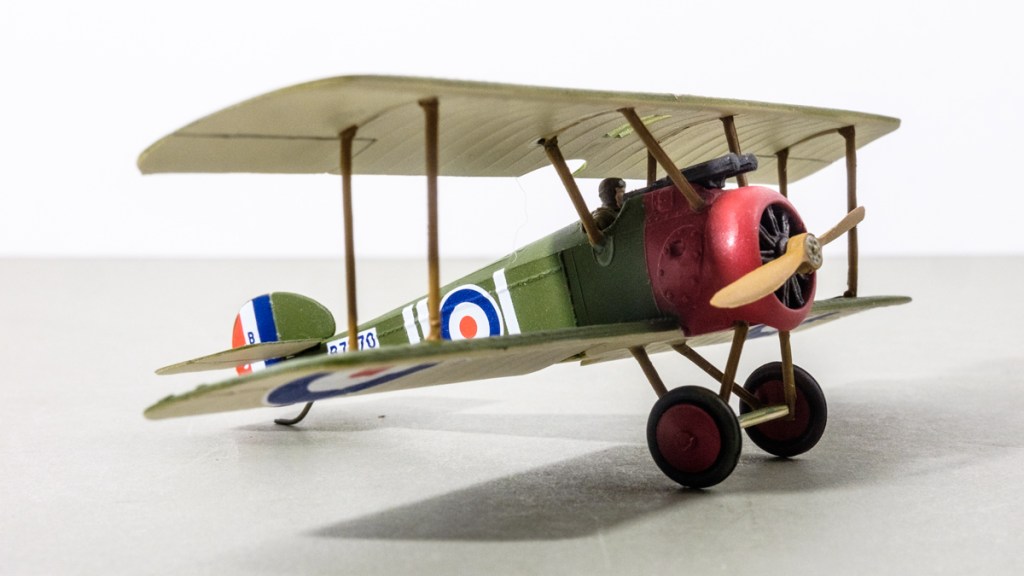
I’ve compared it to the Academy kit of a Camel built last year and I can tell they are both meant to be Sopwiths, but if you set them side-by-side you can see the ways in which the paths have varied. I cannot say which is more accurate, but as they bear different liveries, the question is largely academic. This becomes the 12th WW1 type I have built and I am becoming confident with the biplane.
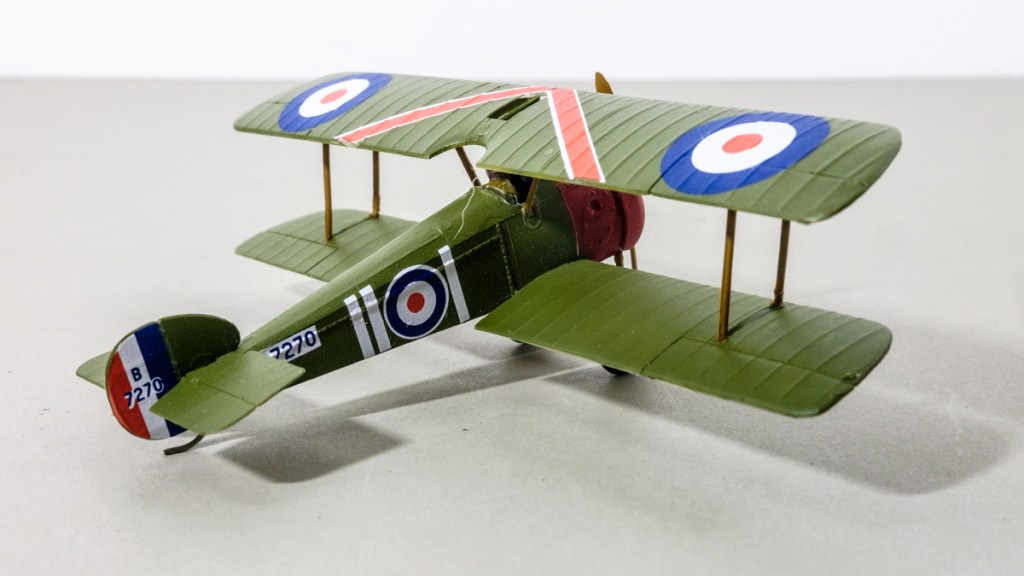
I’ve made a list of readily-available WW1 aircraft and so far there are 27 separate types in this small scale. Some of the kits are a little obscure, but many are in the local shops right now. When you look at them you are daunted by the spindly complexity, but a steady approach gets you though the worst of the wing assembly.

The nice thing about a lot of them is the multiplicity of the colours. Now that I can make my own decals I can make sheets of lozenge-pattern for the undersides and tops of German aircraft and the complex unit markings of the French. Note that these ancient decals performed flawlessly, raising my respect for the Revell printers. I’ve had Airfix and Matchbox sheets die in the packet, but Revell always seem to work.
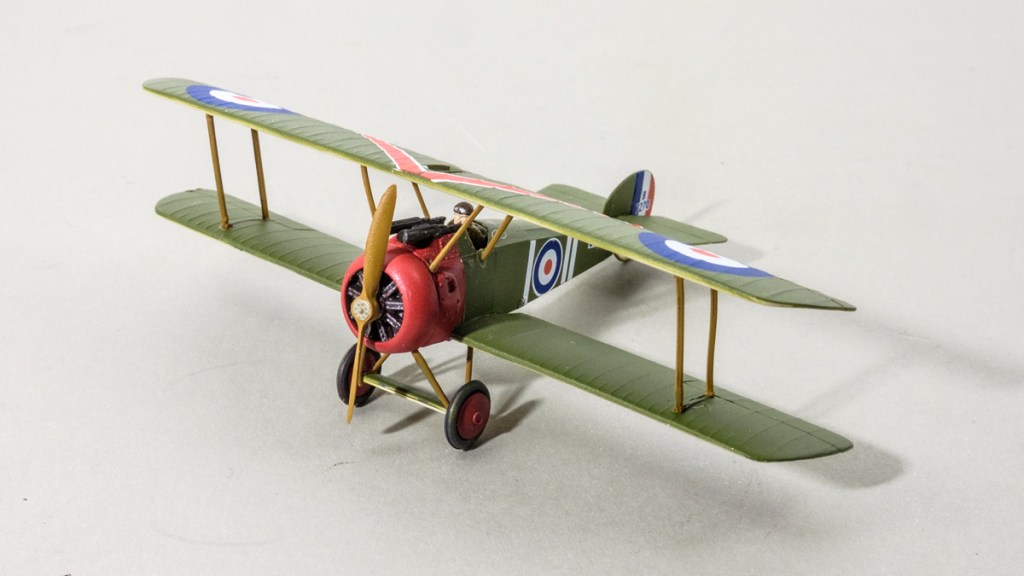
I shall have to start researching service hangars and WW1 flying fields to make some of the little library dioramas. No-one need expect expertise – that can be left to the Western Front modellers club. I shall just go for the Hollywood display.
And if I can find a 7-metre Empire State Building, and a large gorilla, I can build some Boeings…
 The Little World
Leave a comment