
Your forefinger bonded to the kitchen table, that’s what.
Senior modellers out there: Let us be honest with ourselves. Had cyanoacrylate glues – ” super-glues ” – been available when we were building models as children, we would spent our childhoods in the E.R. waiting room with things stuck to us.
We are older and wiser now, and rarely bond ourselves to the mat…but every year brings an experience…
The toughest part about cyanoacrylates is not getting loose – we can slosh a bucket of acetone onto the piano and eventually twist loose – but the business of choosing which one to buy. There are so many brands at so many prices – and in such diverse dispensers. Where is good modelling and value for money?
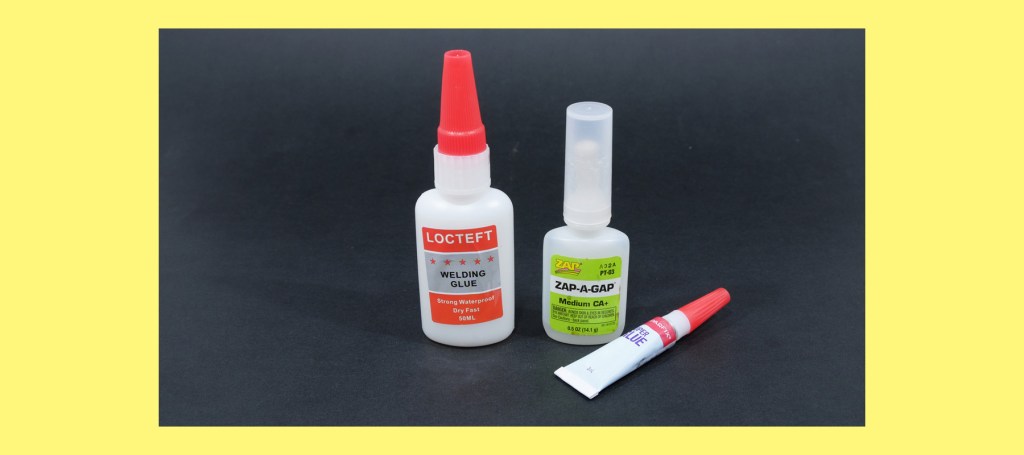
a. The adhesives shelf at the hobby shop. This will most likely yield a brand-name product that may come in various sizes, various viscosities, and various prices. There is likely to be a bottle of accelerant available that will speed the setting and possibly some sort of retarder.
Prices will be stiff, but the buyer may feel that extra volume means a lower cost per ml.
By and large the products will do what they say on the tin – the different speeds of setting will be useful for certain jobs and some of the products’ viscosity levels may well make assemblies much more durable.
b. The no-name eBay or Ali Baba purchase that comes in a larger bottle. The name may remind you of a well-known brand, as the maker intended, but hopefully will not create the same interest in the mind of the real brand’s lawyers…
However, the goo may be all right – and in some cases the price is so low as to make it a good buy. However, and we’ll cover that later…
c. The tiny squeeze tube found at the local newsagent or the DIY shop. This is a tin tube with a plastic spout and holds much less material than the other options.
Bought from a reputable shop like Bunnings and with a reputable brand name like Sellys or Parfix, it may well contain a quality cement in sufficient quantity to make it a good buy. There will only be one consistency, but you can get used to that. And this tube has the distinct advantage of…
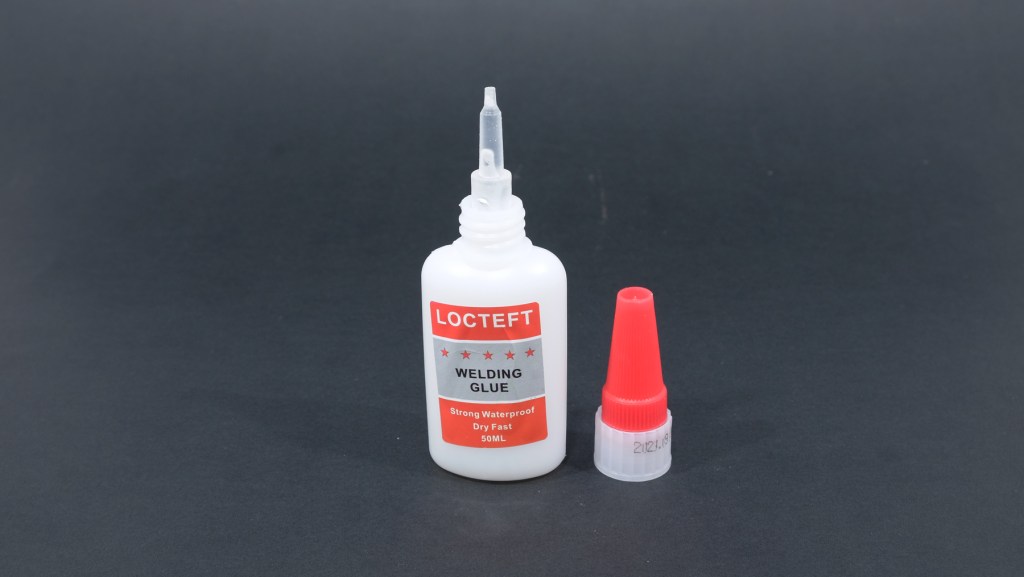
Of lasting long enough so that you get the last of bit out before it becomes too thick to use. In the worst-case scenario – that of the ” Locteft ” brand – a few days of hot weather may see the entire thing set in the 50 ml bottle. That’s set glue you see in the shape of the dispenser tube, and the body of the bottle is solid.
This may happen with the other varieties, but you may have only bought a small amount and therefore lose less. There are things you can do to increase the storage time:
- Purchase only as much as you’ll need in the next month or so.
- Cap it tightly between uses.
- Keep the tube dry.
- Keep the tube in a cool place. Refrigerators are good, but beware that cyanoacrylate vapours can wheezle their way out of anything and settle in the butter and cheese. Ask me how I know this…
- Buy a decent brand from a real shop, if you are going to buy it locally.
And do have a small bottle of acetone and some Q-tips available for the inevitable. You will lose a piece of furniture and a model at some stage of your career so reconcile your mind to it.
 The Little World
Leave a comment