
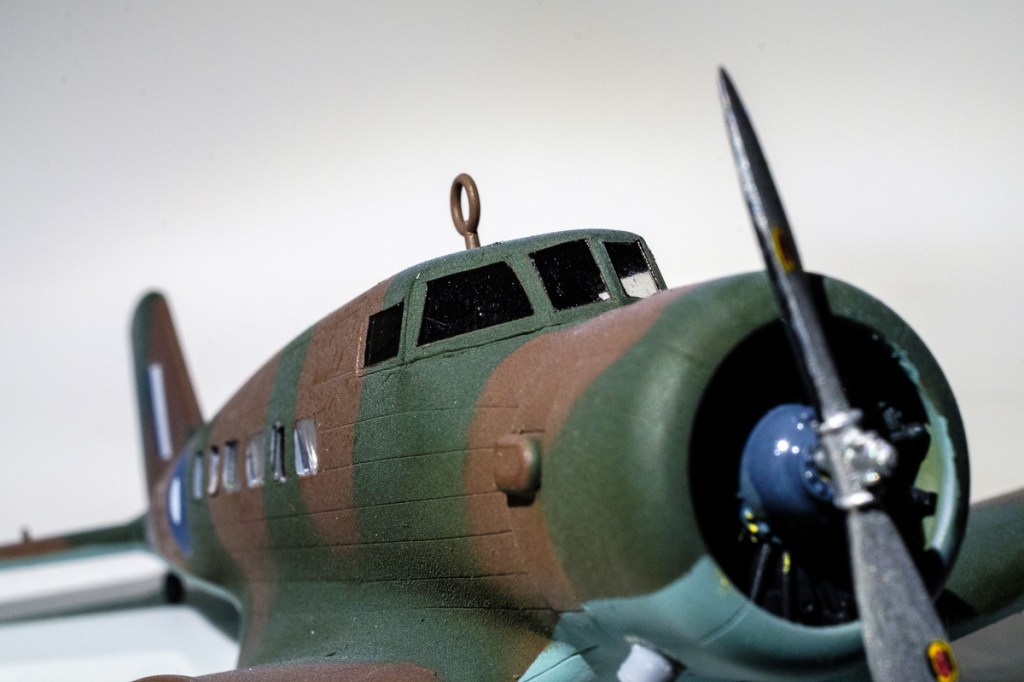
The windows of the songwriter’s world may be covered in raindrops but the windows of the Little World’s modelmakers generally exhibit glue, paint, and fingerprints. It did not use to bother me, but I’ve grown more childish as I have matured and I now find it an annoyance. The solution to the problem still seems to elude me.
I remember being careful as a child when gluing canopies on model aircraft and I was reasonably successful – but then the frame lines on the canopies were hand-painted by a 10-year-old and that shows the level of satisfaction that myopia can bring. Nowadays I try to mask the things off with thin tapes or rubber solution before I spray paint – it can be effective on one model and a disaster on another. We’re still not to a level of consistent skill.
The fastening of the things to the basic structure of the fuselage has now gone from Humbrol cement to Weldbond white PVA glue. As the PVA sets it becomes clear and any little inadvertencies tend to be invisible. I did try cyanoacrylate many years ago in the construction of a fishing boat bridge, but the glue let off a fine white mist that eventually fogged the windows anyway. I’m pleased that PVA has been suggested as it might be possible to soften it with water and re-set things should something go awry in the original gluing – can’t do that with solvent cements.
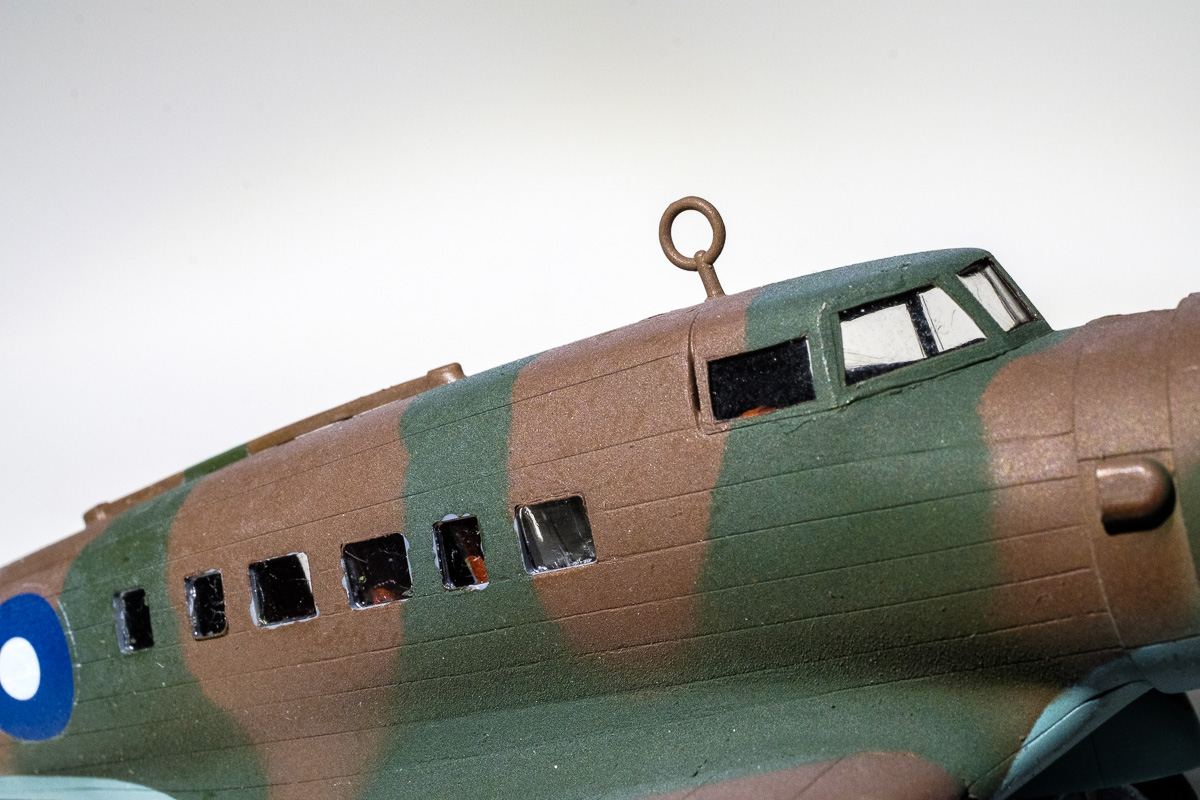
Todays’s effort on the cabin windows of the Northrop Delta 1D were almost successful precisely because of the PVA trick – anything else would have made a sloppier mess. I’ve learned to wipe over the visible surface of a window with water after the PVA is applied to get the bulk of it off. The other trick I picked up – and pick-up was precisely what was needed – was to put a tiny blob of Blutack or Uhu yellow tack on the end of a matchstick. The window then has a handle to steer it into place and when it’s in, you just twist sideways to disengage the stick. Beats mini tweezers.
I’ve been advised to use floor polish to brighten the canopies on aircraft. This may be a good idea, but I’m not sure how it will affect the attempts at masking those frame lines. I dread the day when I get proud and incautious and try to razor-saw a canopy apart to show it open…
Note that the commercial rubber solution is effective, but tends to be stinky and difficult to paint on in the Hot Australian shed – it dries before you get a chance to spread it out properly. There is also a caveat on the bottle that it must be peeled off within three days – and sometimes the modelling schedule goes much longer than this. So I have welcomed the advent of the PVA idea.
Today I also found a bottle of Micro mask in the local shop – it’s listed as water-soluble, and that seems to make it slower drying in use. I’ve masked up a spare clear turret with it and will spray to try the effect. The bottle says it can also be cut to size – presumably if you have a bit of trouble keeping to the edges of the windows you can knife it off prior to the spray job. Anything that will make the masking of compound curves better will be appreciated.
 The Little World
Leave a comment