

Note: This is the second time this post has appeared in The Little World – I miscued it yesterday. If you are confused, join the club… Let’s hope the cunning plan works, Baldrick.
Well, the Special Hobby 1:72 Anson is progressing, but the journey has been one of some rather unpleasant discoveries:
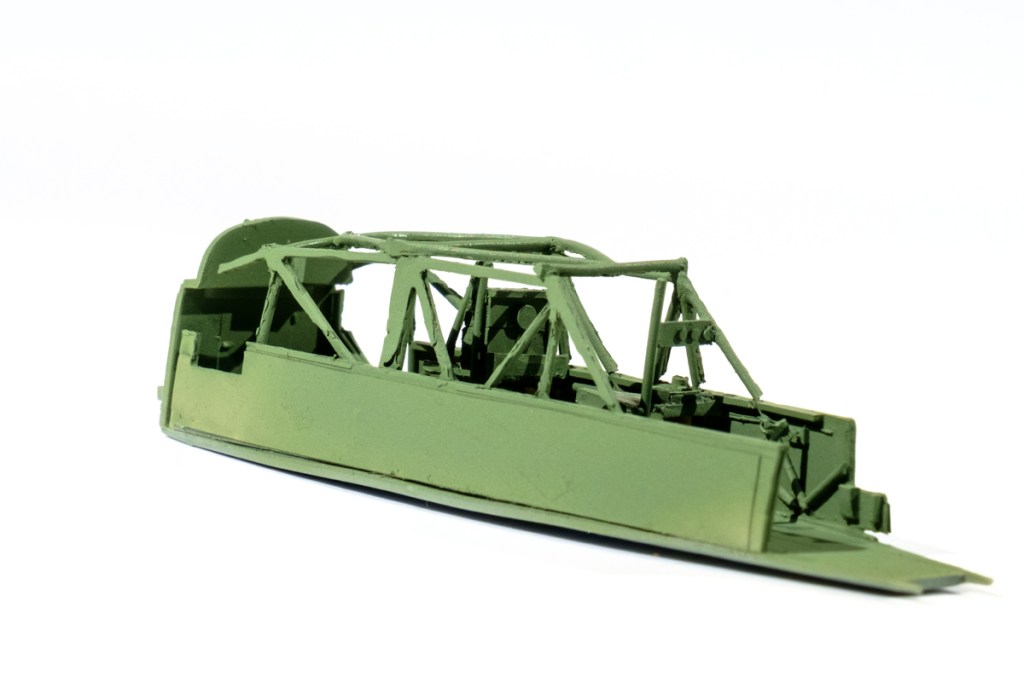
a. The interior of an Anson is highly visible, and terribly complex. It’s the result of making a tube airframe and then covering it with fabric – a historic construction method. The crews of the real things must have felt quite exposed with all the glazing around them.
The method of construction chosen by Special Hobby was to make an internal ” tub ” of this complex structure and drop it into the midsection of the model – then cover it with clear plastic sections that can be masked and painted.
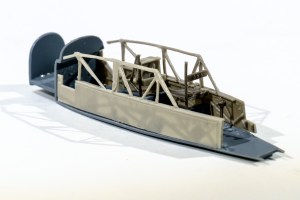
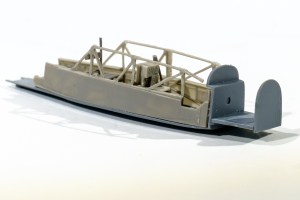 The material that they chose is a combination of an injection moulded base and polyurethane sides plus a myriad of resin details to be glued on. I can understand the resin seats working as they are small dumpy objects but the complex sides seem to have been an invitation to disaster. That’s want I got after a day of cutting , sanding, and fitting with cyanoacrylate glue. You see the designers expected that the two sides of the tub would bend around in unison and end up straight, but they didn’t.
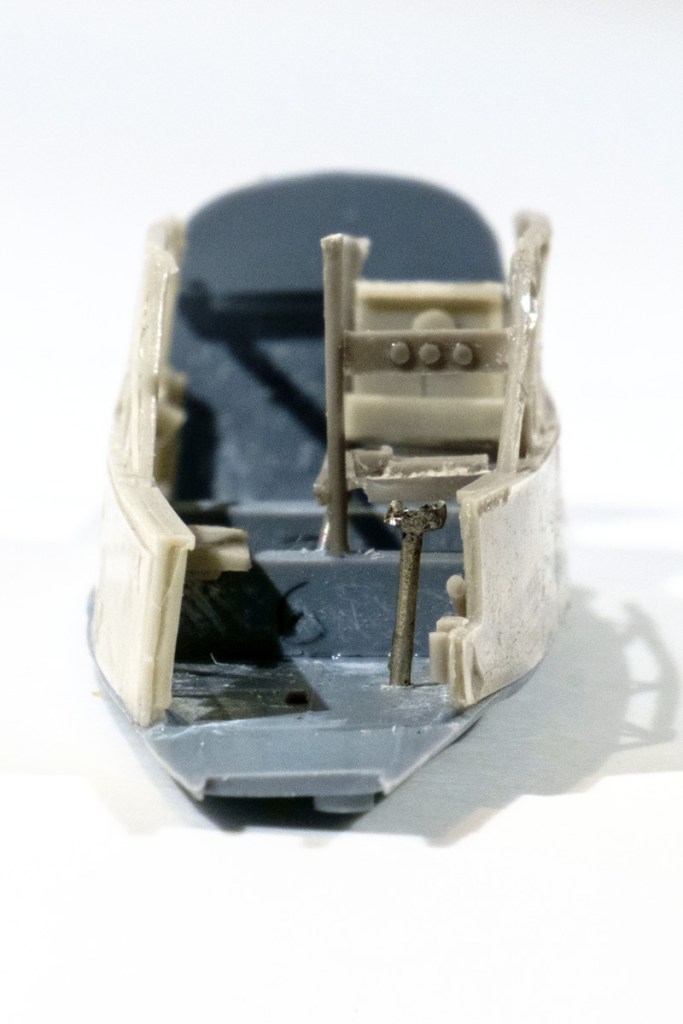
Warping is what these materials do. It prevented the fuselage sides from meeting and nearly put an end to the project before it got started. I was wise enough to set it aside and go to bed, hoping that a solution would present itself in the morning.
It did. I sawed off the top supports, then half-sawed the side pillars on the port side and gingerly bent them inwards. I sectioned the top struts of the cage and glued it all back into place. A coat of green paint hides some of the ghastly mess of those pillars, and with the Canadian Anson version that I have chosen, a lot of the greenhouse is painted out.
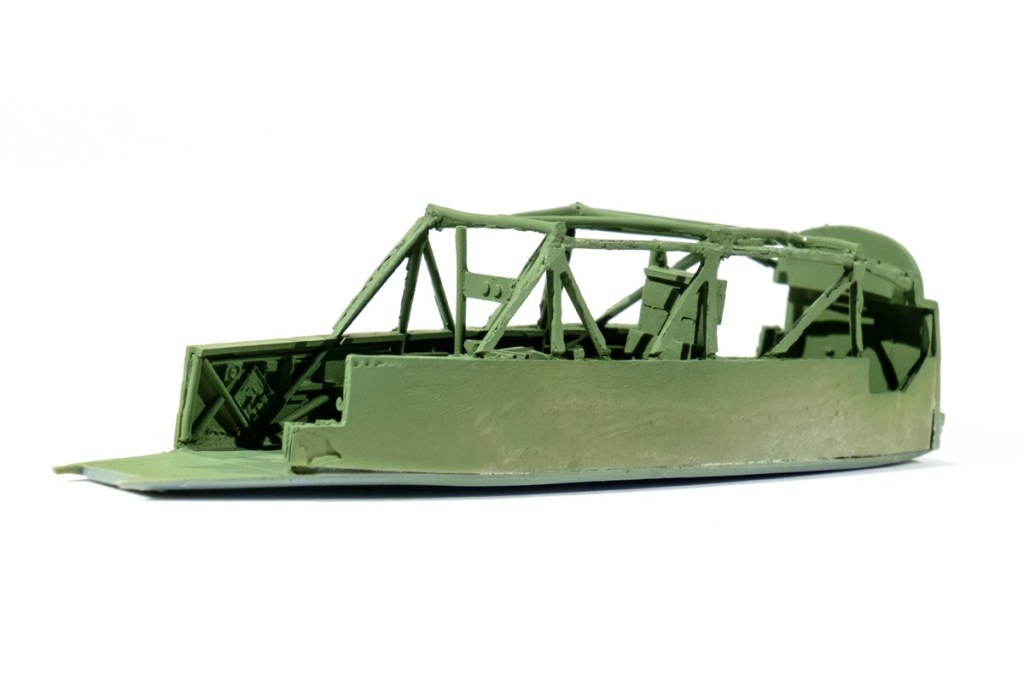
b. With as much of the aircraft exposed, the basic fuselage panels are weakened in several areas. This led to fractures and subsequent re-gluing. There are 5 component parts to that fuselage and unfortunately they are not in the sort of alignment that I am proud of. A lot of filling and sanding and a lot of the fine detail of the fabric structure is going to be lost in the finishing.
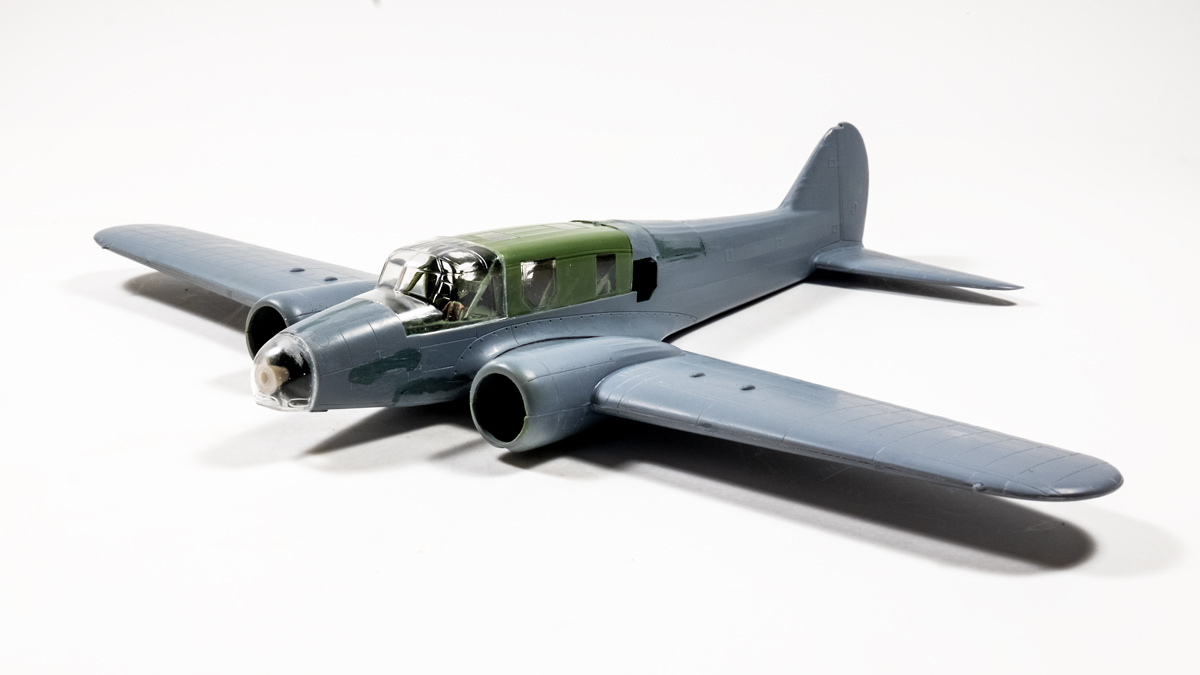
The basic shape is there, but the model will end up looking cruder than, say, the old Airfix equivalent or the Corgi or Oxford die-cast version. I’m still not entirely discouraged from completing it because I have seen a wartime photograph of a Hudson in Edmonton that may provide a solution if the final result looks too bad.
Sobered by my experience with these resin parts, I peeped into the Lockheed Lodestar in my stash to see if it was going to be as bad – fortunately there are only two resin parts and they seem small beans. I noted several large resin kits at one of the Perth hobby shops but their price made me sheer off. I’m glad of this now – I’ll stick as much as I can to injection moulded products.
Once I have filled all I can reasonably hope for, I’ll mask the windows and shoot some primer to see how bad the thing looks.
Note: The engines went together from a crankcase and 7 resin cylinders each and that was also unnecessary complexity, as they hide deep in the nacelles. A simple front face of the engines in injection moulding would have been more than adequate.
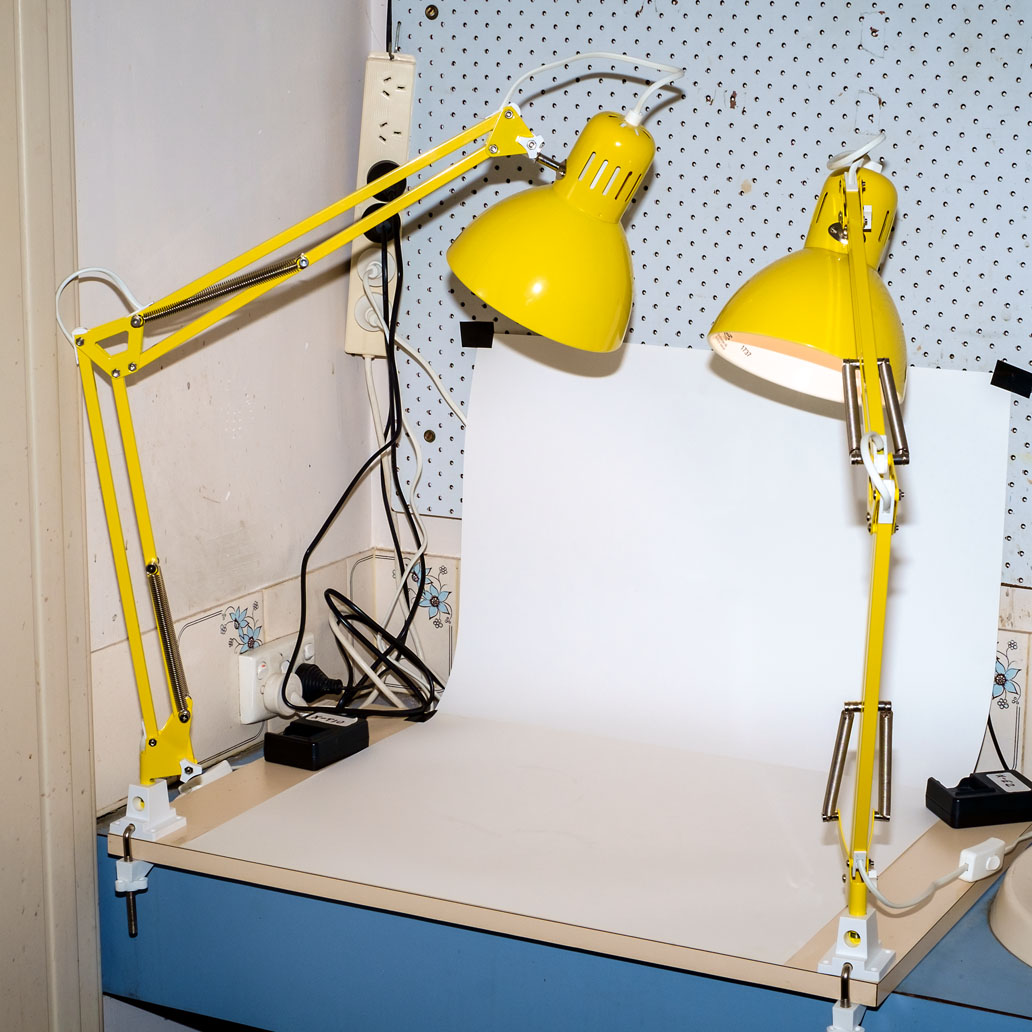
On a positive side, I made up a model photography set here at home out of bargain IKEA lamps and an old kitchen cupboard door and I can get clear illustration very quickly.
 The Little World
Leave a comment