
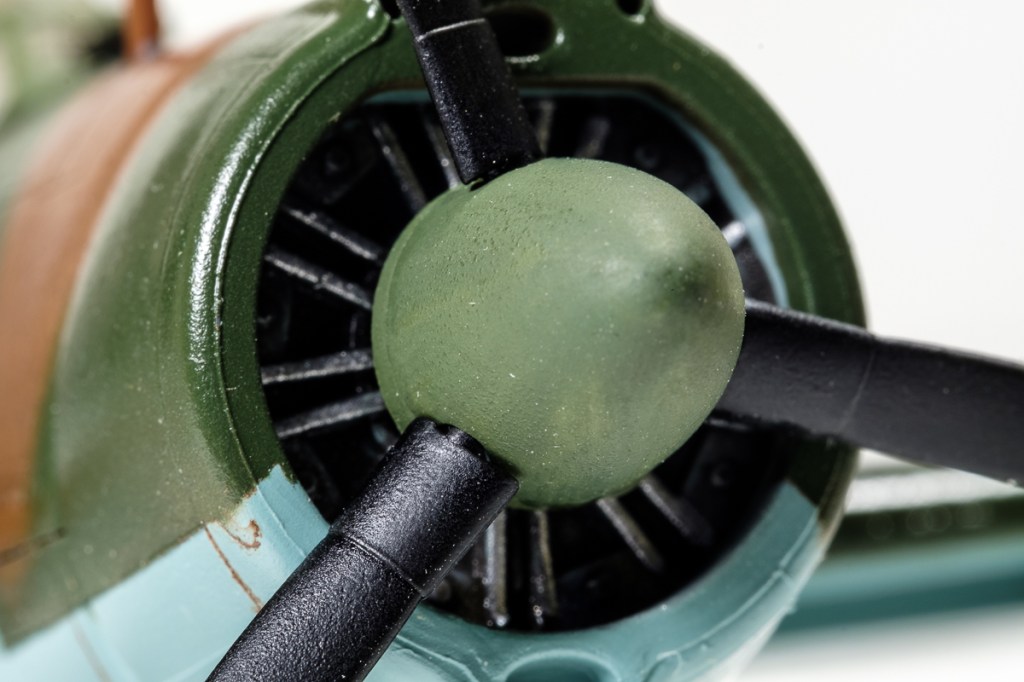
Nor need it be pricey.*
I came to that conclusion each time I approached the Hobby Boss Brewster Buffalo kit – even at the wash and trim stage – where I got the mould-parting agent off the basic sprues and then air-dried them. And then started cutting parts from them and building subassembies.
This was the point where you discovered whether the mould-makers knew their craft. If they were good metal workers the end result was good plastic – if they were not the buyer and builder would pay an awful price later.
I got a opportunity to see truly professional mould making in action at the Lehmann factory in Nürnberg in 1995. I was visiting the factory at the invitation of Mr. Richter, the owner, and was given a delightful tour of the premises while the workers were in full activity. It was something to see, and as they were making 1:22.5 scale model trains and you got a good view of most things. At the heart of it was the mould-making shop.
This was a metal engineering firm within the business that had turned out all the moulds for the classic LGB train sets since the 1960’s They had made so many of their signature locomotive – the Stainz narrow-guage steamer – that the original mould was wearing out. The factory manager who accompanied me spoke as if the metal of the thing was rounding off and sloughing away, though that is hard to imagine when the material it was moulding was plastic.
Nevertheless, a team was engaged in re-making the Stainz loco, and the two machinists I saw had a block of metal clamped in a jig and were painstakingly milling off the edge of a roof line – at about 1/10 of a millimetre at each pass. I remember that after each run of the cutter they shut it down and carefully brushed all swarf and cuttings off the block before starting up again. There was nothing computer-controlled about it – Just two serious Germans in lab coats and goggles.
The end result of their efforts is probably moulding Stainz locos right now, though the factory may have been moved to Hungary or China for business purposes. And I’ll be willing to bet it will be making perfect parts.
It’s that perfection – the ability of the mould halves to close in perfect registration and without any gaps – that makes the difference between a model that is a pleasure to build and one that is a painful chore. I have built the latter – some of the cheaper models of the 1970’s come to mind, as well as some of the cheap Chinese toys. I yearned for the former…and it looks as though the Hobby Boss Bewster was one.

Hardly any flash. About four licks with a blade edge cleaned the thing up entirely. No need to cut every surface free from the basic dirt it was grown in. No pushing the edge of the Xcel knife into my thumb. And where the makers had moulded in sockets and posts for assembly – the two parts fitted exactly.
If this is computer work, I say bring it on. If it is human skill, then Hobby Boss should make sure that their workers are well-paid and happy. They deserve the reward for their efforts.
* $ 15 spent on this kit was the bargain of the year…
 The Little World
Leave a comment