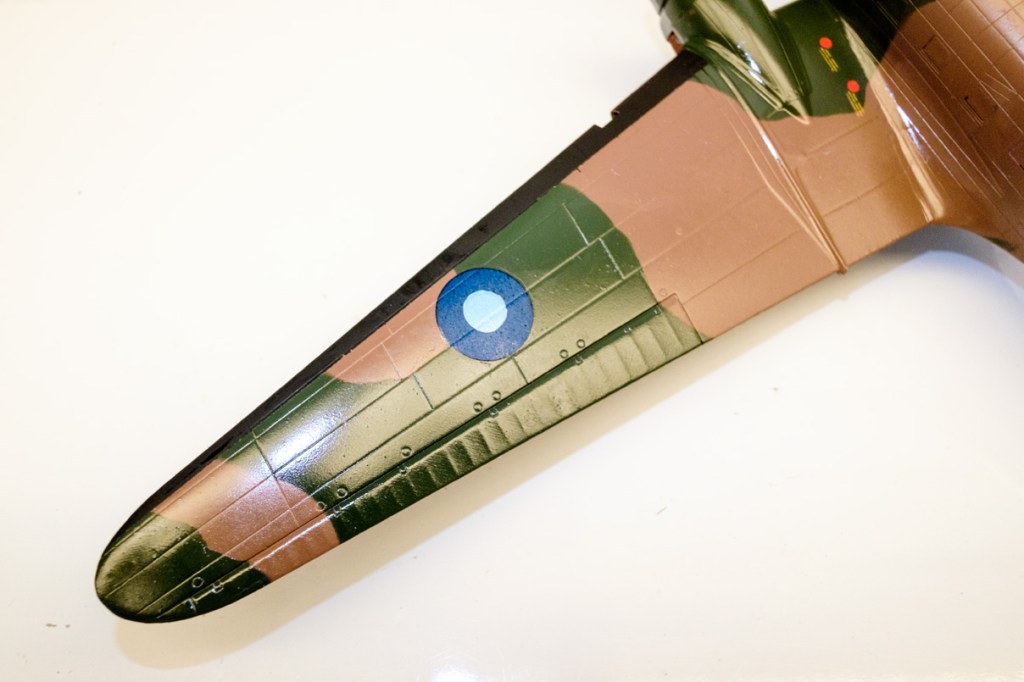
There are many reasons for camouflage paint schemes on aircraft:
a. A disrupted earthen top pattern prevents the enemy from seeing the plane from above while it is parked on the ground.
b. A solid blue or white top pattern can also prevent the enemy from seeing it from above when it flies over water or snow.
c. A solid bottom colour prevents it from being seen when it is outlined against the sky. Light or dark, depending upon night or day.
d. Someone in the Air Ministry thought it was a good idea.
e. Someone in the Air Ministry has shares in a paint company.
f. There was all this paint sitting around and the fitters had nothing to do.
These are all good reasons in wartime. Once the shooting has ceased and the aircraft are back on the home station the reasons change:
a. We had all this paint sitting around and the fitters had nothing to do. But this time they had nothing to do on National Service instead of Hostilities Only. Same paint.
b. The poor old aircraft are looking sad and need cheering up.
c. The aircraft are destined for a museum and need to look good to attract the tourists.
And this means that a whole new set of values come into play. No longer is it a case of hiding – quite the opposite. The display needs to be as spiffy as possible to get the entry fees for the museums and air shows. And that means that the old reliance upon matte paint in grungy colours is suspended. The colours may be grungy but the surface is more likely to be gloss and polished.
On this basis, and in the spirit of experimentation, I decided to finish X in gloss. The paints themselves were a mixture of matte and satin, but there are two separate applications of Humbrol gloss to the plane. It would never do for service, but it is very like the finish on some of the other C-47/DC3 transport planes used by the RCAF .
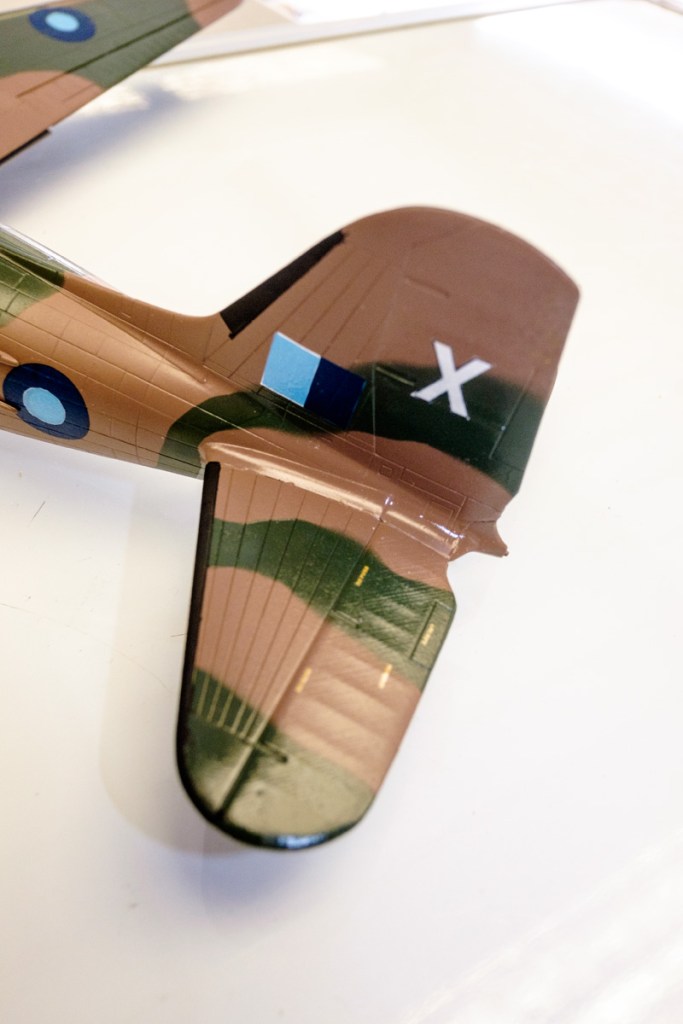
The specific scheme is related to Burma service – the roundels having the light blue centre and the fin flash being two-tone blue. No red visible anywhere save the propeller stripe..The green is closer to the Australian jungle green than to olive drab. The only thing missing is the white ” Canucks Unlimited ” logo on the side. This decal was apparently available with a magazine purchase in Canada some ten years ago, but I doubt we would ever see it in Australia. Fortunately, I have colour photos of X parked on the tarmac with no logo.
Is it clean. Yes it is. Is it too clean? Well at present that’s the way the museum likes it, but there are enough YouTube videos on weathering aircraft with dots of oil paint…if I have nothing to do it will make a nice learning exercise.
One good thing about the DC-3/C-47…the driver’s windows are commendably small and plain and the side windows are easy to mask.
This was the first…and will be the last…time that I follow the Silly Putty snake and blobs of masking route for British camouflage. It worked, sort of, but not conveniently, and I had no reassurance whilst I was doing it that it would not be a mess. I will use hard masking tape or freehand in the future.
 The Little World
Leave a comment