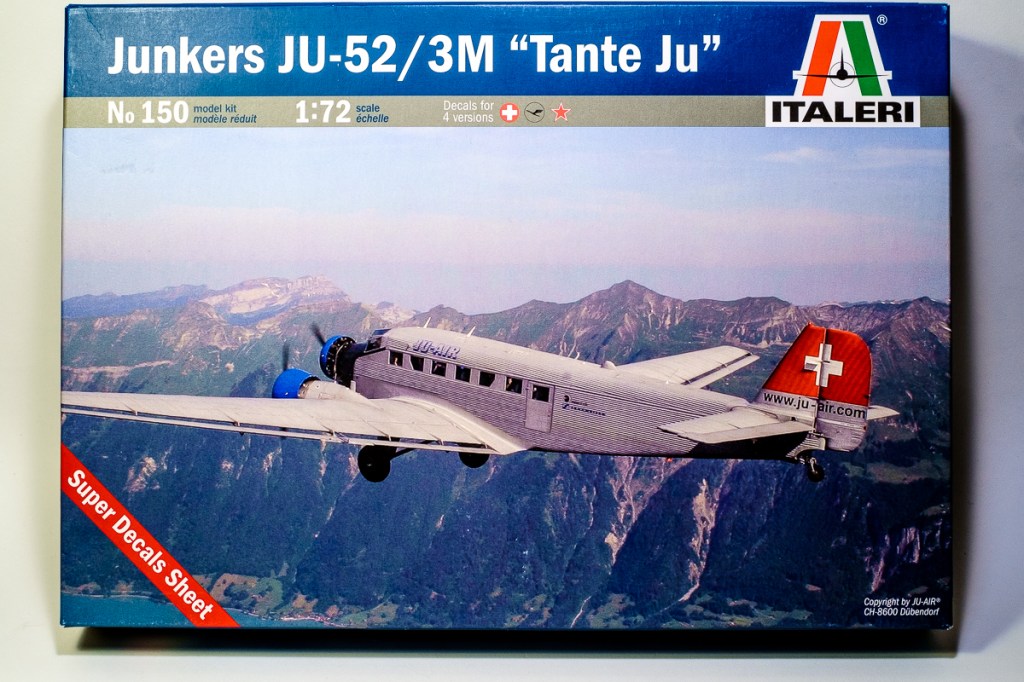
Not all my model aircraft builds are warplanes – though the economics of the model industry mean that they make up the bulk of offerings on the shelves. And even if they are military aircraft, not all of them have to be fighters or bombers…as evinced by the Douglas Dakota with RCAF markings. So there was an immediate pull when I saw the Italeri Junkers 52 on the shelf at Hobbytech. It ticked all the boxes – price/engine ratio, all injection construction, and a very reputable maker. The Dakota was Italeri and I was absolutely delighted with it, so what was not to like about this one.
Well, I was going to have to get round the fact that it was a German airplane from the 31-45 period – and as delightful as it may have been, I needed a livery somewhat different from that worn at the time.
Italeri recognise the fact that they have a plane that had a prominent swastika on the tail for both the pre-war and wartime situation – and that this will be a legal problem for sales into Europe. They have solved the problem for themselves by simply leaving it off the large red and white marking on the rudder. Once the kit leaves their factory people can decal or paint whatever they can get away with in the large white circle. All the rest of the scheme is authentic.
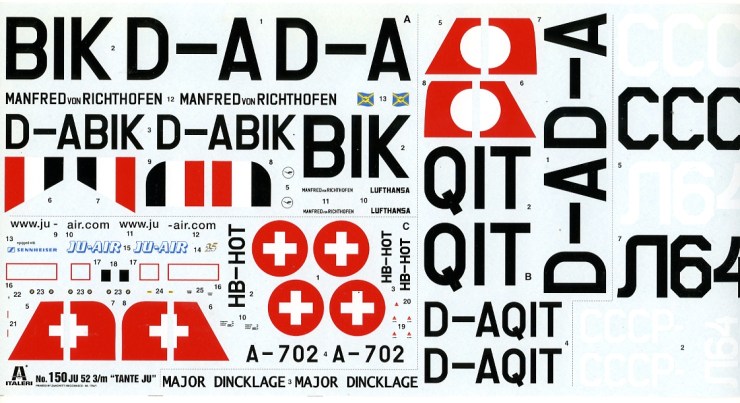
They also let the modeller make an example that was used by the Soviets in Tashkent after the war, or a modern Ju52 that is run by a Swiss firm for joy flights. That’s a sensible approach to the problem, and spurred me to buy it – and to find my own answer.
My answer was provided – as so many of these things are – by the internet and by a Russian site that put up colour profiles. They show a Ju52 that was used by the South African Air Force in the early 1940’s in the Libyan desert. There is the characteristic British desert pattern camouflage with earth and mid stone on the upperworks and either med blue or azure on the underside. Those of you who build British aircraft of the time know the degree of debate that can be engendered by these two colours…but I liked the look of the thing.
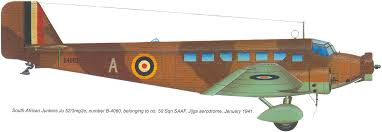
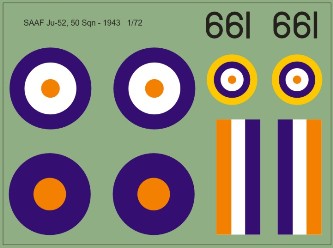
I also liked the fact that the SAAF had their own twist on the British roundel and fin flash – they substituted orange for the deep red of the RAF. From an initial suspicion of this, I went to certainty after a chap in Hobbytech found an internet offer for decals for just this build – and they were orange in the centre. I made my own on my printer, but I was glad of that confirmation.
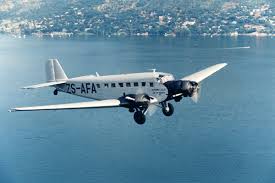
The other real attraction of this build was the fact that there is a South African example of the type – admittedly in bare metal as a civil airliner – still in a museum, and they may fly it occasionally as well.
 The Little World
Leave a comment