Having done some research into masking and finishing this year – some of it reminiscent of Wile E. Coyote and the Acme Manufacturing Co. – I have come to practical solutions for impractical problems.
Impractical problems are those that no-one else has, that need not exist, and that leap out from behind the door and savage you when you walk by. Those of you who have children or cats know precisely what I mean. It is the same with scale model building. You go along fat, dumb, and happy and in a split second are converted to sore, sad, and searching for missing parts on the floor.
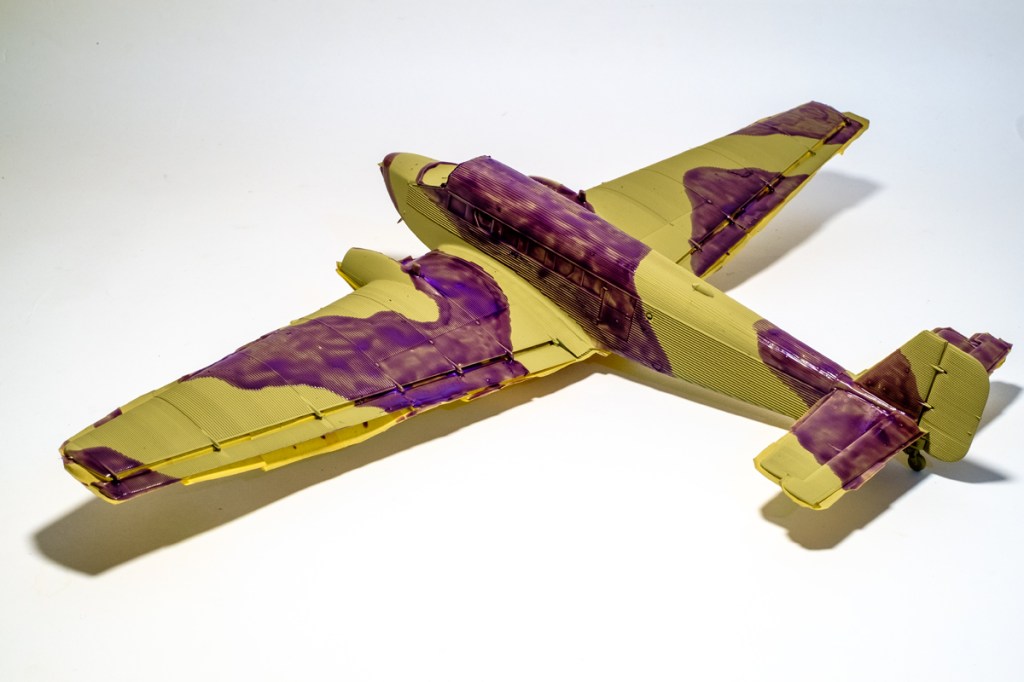
In my case I have decided to eschew the complex systems of masking. The putty snakes, the paper masks, the puff pastry mats ( Didn’t know about that one, did you…?). And for the Junkers 52 of the SAAF I just grabbed some masking tape, Q-Tips, and a new bottle of Humbrol Maskol. If I want soft edges I can always add them with the airbrush and the .2 nozzle.
The azure/med blue of the underside is a compromise based upon a new computer asset I have found – an RAF WW2 Digital Colour Chart that quotes and delivers exact RGB numbers to allow reproduction of the standard service colours. Fresh colours, I hasten to add – not weathered. My museum is painting things up fresh so these are what I want to see – later on I may dirty up the builds. This chart is great – here’s a standard RAF roundel to their recipe:
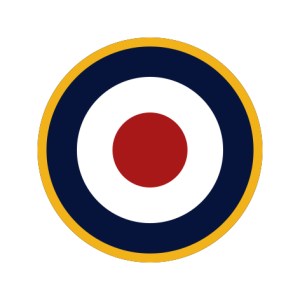
I will use it more and more when I print up my own decals on the inkjet. I do not have the energy to colour-fight with other modellers and will accept this to be as much authority as I need.
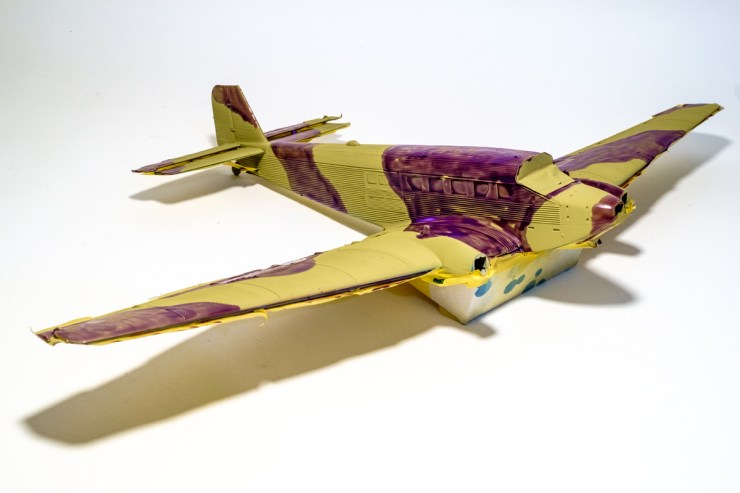
The Q-Tips are magic when it comes to British A/B patterns. You can be as fussy or as freehand as you like and they always seem to deliver. And the cost of the materials is far less than commercial masks would be.
This mask-up also pointed out a failing of standard commercial modellers masking tape – it has no chance of really sticking to a corrugated or otherwise closely patterned surface. I was horrified at the second stage of painting to discover the tape that was protecting the blue underside had peeled away from the leading and trailing edges of the wings. So I just dribbled Maskol into the gaps and it did the trick beautifully.
The protective covering for the landing gear is the edge of a box cut away. You get hellishly inventive when you are confronted with complex shapes. Any shortcut is a good thing.
 The Little World
Leave a comment