
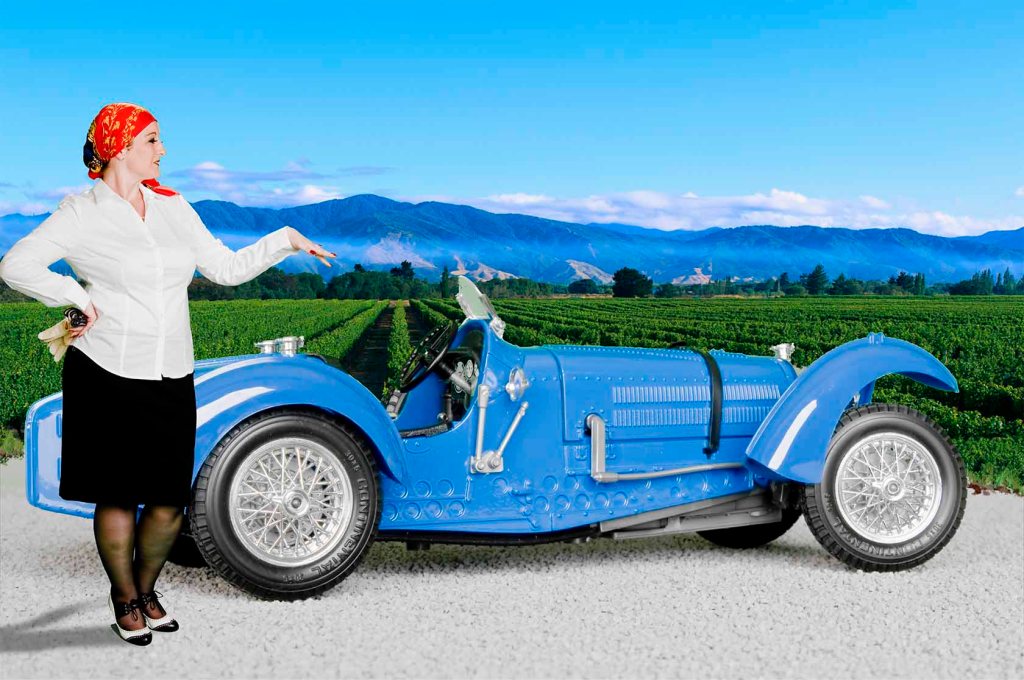
I never make misteakes.
Now that you’ve recovered yourself, I can tell you that I was just teasing. I deliberately misspelled ” nevur ” in that first sentence for comic effect. I expect people will start to laugh any week now.
Botching up things is a fact of life for a lot of us. We cook badly, drive badly, and make love in such a way that the neighbours complain. The fact that this happens 53 weeks a year would be discouraging if it were not for the fact that the neighbours are no better. We can feel either sympathetic or superior.
Botching up modelling projects in the Little Workshop is no different from doing the Kama Sutra on roller skates down an escalator. But the fact that we really care about the scale modelling makes the failures more of a bitter experience. We might be prepared to suffer cuts and bruises dry-eyed, but bad paint jobs bring us to tears.
a. Don’t ignore your mistakes. That would be just self-delusion. But don’t beat yourself up over them, either. Scale models are just representations of reality – not reality itself. If you make yourself ill over small things, you reduce your overall resilience to larger things.
One modeller on a YouTube channel cautioned us to not overlook some obvious flaw at an early stage and imagine that it would go away by itself – he said we would always focus upon it ourselves, even if it was not obvious to others. I think he’s hit the nail on the head. If you see a flaw that can be rectified in a reasonable manner, do so.
b. Don’t try every new and fashionable procedure just because it has gotten into the magazines or onto the net. If something seems like an advance, try it. If it looks to be just a pain, avoid it.
c. Don’t continue to use troublesome techniques or materials if they cannot be made to serve your basic aims. You need not bat your head against a brick wall, even if it is only a scale one. By all means try something more than once, but if it is never really what you want or need, have the good sense to relinquish it. There are more ways up the mountain.
d. Do not obsess over unseen details. Even if the manufacturer has made a scale model kitchen on board your airliner with resin eggs and photoetched bacon, if you cannot see it inside the fuselage, time and angst spent on getting the bacon really crispy will be time subtracted from your happy life. If no-one sees it, you need not make it.
e. Fantasy is good, but in small doses. Sometimes you need to supply a fantastic answer to a modelling question – a colour, an outfit, a unit, a history, etc. Do so if you need to fill out a shell of an idea, but be aware that most fantasies fall apart early in the piece – and rarely show their maker in a good light.
f. FInally, no paint colour is 100% accurate. Resist the blandishments of the paint makers to switch over to their system because they have supplied some colours with famous names. Likewise do not place too much emphasis on US FS colours or Air Ministry colours or any other chromatic memory. Pay little attention to the colours that you see in a museum; they have either faded, darkened, or metamorphosed in the past decades and can barely represent themselves now, let alone 70 years ago. The Mona Lisa is changing colour right now, and so are you.
 The Little World
Leave a comment