
The first clear coat on the paint mule chips was meant to duplicate the sealer that one puts on after the paint job is completed to allow decals to be applied without silvering. The US and UK modellers speak of using Future or Kleer acrylic floor polish for this.
I tried three of the new ideas:
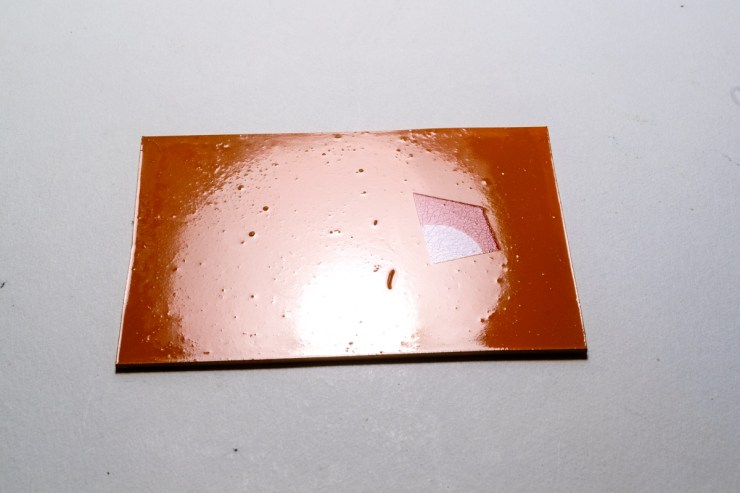
a. Cabot acrylic floor polish. Straight from the jug, it sprays like water and can be run to a wet coat easily – too easily if you are close or have put on too much air pressure. You need to give it a mist, wait a little for a set-up and then do the wet coat.
It covers matte Mr. Hobby and gloss Tamiya easily, but tends to bead up when it hits Mr. Colour glossy lacquer. I noted this quickly and wiped the chip dry again. Then when I tried re-spraying, it went on very easily. I think if you are spraying over lacquer that a wipe with a slightly dampened rag would break the surface tension enough to help.
The chips were set aside in the drying cabinet set at half power, and set up well in an hour. But a curious defect was noted with the matte Mr. Hobby and gloss Tamiya – the floor polish contracted slightly and dried with tiny cracks at the edges of the panels. It was quite noticeable. The orange Mr Colour panel had none of this cracking.
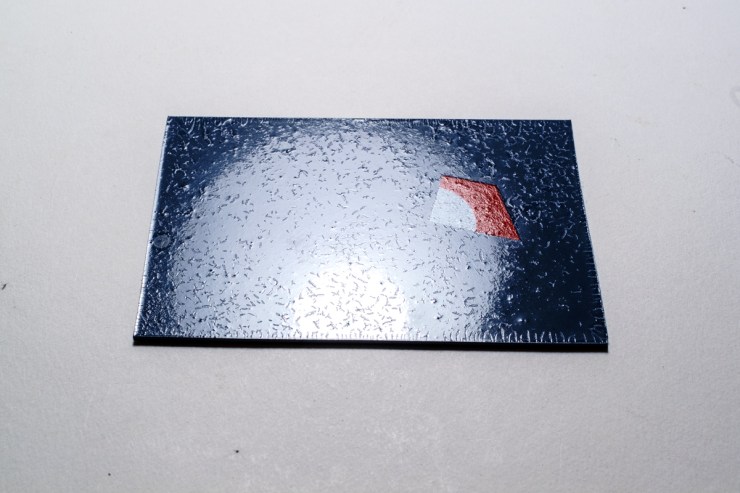
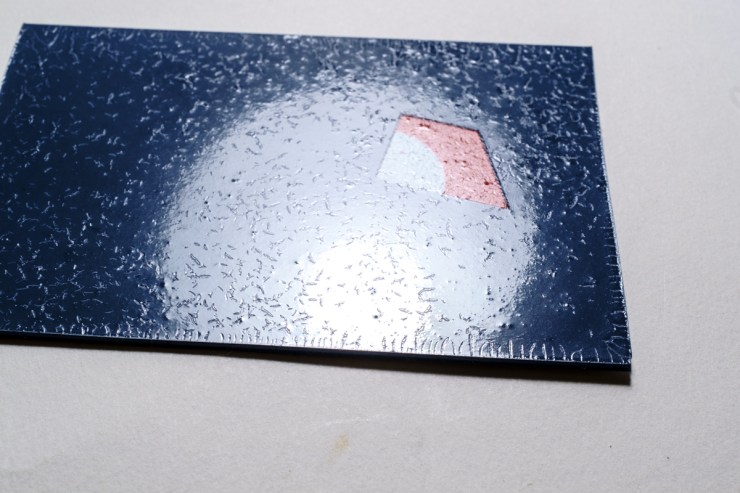
b. The Supercheap Acrylic Lacquer diluted 1:3 with the thinner. It did not spray at all well at the normal 20 psi, matting up and making white dust on the surface. Boosting the pressure to 30 psi pumped it out well enough to avoid dry spray, but was on the verge of runs and overcoating. I tried brush painting with it and, while it worked to some extent, it showed that the hot solvent actually started to soften and peel up the orange Mr Color lacquer.
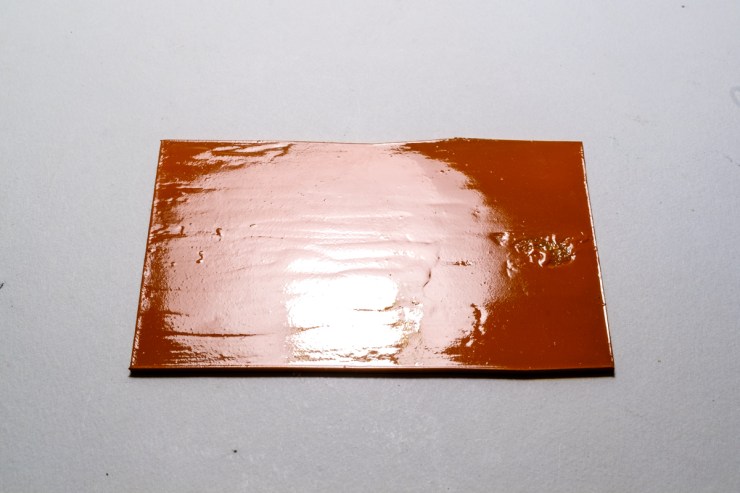
I suspect that this lacquer would need at least 27 psi and a regular gun with a 0.8 nozzle to come out well…and the overspray from this would be horrendous. Not, perhaps, a modeller’s material after all.
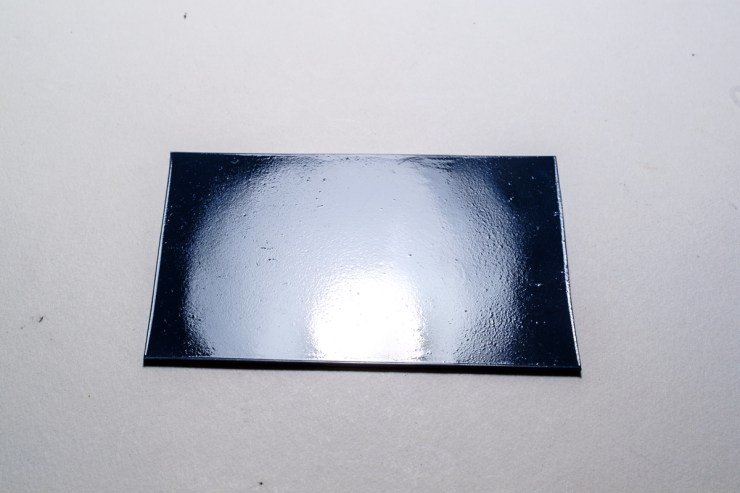

c. The Mr Hobby Super Clear UV-cut lacquer spray.
Not surprisingly, this covered very well for all three classes of paint. No dramas save the overspray.
After the coatings had set – and remember that these are all a case of curing as well as surface drying – a set of discard decals were applied to them. The regular method of decalling was followed – Microset on the surface, a water soak, then a settling into the Microset puddle and an eventual squeegeeing with paper towel to press the decal into place. None of the first sealers reacted badly and no silvering was evident.
One conclusion I can come to from this step is that the Supercheap material is intended for a different class of work and may not be the substitute for Mr Hobby or Tamiya that I hoped. It will not be wasted – eventually some home project will need it and I do have a 0.8 gun and a big compressor. The Supercheap lacquer thinner can be used for airbrush cleaning, saving the more expensive Mr. Hobby Levellling Thinner 400 for paint dilution.
The other conclusion – that the Cabot floor polish is no good either – is still up in the air. It may have been that the raised temperature of the drying cabinet accelerated the drying too much and caused the cracking. I will retest this with gloss and matte and a slow air drying sequence.
 The Little World
Leave a comment