
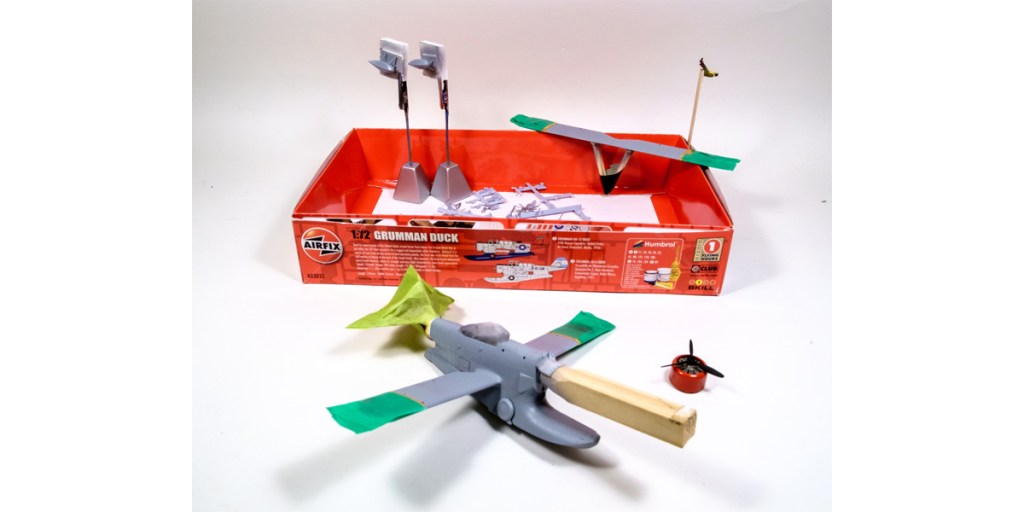
Like most seaplanes – the Rufe, the Spitfire on floats, the Seamew – the Grumman Duck looks vaguely like a practical joke the designers played on the factory that leaked out past the drafting table, and they were too embarrased to admit it was all in fun. Yet the planes worked and were very useful for scouting and rescue.
The Duck is going to be working inland in Canada on the chain of freshwater lakes that stretches from the Great Lakes up toward the Yukon – the area where bush pilots have been landing float planes for the last hundred years. It is an eminently suitable route for commerce – such as it might be – and governmental activity in an area of the continent that doesn’t yield readily to land transport.
The actual kit is reasonably decent – the rivets are what they are, and you need to be wary when you are sanding – you either sand round them in little strips or go the whole fussy hog and sand them off and scribe panel lines. I opted for the former course of action and it hasn’t worked out too badly.
I am none too sure, however, how well the cabane and interplane struts will match up to their receptacles in the upper wing – Airfix have made large pads to base them in. The final assembly is going to be of painted parts, as well, so it will need to be done in good light and with a clear eye. Those struts you see here are not the kit parts – they are matchsticks used as paint supports. And the rubber brick will not be featured on the finished model…
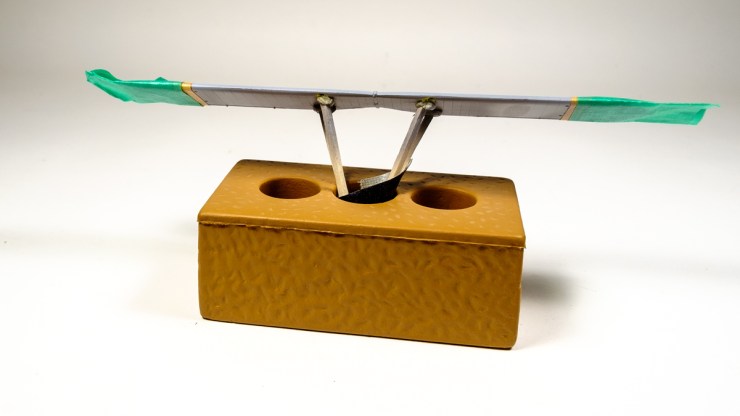
This will also be the first aircraft that will see my new stencil procedure with the Avery paper put to the spray paint test. I can do it before the wings are united, so if there is a major washout it can be re-done.
Note: This model was quite inexpensive in the Airfix rack at my local shop. Is it not selling? Is the prototype too weird for the average builder? Are modern kids frightened of rivets?
 The Little World
Leave a comment