
Watch people on the train. The ones that are not buried in a mobile phone or tablet, I mean. The ones left to their own devices. They generally fall into three categories:
a. The ones who freeze. They remain rigid staring at some point a thousand yards out. It is a betting game whether they actually see anything closer, and you are always in hushed anticipation when the train approaches the station to see if they are going to come alive and lurch out.
b. The ones that flail from side to side. They have loose joints and loose bearings. Many of their control cables must be slack because every movement of the carriage causes them to fall from one stop to another.
c. The ones who sag. Dudes abide. These people subside. They may have a leak in their hydraulic system that causes them to slump – I should put newspapers down on the floor under their desks at work.
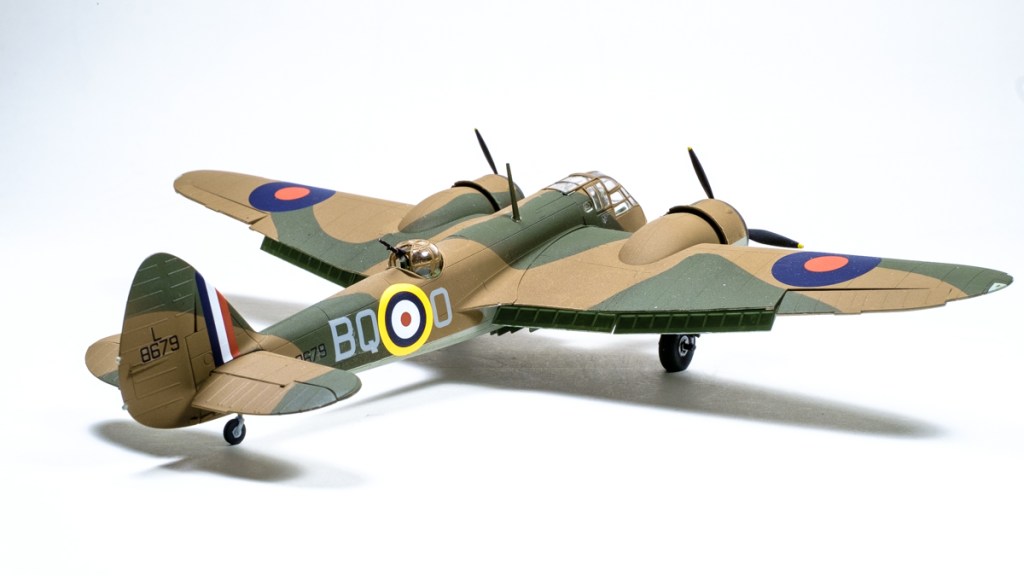
These are all scientific observations of a train rider on his way into town to go to the hobby shop and buy a model airplane kit. When he gets it home and has dealt with the interior and the engine and the wheels, etc. it will come time to consider what sort of bird this is to be. Most models are built as landed aircraft, and they can be just like the train riders.
The control surfaces of older Airfix kits used to be moveable – hinged crudely, but with the delightful ability to let you play with them after the wings or tailplanes were assembled. One kit even had movable dive brakes. They moved until they broke…
Modern kits are often fixed surface moulds – finely delineated with scale surfaces and gaps – it really is impossible to do much with them without reverting to crude standards. But some, Like the new Airfix Boeing Fortress III, have separate, but posable control surfaces. I am all for this and it will enable me to put a little life into the still model.
But what life? Did the Fortresses droop their elevators when no-one was at the controls? Did the wheels fall over to ether side and let the ailerons point up and down? Was the rudder always central?
I’m not going to expose the flaps if they were something that was not a commonplace on parked aircraft – It will be temptation enough to lever a few access hatches open to show the painted interior and the bomb bay is going to be a point of research – did the RAF bomb up aircraft that were to be used for ECM duty, or is that just gilding the geranium? Or could I model a plane bombed up for a chaff mission?
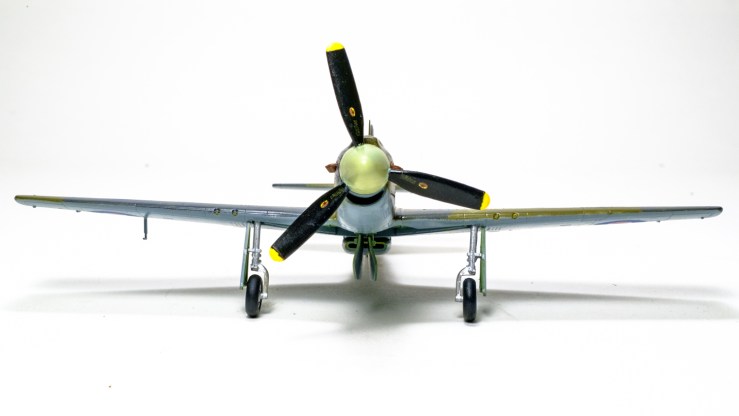
There’ll aways be the question of gear doors as well – lots of aircraft have no option for these as they open fully when the wheels are down and that’s it. But some fighters have inner doors that can be open or closed – the P-51 A seen in RAF pictures of the time seems always to be parked with the inner doors shut. Maybe they shut automatically or maybe they wedged them up.
One day I will buy a model that has an exposed engine and doors that can be posed. But not at the prices that some of the Czech kits run to…
 The Little World
Leave a comment