
Get more home-made every day.
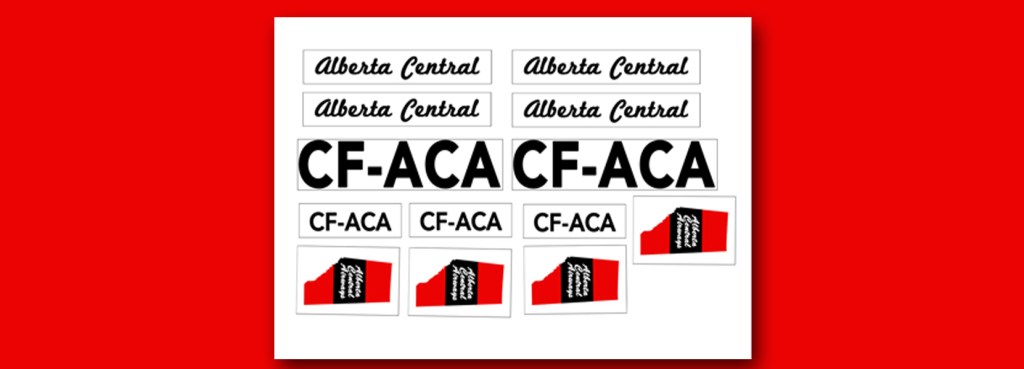
We are in the midst of a drought of decal paper in Perth. It may have escaped the attention of the major news channels, but I assure you the effects are being felt in the model airplane world. Particularly in my own little one, as I have discovered the joys of printing my own insigniae and markings on the inkjet printer. I hoarded my last sheet of Testors 5.5 inch by 8.5 inch paper but finally had to print on it – leaving me gasping for the next project.
There is paper available from the eastern states, I am told. On-line orders, etc. You start at $ 35 a packet and go up from there. I have a philosophy that suggests going down rather than up and I am never happier than when the price goes down to stuff I already possess.
A google search of decal paper turns up much the same old information and how-to videos from the US. Can they really be so stupid as to require a 20 minute instruction tutorial on how to soak a decal? I fear I am missing something here, but I’m not going to watch another YouTube in an effort to find it.
Instead, a Wiki article showed the cross-section of a typical decal and gave the composition of the layers. After the porous paper, the secret ingredient seems to be a dextrose layer – I am guessing thinned corn syrup. It’s the thing that dissolves in water and then acts as a thin glue on the model surface. Then a layer of either white or clear acrylic varnish, the ink from the printer, and a final sealing coat of clear varnish.
I’ve got plenty of good porous Japanese printing paper, white and clear varnish and the printer is ready. I’ll pick up a small tin of Karo or similar from the grocery store and start experimenting. One thing I can already confirm from previous prints is that Epson K9 ink makes a good decal, but you must use the Photo Black rather than the Matte Black if you wish to avoid cracking and marking in the black portions of the design.
 The Little World
Leave a comment