
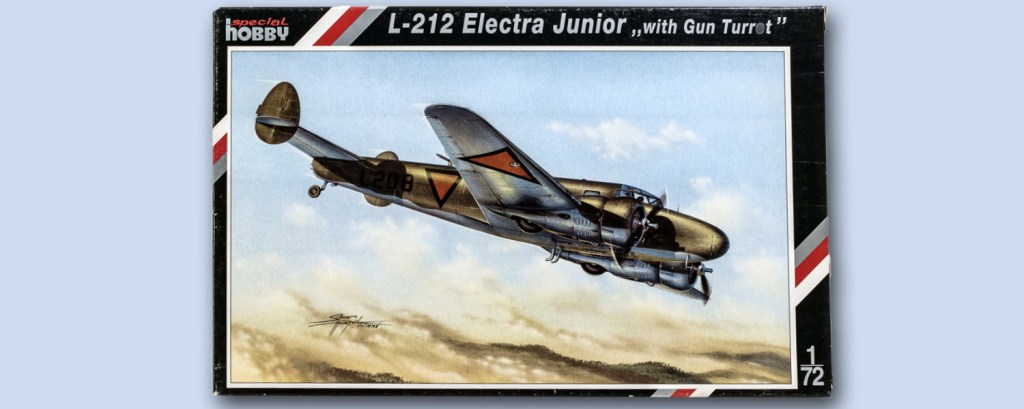
The third purchase on a happy visit to a distant hobby shop was a Special Hobby kit. These are always more expensive than the big maker’s offerings but can be had for subjects that would never be kitted otherwise.
I am always surprised at the things I see in this class of model. Measuring the desirability of a kit by one’s own needs and wants is a pretty selfish thing to do, but then if I am spending my own money ( as opposed to government funds ) I have a stake in that selfishness. I do not deny others the same rights – but I am astounded at the things they might be induced to buy or build.
The hook on this kit was Lockheed and Electra Junior. I’ve built a Lodestar model before and thoroughly love it. Also a Beech 18 that is a civil liner with my Alberta Central Airways. The fact that this Lockheed seemed to be advertised with a turret was neither here nor there – I have added and subtracted gun turrets before as needed. The prototype was something supplied to the Dutch East Indies that later arrived in Australia, so I had two choices of Military scheme if I didn’t decide on a civil rig. I bought the kit.
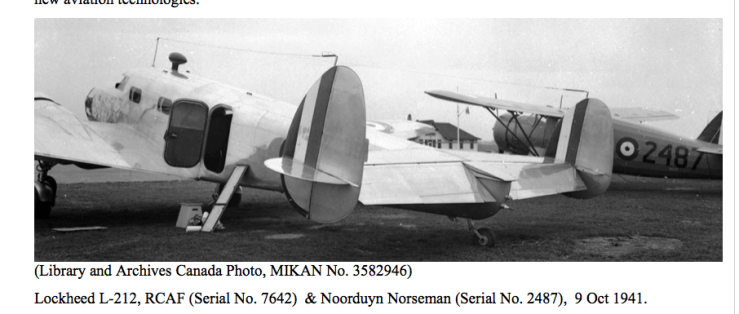
Lo! And Behold! When I got home and Googled the L-212 type I turned up the fact that it was also suppled to the RCAF in 1941 – and there were clear photos of the scheme.No turret, bare metal finish, roundels and fin flashes, and big black buzz numbers. I had another RCAF authentic type!
Don’t mind if I do.
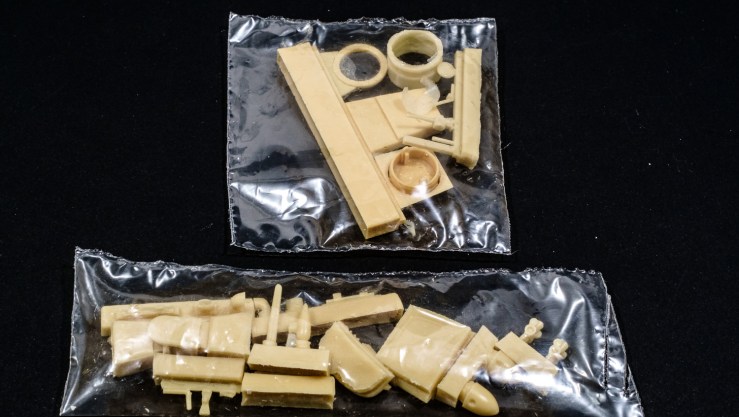
Bonus was to discover that the basic fuselage castings are made with solid top and the Czech moulders expect you to cut it open and install a resin turret. No thanks on several levels, but I’ll keep the turret and guns as spares.

As for the rest of it, there are a number of resin detail castings that will prove simple enough to make – and the bane of existence; resin hubs and separate propellor blades. I’m sorry to see that the hubs are distinctive enough to demand their use – nothing in the injected-mould props box matches them. I hate separate-blade props with a passion.
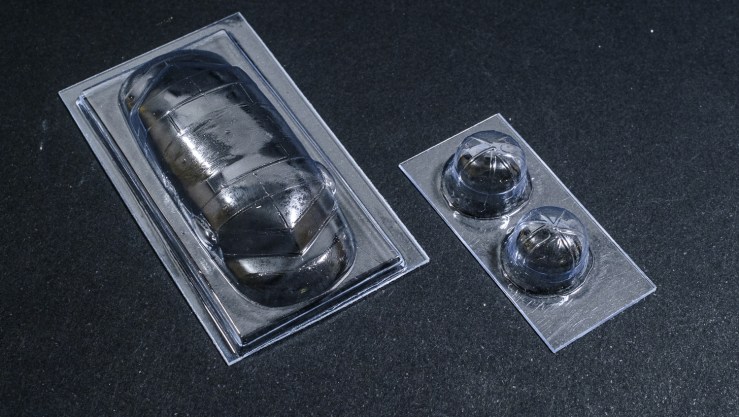
On the plus side, there is a vac-form sheet with two different canopies. As fiddly as some people find these, I get on well with them. The RCAF photo shows the side windows to be the straight type – no teardrop shapes on them. While the turrets will go to spares, I am impressed with the degree of detail that has been drawn into them; that’s better than a lot of makers do with injected styrene.
Decals look good, even if they will go to Dutch and Australian spares respectively. Usual Czech instructions…read, note, and carefully digest.
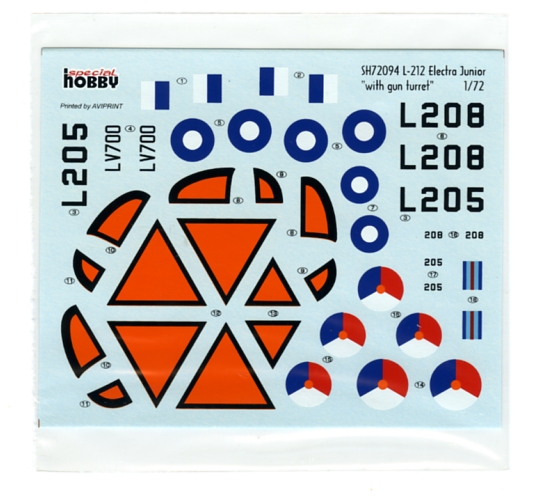

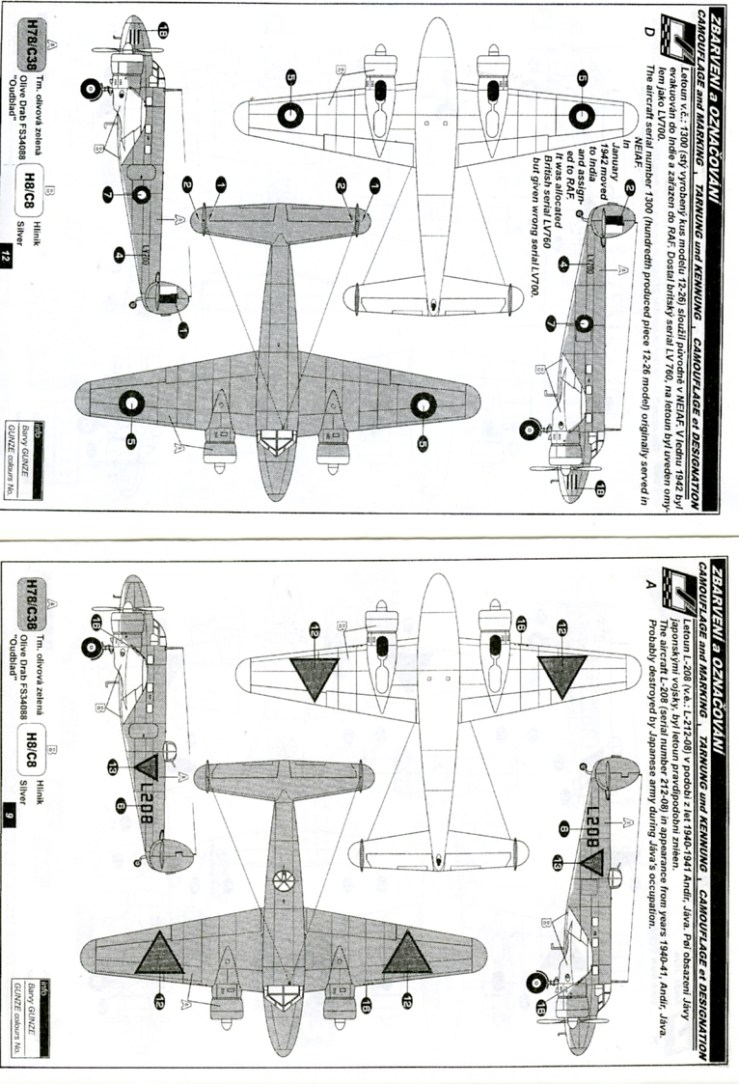
And the final surprise. The wings and fuselage sprue trees are two different shades of grey. Reminiscent of a Matchbox model!
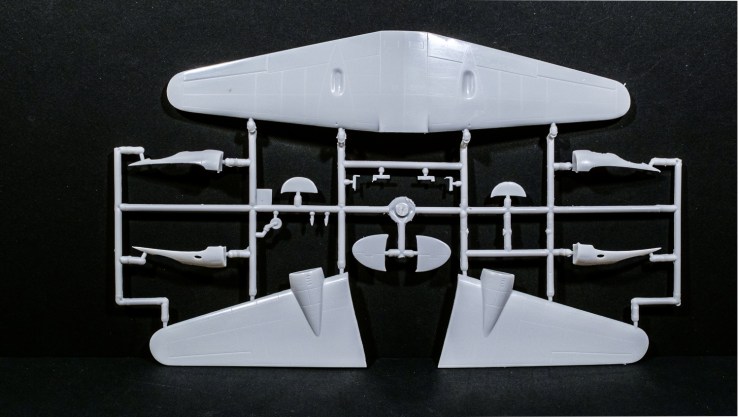
I buck at the price demanded for some of these Czech kits, considering the crudities that one encounters, but in the end they generally yield what you hoped for.
 The Little World
Leave a comment