

At least, I don’t think it is. I think it’s a small transport aircraft that can be disguised as a trainer.
The Cessna Crane that I speculated about in the first post appears in bright yellow RCAF trainer livery in every historic shot I can find of it. Nowhere so far does it appear in a service camouflage or a silver – except in US service. Yet plenty of them served in Canada.
However, when you look at it as a training aircraft, it doesn’t seem to have the sort of back end seating or desks that you’d expect of a navigation or radio trainer – just the two drivers and a big bench seat for passengers. Either the real ones were kitted out differently or it was just kept as a transport and hack when not giving some poor soul a dual-engine ride.
This may explain why it did not get a ” school ” name.
In any case, the interior fits better than many Czech kits and the fuselage halves have slotted together without filing.
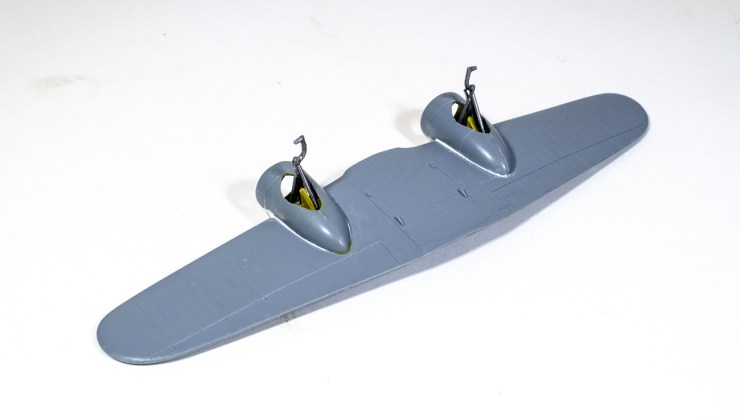
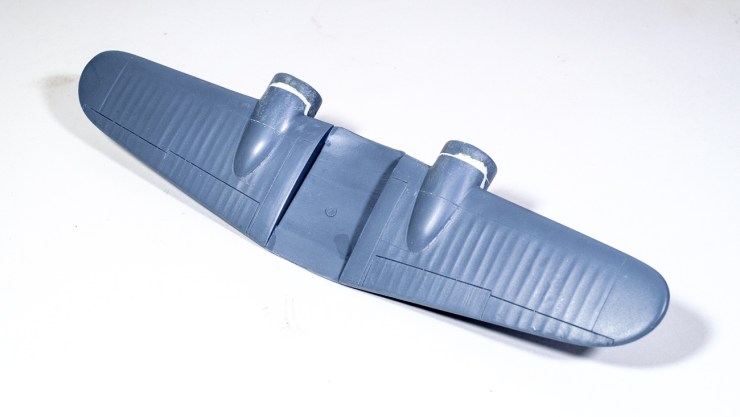
The wings also went together but here the filing out of the heel wells and the filling of the engine housing was about what one would expect. Fortunately the wing root-to-wing seams were quite small and a squirt of Vallejo resin putty did them. The fuselage centre seams took two applications of Perfect plastic but have come out very well.
Note – I have a new tool from Ustar. Inspired by my success with the Ustar seam scraper I lashed out a whole $ 4 on their star-shaped sprue scraper. It is just as useful as the curved one, with the advantage that it can be used down to 1.5mm without hitting anything outboard of this.
It doesn’t replace a sharp knife nor the sandpaper sticks, but you can almost get to the fine wet and dry stage by scraping alone.
 The Little World
Leave a comment