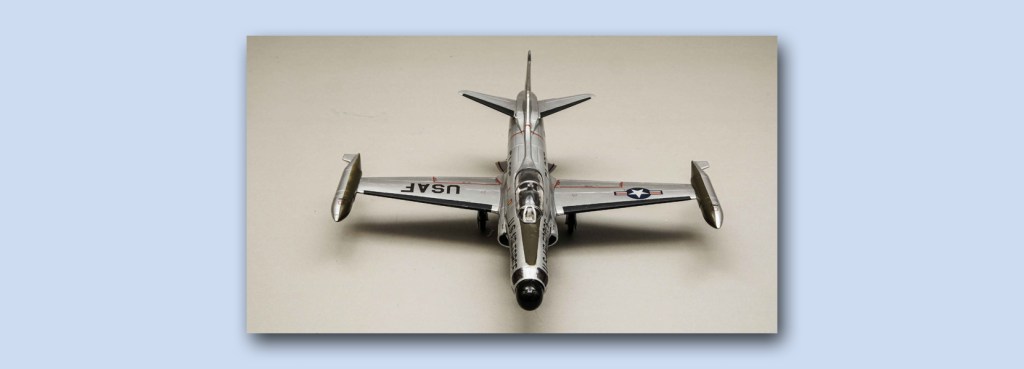
You’ll have seen my post about backtracking with the Beagle Boys a little while ago; September 20, 2020. It detailed my wilful errors in painting that were corrected late at night. Since then I have played the soft pedal for this build and have been rewarded in the end with a delightful result.
The clear silver finish you saw last time has been preserved. I was a little doubtful about the decals of this 1993 kit – the stars and bars look decidedly distorted compared to modern Cartograf examples. But I determined to play the hand dealt me and went ahead with the Option B – A plane from the USAF proving command in 1953. No glossing before the decals – the silver seemed smooth enough.
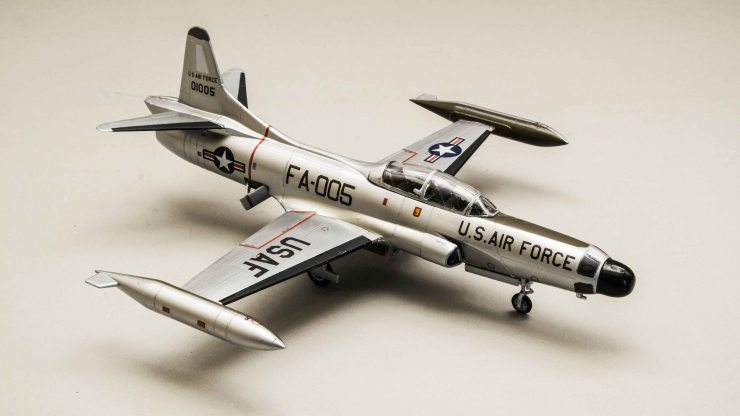
Well, so it proved – the decals might have seemed rough but there was no silvering under them. The released slowly – 30 second soaking needed. After they were in place, dried for a day, and then lightly washed over with a wet tissue – I carefully hand-brushed the Gauzy gloss varnish over them.
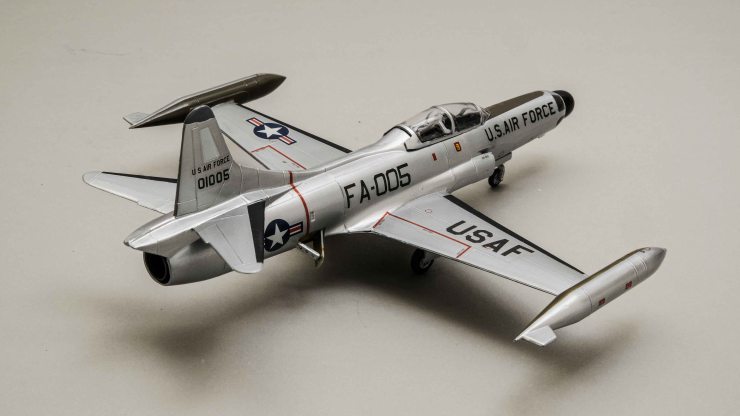
This may sound a little olde-schoole when I have several airbrushes, but I never seem to be able to apply this sort of coating without bubbles – the use of a special soft bush let me do it and then chase the bubbles out as they formed. There is plenty in the Gauzy bottle but I suspect when it is done that I can use a locally-available Cabot wood varnish in exactly the same fashion.
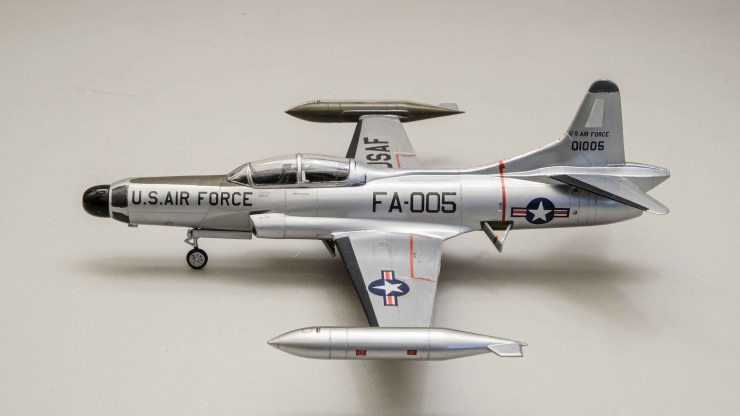
The aircraft is far from slick when it is in flying configuration – but you must remember that it was the first of the afterburner planes and they had not worked out how to streamline the idea. However, it must have been smooth enough to cause real headaches when it came time to slow down for rocket firing or landing. The dive brakes and spoiler flaps are very wind-busy. If you put the gear down and opened the trailing-edge flaps it would have been like a frill-necked lizard.
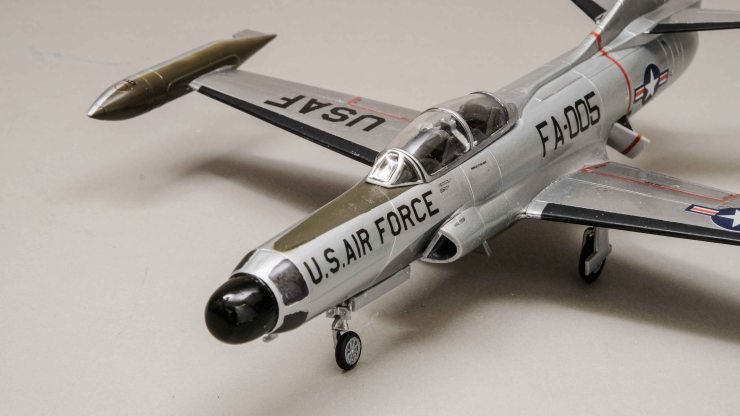
As I said, I’m very pleased with the end result – for a $ 20 model this is good fun. I’m now going to look for chances to increase my Cold War planes.
 The Little World
Leave a comment