
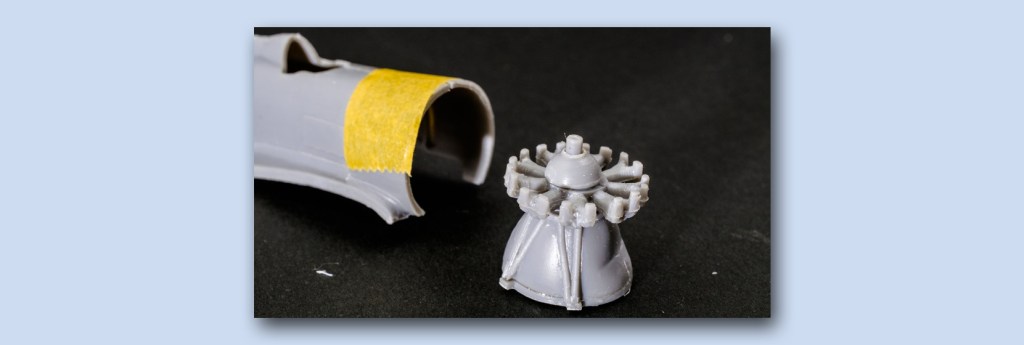
I might not have been paying attention in the past to the details of aero engineering…but I do now that the kit makers are making much more detailed efforts.
For instance, I always built the Airfix and Monogram fighters with radial engines that fit inside cowlings. In many cases they were just engine fronts inside the part. I did not decry this as it was a good looking job in the end. I gave no mind to how that round engine was attached to the rest of the airplane, and the technology of the day offered no hints.

Now ICM and Avis have moulded early Soviet fighters with the complete engine and mount inside the cowling and you attach it to the firewall as per the real thing. But Soviet design seems peculiar. The attachment point for the struts is buried deep within the fuselage close to the leading edge of the wing. There is a cowling face that covers the cylinders, and frequently a crankcase fairing that hides most of the engine. It really seems that the force of the air that is blown back from the propeller is pushing against a solid cylinder, rather than past a streamlined engine.
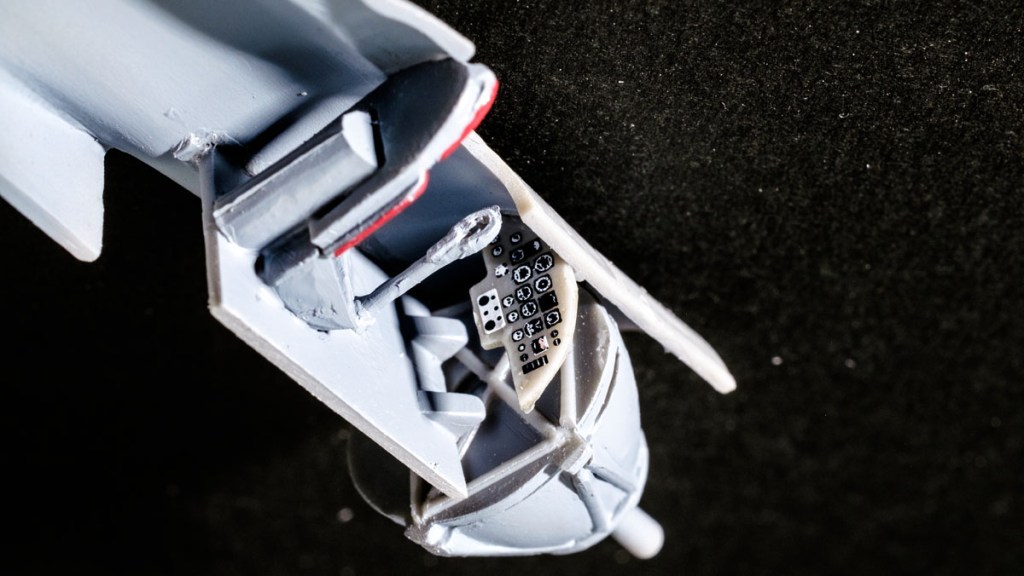
But it must have worked. The I-16 and a lot of the other small Soviet fighters were successful for the inter-war period. Perhaps it was all caused by the need to operate in very cold conditions. And perhaps they needed to preserve the heat in there for the fuel tank and the pilot.
 The Little World
Leave a comment