
If you paid more to read these posts, the jokes would be better.
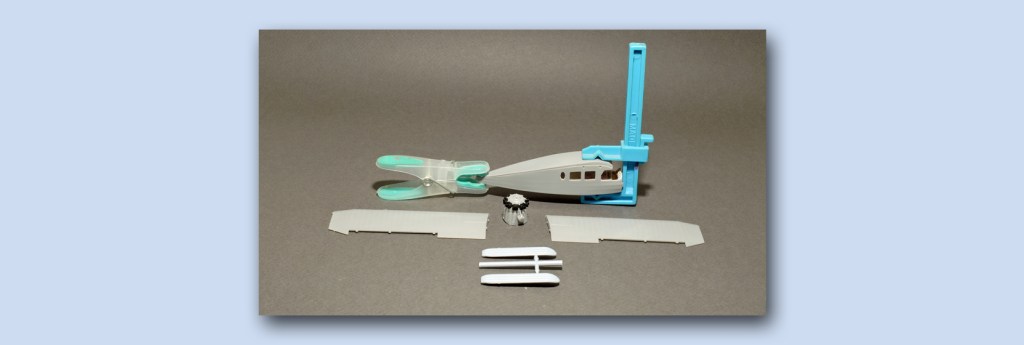
The fuselage on the Dora Wings is a model…of course it’s a model…of sturdiness. Once the sides and top come together with some liquid cement and dry for a night the whole is greater than the parts. But there is a discrepancy between what DW have moulded and what Bellanca or Canadian Vickers turned out of their factory.
Note that CV made Bellancas for the RCAF – both Pacemakers and Skyrockets – in some quantity. There would have been a lot of them flying around Canadian lakes and snowfields on skis and floats.
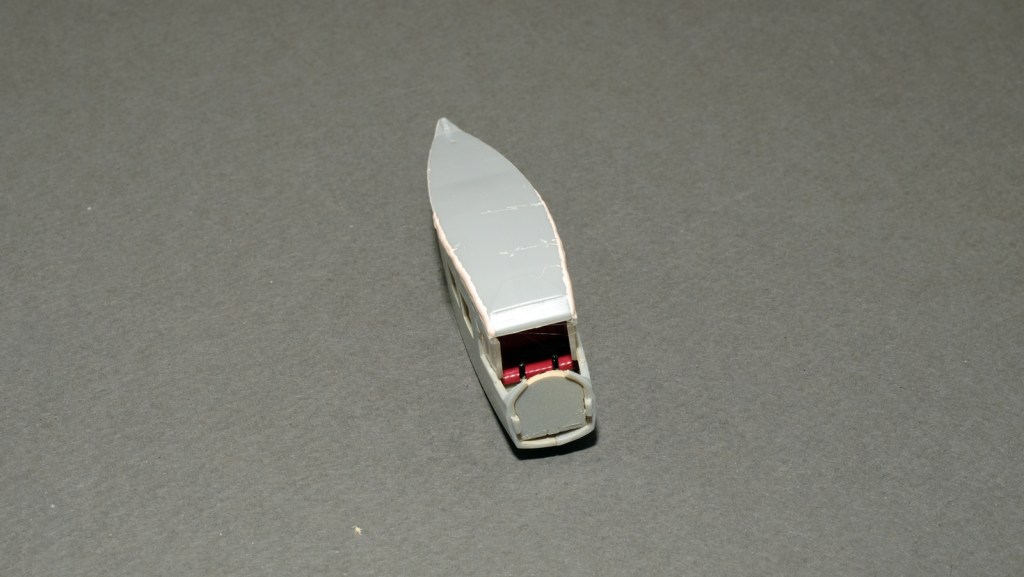
The lower edge of the fuselage is taken care of by the side pieces – and the dorsal surface would be fine if it did not fall a little short at the upper sides. Internet images of surviving Bellancas show this line to be solid and not stepped. So there is some filling and sanding needed.
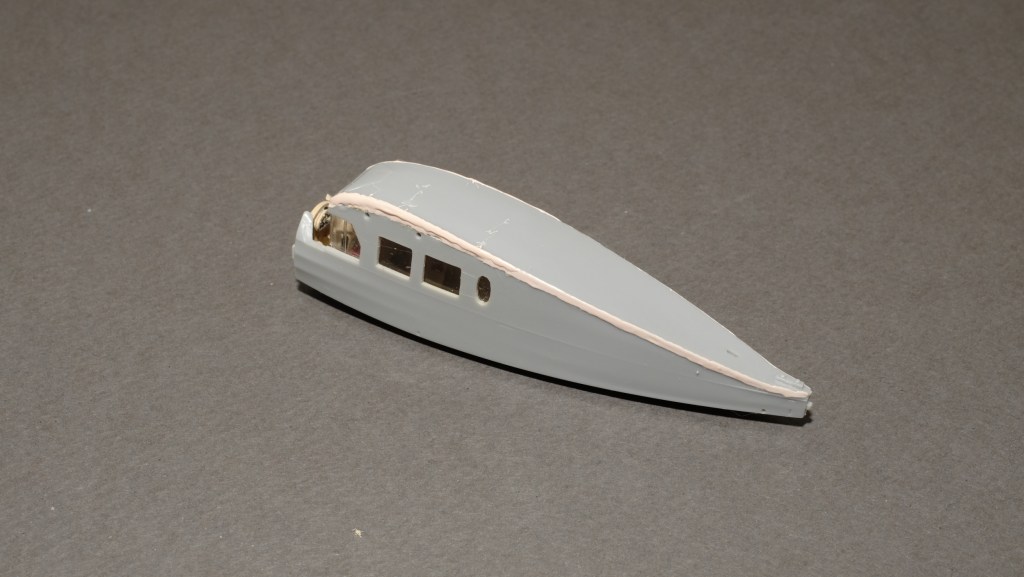
It’s two-part work – both thin and thick filler made from Evergreen plastic and Supercheap Auto lacquer thinner. It’ll need a few hours to gas off and harden, but the final shaping and clean-up should be very easy. There is also the option of a thin strip of tape to hide the wing/fuselage join. This is easily seen on flying examples of the C-300 right now.
 The Little World
Leave a comment