

If ever you are presented with the prospect of building a WW1 German aircraft, look at the colour call-out carefully.
It may have lozenge-pattern cloth used as basic covering, Prepare to tremble.
The lozenge-pattern camouflage is going to be difficult – as the previous chap found out when he tried Humbrol enamel on the complex shapes. I knew I could do no better, so I searched the internet for someone who had made a study of these fabrics. He showed a number of varaints in big enough patches to copy.
I laid dark top and light bottom blocks out on inkjet decal paper and printed enough for double the amount that would be needed – you can never tell when a pattern will smear or tear. I coated it in Supercheap Auto clear acrylic lacquer.
The application of this ready-made pattern was simplicity itself through the use of a new decal box. Once the big sheets were wet and ready they floated out onto Mr. Mark Setter and settled into the details. It took time and patience, but there was no screaming.
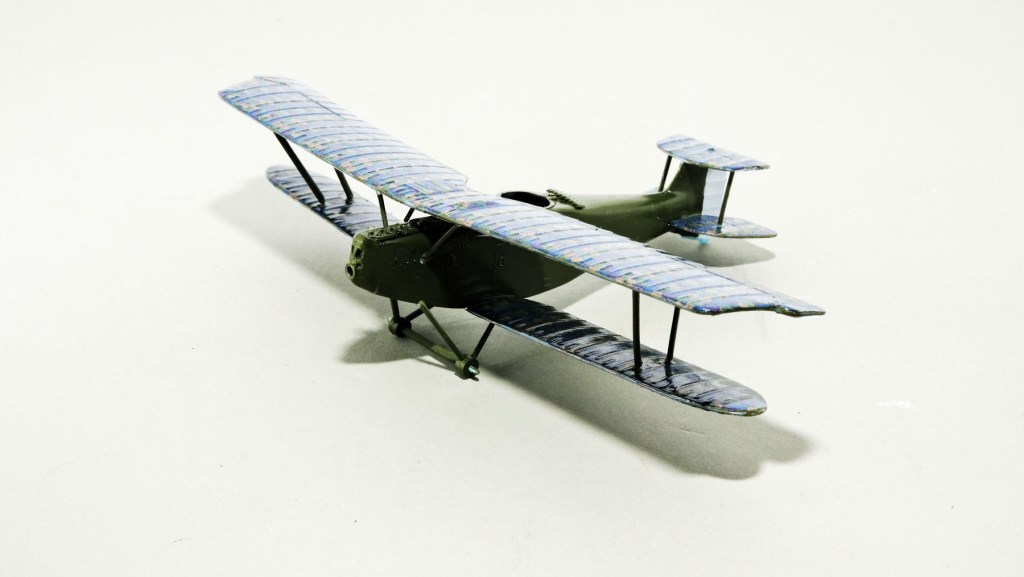

Then on to the acid test – the attachment of the wings and spars. Most times you choose either main spars or cabanes to cement first and let these firm up before slotting in the others. I chose the main first with standard cement and after this was set I squeezed the wing down until the cabanes could be made to grab with superglue and a kicker.
 The Little World
Leave a comment