
On January 23rd, 1940. Not sure what time of day.
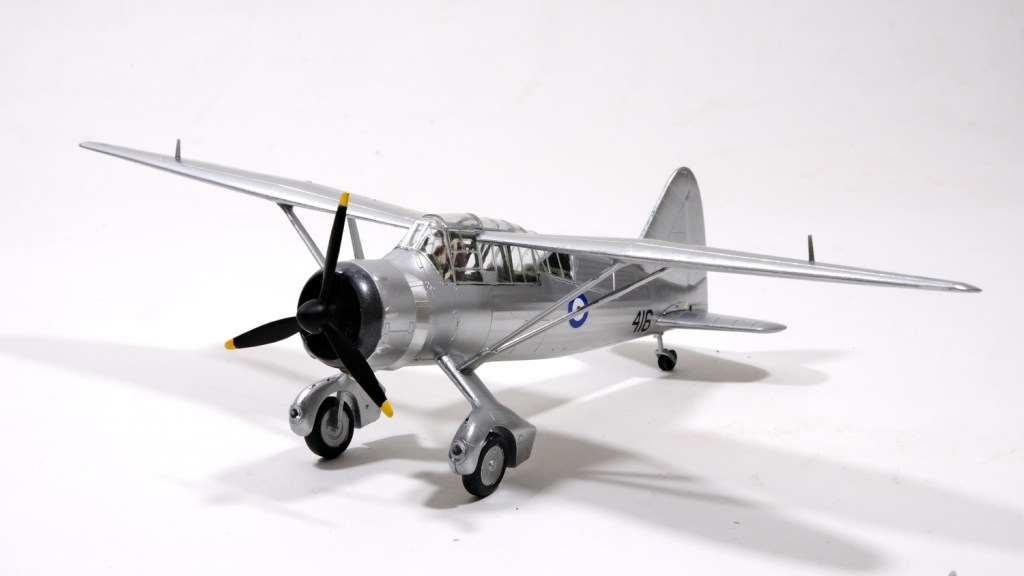
The image that served as pattern for this model was taken at the Rockcliffe station near Ottawa on a snowy day. The tarmac is all white, though I note no skis were fitted to the Lysanders lined up for RCAF trainee pilots.
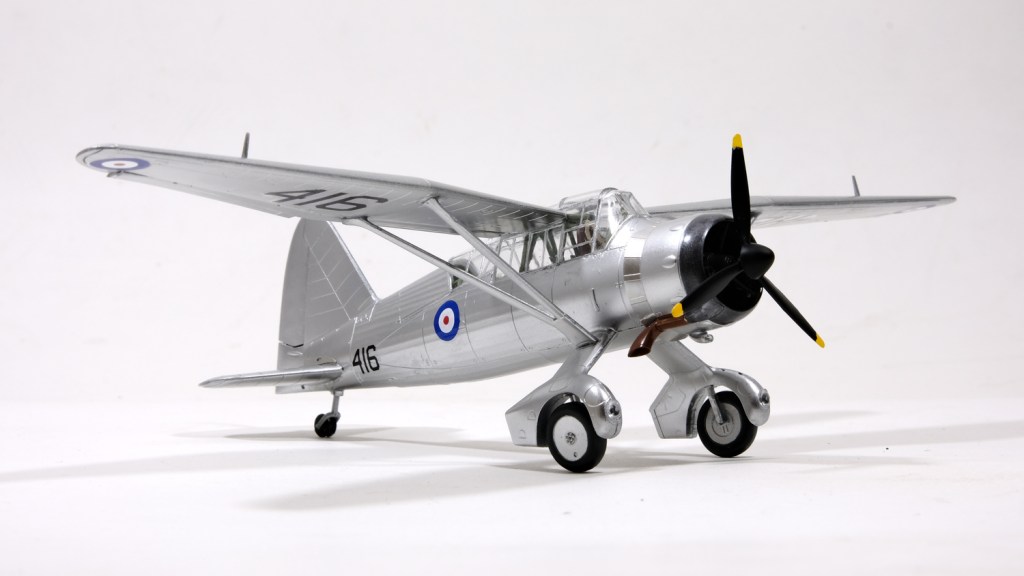
Interestingly, while there are buzz numbers, frame codes and small old-pattern roundels, no tail flash is painted on any of the aircraft. At this time a lot of RCAF had very large tri-colour panels on the rudder.
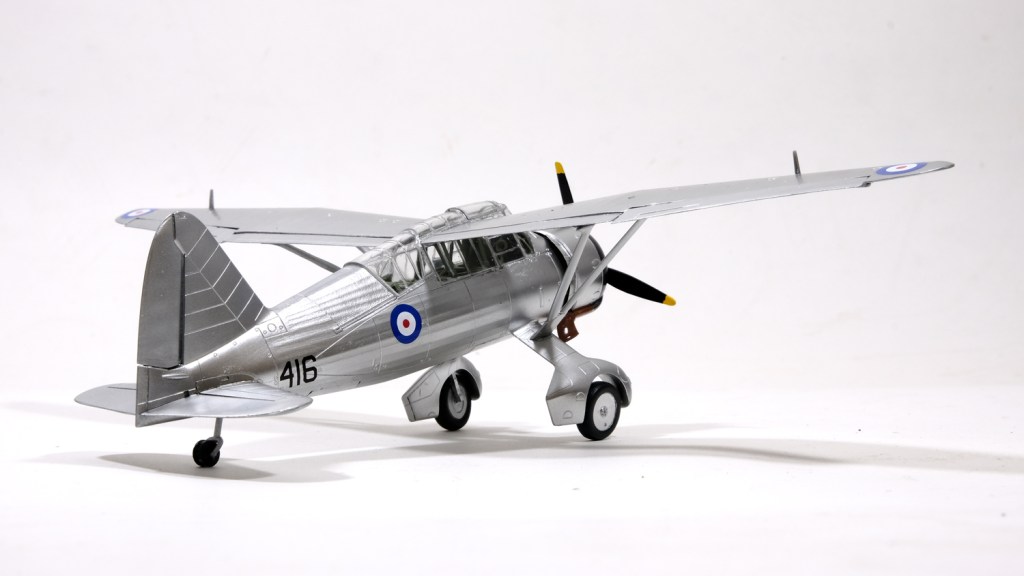
Note the finish is aluminium dope and natural metal – not trainer yellow.
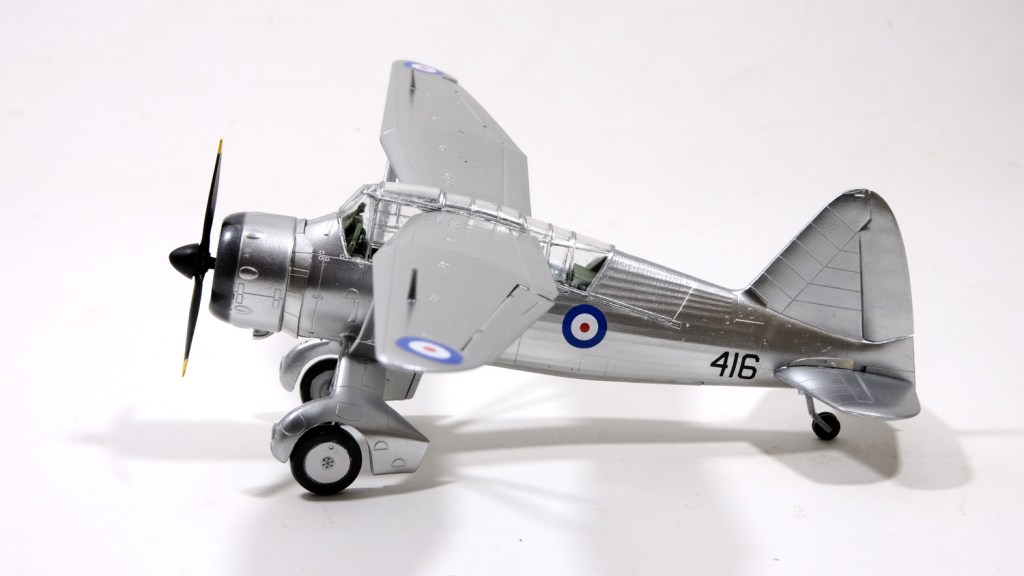
As a model, this one was both difficult and easy to build – everything went together well, but so much was both complex and highly visible that the thought of the end result was making me nervous. Because of the large greenhouse, a lot of the final assembly was done with PVA rather than stiffer adhesives. There was enough surface area distributed between wing root and strut to hold it together, but I am not going to shake it like a maracca.
For the enthusiasts, there is a wonderful YouTube video if a Canadian pilot taking a restored Lysander up and around for an instrument check – he goes through the complex starting procedures and the operation of the automatic wing slats and flaps – they seem to make it harder to fly than one would imagine. Apparently it is a beast to wrestle down to the ground – it always wants to take off again.


Leave a Reply