
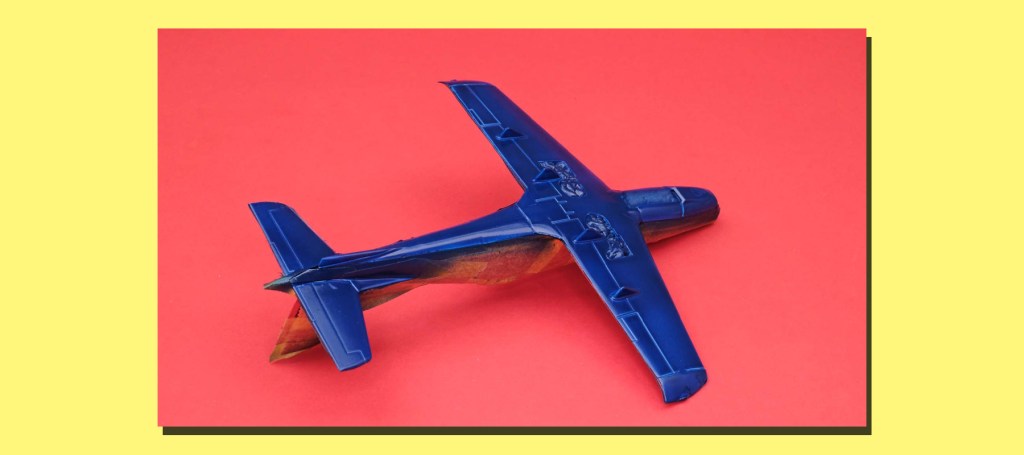
Fear of water-slide transfers, if you wish to be pedantic…
It strikes us all at one time or another. We see a commemoration scheme on the box lid and are lured into getting a kit with complex curved surfaces. The real-life plane or vehicle is painted by professionals with masks, spray guns, and a lot of time on their hands. The kit maker tries to get a sale by putting 3-dimensional designs onto 2-dimensional clear film. Any failure to get this topographical nightmare to conform to the kit’s curves will be your fault…
Well, you are back on to the business of taking it slow and observing the clues that link the colour call-out and the model in front of you.
a. Secure the darned thing. I use my jigs for this. Unless you are an octopus, you cannot hold, apply, flatten and wipe freehand.
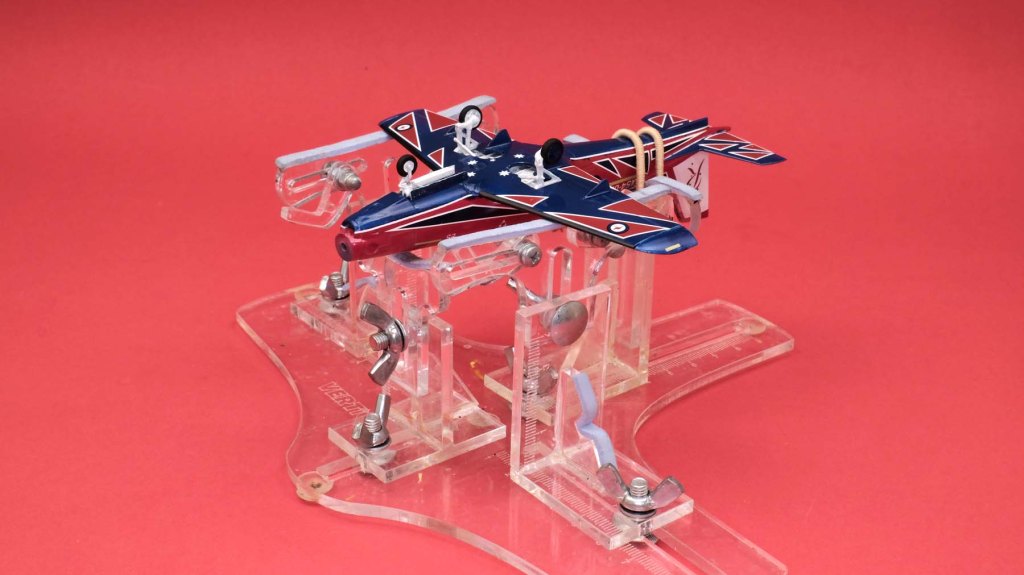
b. Work on one aspect at a time – I do the bottom first, from aft forward – marking off on the decal diagram after each decal is down and smoothed.
c. Suit your speed to the nature of the decal – my home-printed ones release like a rocket and you only get one shot at sliding them into place. The Ronin decals are much slower to free from their paper – I used a tempering box with a wet sponge to prepare them and it was a good 5 minutes for a safe slide-off. The box lets you prepare half a dozen at a time for a timely application.
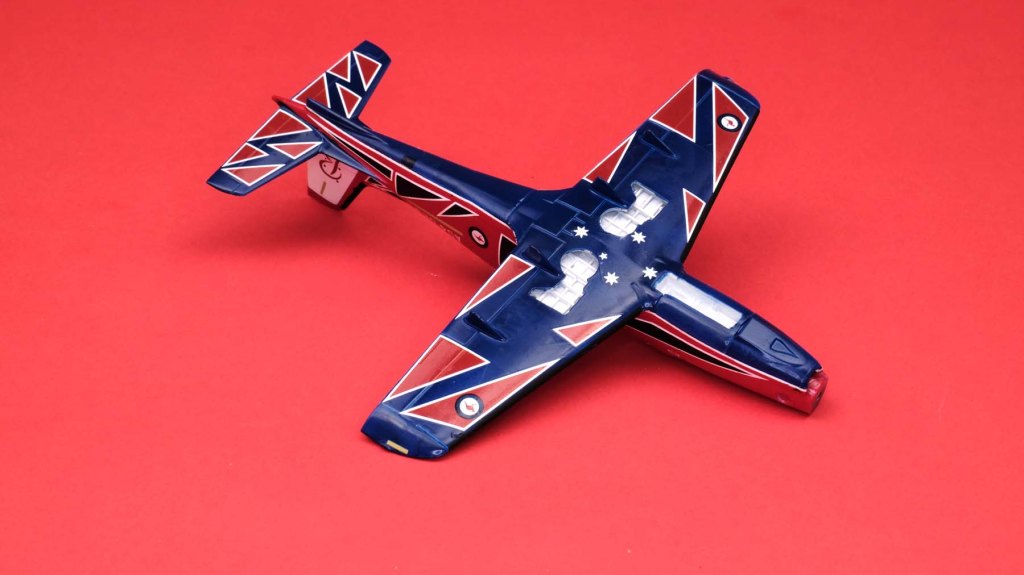
d. Pause between surfaces to let the decals sink in and set. Half to an hour, with other tasks occupying the interval. You will have no slide-offs to repair.
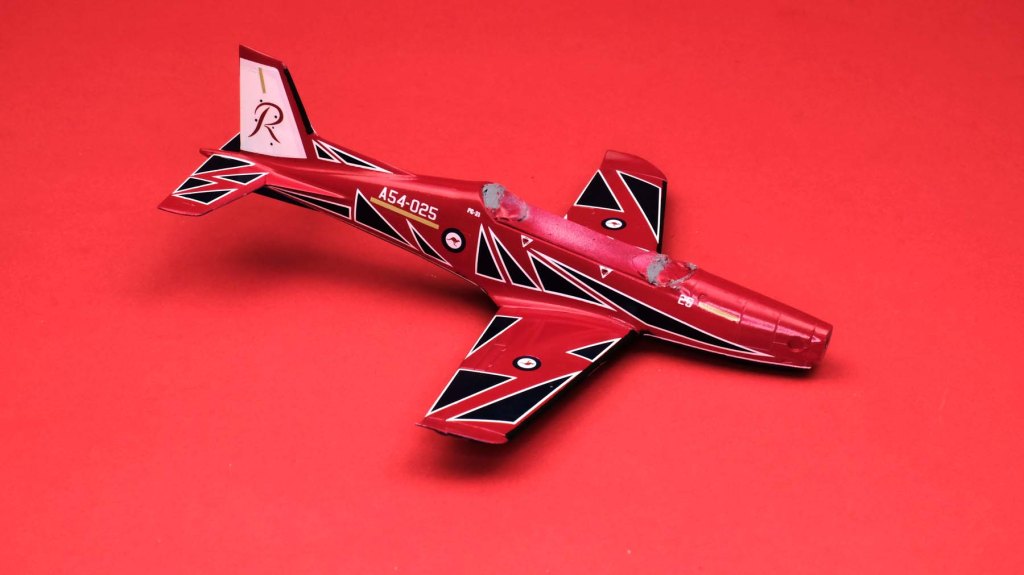
e. Let it finally set overnight before you gently towel away the setting residues. Then varnish in three light coats.


Leave a Reply