Every Ruritanian boy has a burning desire to fly – frequently far from home and the endless cultivation of vegetables in the cold, damp soil. In the centuries before flight this urge was satisfied by sneaking over the border into Austria, Hungary, Poland, Russia, or Germany. There, the life choices of the Ruritanian peasant could be expanded to include coal mining, drowning at sea, and work as accordion players in brothels.
Ah, but once aviation arrived over the European continent this prospect broadened greatly. Now the farm lad could aspire to become an ace fighter or bomber pilot and be burnt to death in a plane crash. Is it it any wonder that the recruiting office on Feuriger Todt Straße was always crowded with hopefuls? Suitable trainer aircraft were reviewed and the classic slow-speed two-seater chosen. But where to conduct flying training? Ruritania is surrounded by mountains and doused with fog, rain, hail, etc. Sunbathing is done indoors in cellars. There is no suitable area for students.
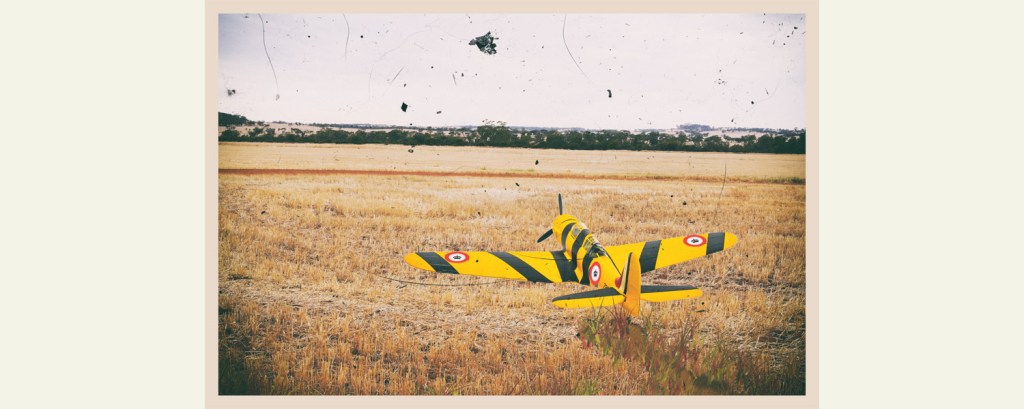
Fortunately, a minor relative of the Royal family – Demi-Graf Heinrich v. Hentzau – had emigrated to Canada in the 1880’s ahead of the warrants and established himself in the western province of Alberta on a wheat farm. Demi-Graf v. Hentzau, or as he was known locally in the Wet Dog County, Hungry Hank, had been supported in his efforts to farm a large area of dirt ever since he arrived, and was still in possession of it. As it had no minerals, water, crops or forests to harvest, the provincial government took no interest in it. To all intents it was flat and far away from town. Hank had to do something to make it pay.
This seemed a perfect opportunity to propose a training airfield for the RRAAF. He named it Hentzau Field and no-one cared to dispute it.Recruits could be shipped to Canada as third-class passengers on the emigrant boats, learn to fly in an area where they could not hit anything valuable, earn their RRAAF wings, and then return in triumph as third-class passengers on freighters taking cattle to Europe. The scheme was accepted by the Throne and a yearly contingent were given their passage money, a bag of rye bread, and farewelled at the Strelsau railway station each Autumn. Enough eventually returned to form the flying staff of the RRAAF.
The rumour that they were handcuffed to the seats of the railway carriages for their return is a foul canard.
 The Little World
Leave a comment