

I am becoming a critic of instruction sheets. Though I might have become a literary or food critic in another career, I now look closely at the sheets and books that we get when we buy a kit.
Part of the job of a critic is to praise, but it’s low-down on the list. Most of the time we are tasked with blasting whoever produces something…and in the case of instructions, this is no mean feat. I build enough kits, old and new, from different makers, to be able to form my opinion. After it is formed I like to throw it against the wall to see if it’ll stick.
Some instruction sheets are period pieces – look at some of my columns that have dealt with very old Airfix kits or the rudimentary things printed on the cardboard fold of a baggie kit. They are what they are and by now the best you can say for them is that they remind you of your childhood. So, for that matter, does acne…
Some sheets are really books – Revell Germany is famous for these. The actual information you need to put together the kit may be in diagrammatic form but the bulk of the paper in the boxes is dire warnings about safety. Makes you wonder whether they are supplying plastic kits or 500Kg bombs with trembler fuses. To their credit, there are few errors in the diagrams.
Soviet and Russian sheets are likely as not printed in Cyrillic text – totally obscure to the average Australian modeller. Their diagrams can be crude as well, but in most cases there is enough information to ge the kit together.
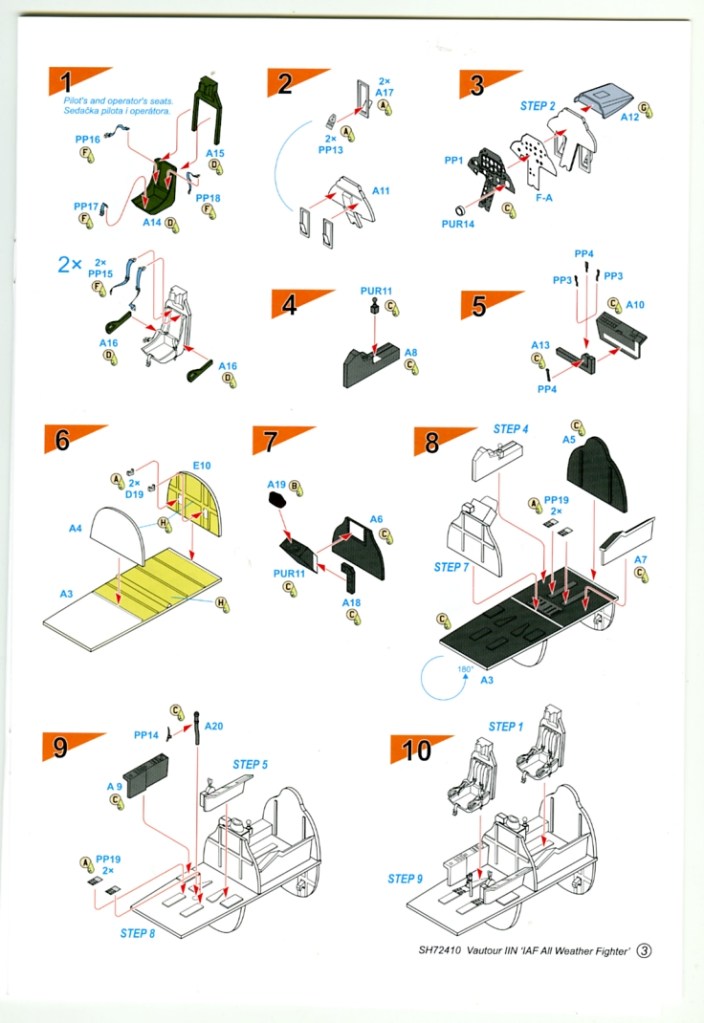
Czech instructions come in two classes; old and inaccurate or new and inaccurate. The new ones -like the multicoloured booklet from Special Hobby – can have some marvellous diagrams and good colour profiles at the back. Sword models instructions can be so wrong as to risk spoiling the model entirely if followed. With them you need to cross-reference from the internet every time. The number of times I’ve swerved close to disaster with Sword…
Note that the Special Hobby are also adding colour references to each separate part they add – a very good idea. I go one step further and write the actual colour at each little coded drop so that I do not mistake them as I proceed.
The colour profile does do one good thing – defines the main colour areas with a Mr. Color or Mr. Hobby number – but then deviates off to an RAL number for one of the divisions. You are left mixing and blending anyway.
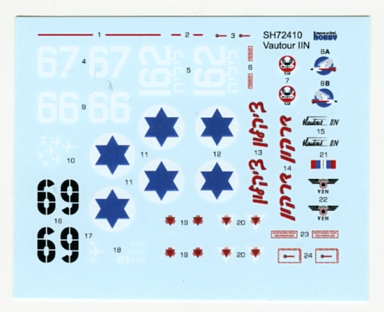
The decals are superb – and Special Hobby ones are good to go nearly every time. They reward flooding their sites with Mr Mark Setter before placement and a wet brush for pushing them around – but you soon learn the ritual moves of decal placement after a few big wing numbers. It’s always a tug at the heartstrings to put away the sheet after the decaling job is done with so many good letters and numbers unused.
 The Little World
Leave a comment