Tag: camouflage
-
Mirage III CJ – Part Four – Who’s Hiding?
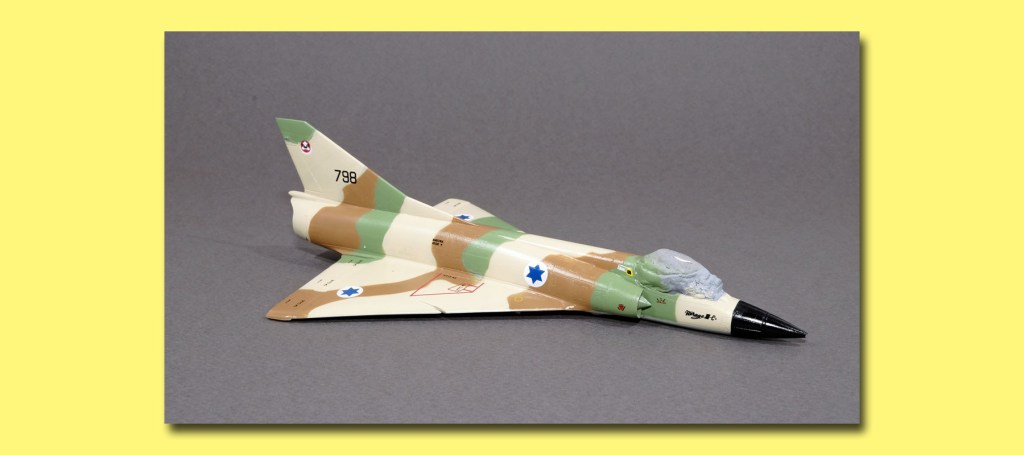
And from whom? Where are they lurking? Is it all just nonsense these days? I have no idea – I presume the various air forces have worked out how to hide in the air with grey paint and rubber knobs on every sharp point of an aircraft. The business of greying out national insignia to…
-
Curtiss Model 75 A-4 – Part Four – Ugly Duckling

The painting stage for some models can be a beautiful and uplifting experience. Car modellers may experience this as they apply colourful and glossy finishes. Railway modellers also have bright colours in the liveries. In the case of this Curtiss 75 the chosen palette seems to contain nothing but expired motor oil and dirt. Of…
-
You Can Be Colour Deaf As Well As Blind

Some unfortunates cannot see certain colours. This must be a challenge for them when they undertake scale modelling, though the provision of reference material that makes use of standard paint numbers might see them through. As long as the kit makers and paint makers tell the truth to the builder ( and each other )…
-
VVS Tupolev SB2 – Part Three – Freehand
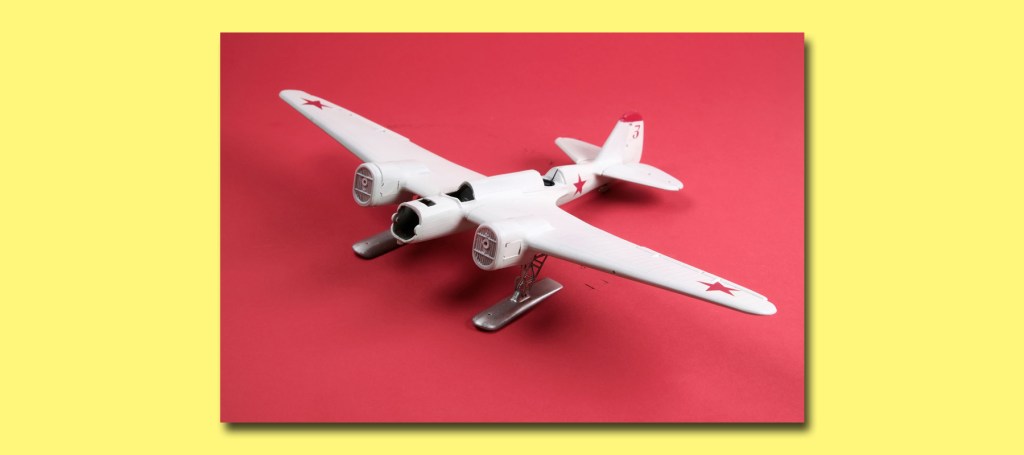
Not a choice I frequently make – I am a mask and spray person. In this case the photos of an SB2 in the Winter War were pretty thin on the ground ( and that was covered in snow,…) and the delineation of the two areas of colour in the monochrome pictures is poor. Not…
-
RCAF Wellington Mk II – Part Five – Night Black

The RAF night bomber scheme is a grim sort of design. Well I guess flying 300 miles in the dark, amongst a thousand other flying bomb dumps, and through radar-directed flak is a pretty grim business anyway. With a German Chancellor at one end and Arthur Harris at the other it seems like a murderous…
-
Well, Hello Masking Fluid

Goodbye putty worms. My Facebook feed has just put up a reel of the world’s only flying Avro Anson Mk I in preparation for take-off. The shot is of the starboard wing, engine, and nose. The colour scheme is the standard RAF Dark Earth and Dark Green. And all the colour edges are sharp lines.…
-
Mitsubishi Babs – Part Two – Just When You Thought…
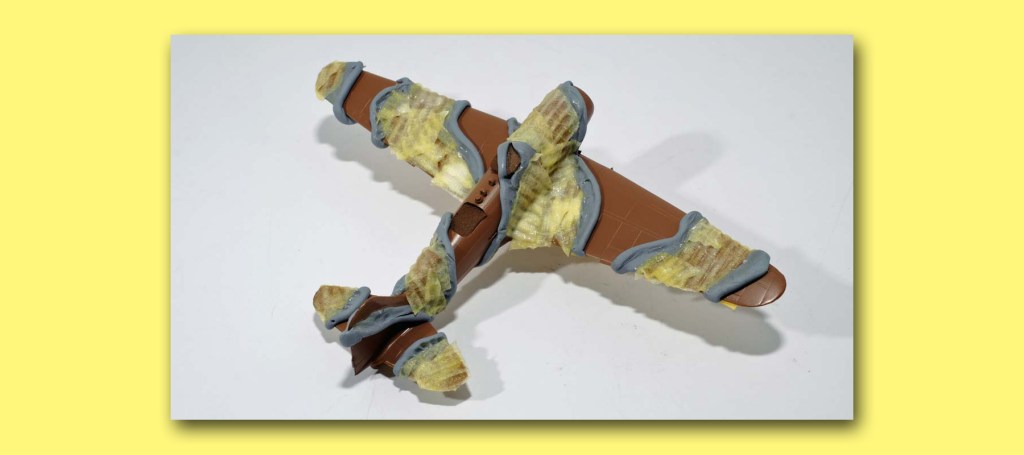
Just when you thought modelling could not become uglier…I had a good idea. The camouflage patterns for many aircraft are wavy, blobby things. You can spray them freehand or mask them, but in most cases of 1:72 planes, masking is better. I’ve tried many different ways of doing it, but settled upon the putty worms…
-
The Underside
And differences in opinion. Nothing is more striking when looking at aircraft camouflage than the variety of colours and shades that the different air forces used under the Plimsoll line. A glance at any of the Profiles books, a visit to an air museum, or the call-out sheets from any kit maker show colours like…
-
General Dynamics F111 – Part Three – The Masked Bandit
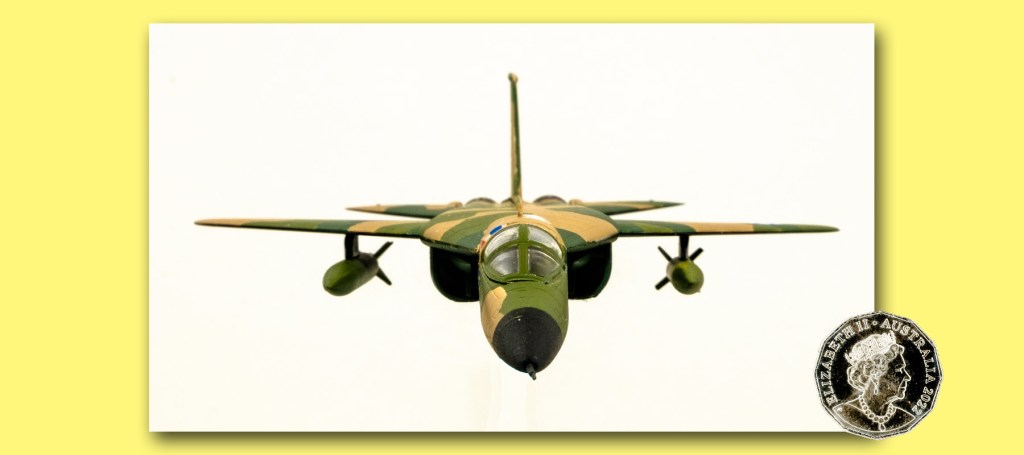
Every model you build teaches you something – this little one showed me how to conquer the tri-tone scheme. Normally I hate ’em – the Armée de l’Air or USG or Italian three-colour camouflage that looks so cool and takes so much masking and spraying time. I have been known to chicken out more times…
-
The Low-Vis Paint Scheme
Or how to survive on the battlefield. See them before they see you – then run away. This also works with blind dating. The almost universal adoption of low-vis paint scheme and insignia by the world’s air forces has been founded on a number of assumptions – but not all of them seem logical: a.…
 The Little World