
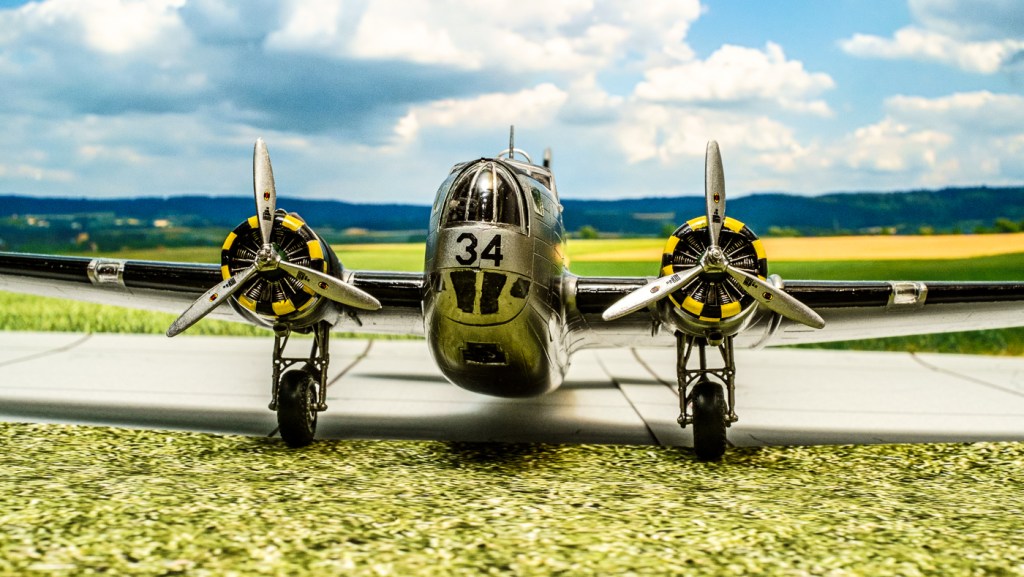
Is there any reason the US Army referred to their aircraft as ” ships “? I wondered at that – the US Navy referred to them as aircraft, and that’s not surprising as they would also have had to use the word ” ship ” in other ways…dealing with sea-going vessels. Why did they both not standardise on ” airplane “?

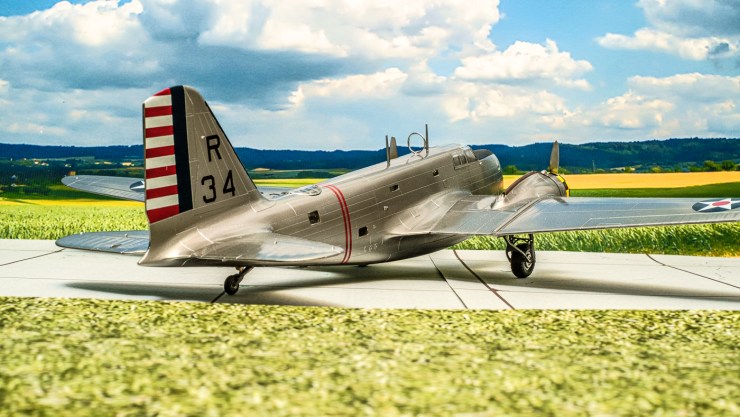
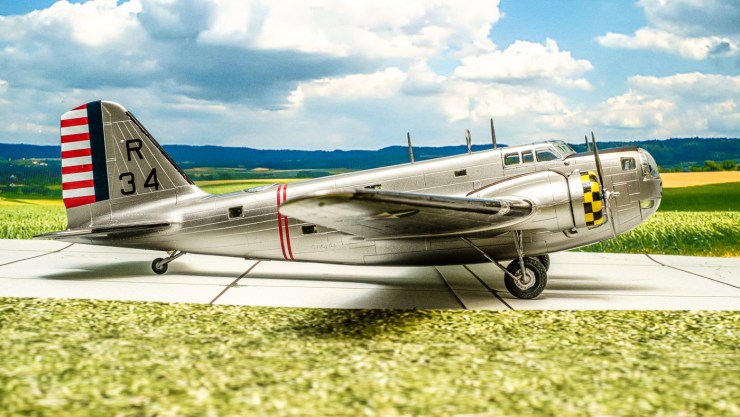
Well, leaving the semantics aside, the B-18 has built up into a superb model. I Am glad that I got to make the Canadian version – the ” Digby ” before I tackled the Bolo – and I’m glad I opted for the pre-war livery as provided in the box. Internet search has turned up preserved planes in a couple of air museums in the US to confirm the details. The build was easier than the one for the Digby as the nose is an easier paint job.
Not without the usual Czech foibles; the internal cockpit or fuselage trays that need to be sanded carefully to make them fit. I have a workflow now that constructs all internal trays and then dry-tests them for fit before I close the fuselage. There is always a little fettling to do, and I like to do it from both sides of a tray to make it sit straight within the assembly.
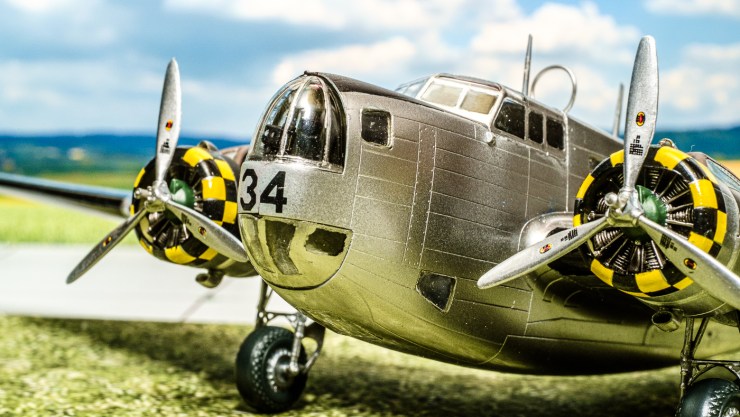
I also make sure that the windows are seated well before I close – both with solvent cement and PVA internal seal. They started out pretty damn rough in an old Northrop Delta I made but they are getting quite smooth and sophisticated now. Note that the Micro product PVA cement bottle got a little low so I topped it up with Weldbond and it seems to do just as good. When I finally finish it I shall just opt for the Weldbond for all PVA work and not bother to buy the expensive stuff any more.
As a museum ship, there are no weathering marks evident. Indeed, even the de-icing boots are coated and polished to preserve them. This is not Schmatterim, after all. I do admit to being seduced by the box art showing a highly-polished B-18 over the desert. The Mr. Color Super-Metallic has lived up to it’s name.
There are, of course, discreet dobs of clear PVA glue re-enforcing the landing gear sections and even a wooden block placed within the tail-wheel assembly to bear the weight of the rear fuselage. All perfectly good museum expedients with an airplane of this vintage. If you don’t believe me, go to your local air museum and peer into the dark down the back of many of the exhibits. There are more things propped up on cinder blocks than you would think.
The cheerful appearance of this Army ship is in keeping with the yellow-wing livery of the US Navy at the time – and indeed with the silvered wings of the RAF in the inter-war period. I am going to see if I can find more of the proto-fighters like the Seversky types in this sort of livery to accompany this bomber. I also believe Hasegawa or Academy made a B-17 in the very early configuration that would make a great stable mate.


 The Little World
Leave a reply to Dick Stein Cancel reply