
Tag: US Army
-
H-34 Choctaw – Part One – Third Little Indian

The naming convention for US Army helicopters uses the Indian tribes of the nation – a delightful thing. This is the third helicopter in the collection with a tribal connection. There are more helos in the display cabinet, but they are either civilian or international versions that adopt their own names. So far I only…
-
Sherman Tank – Part Five – Aberdeen

And not the one in Scotland, either. Aberdeen Proving Ground, Harford County, Maryland. The US Army testing facility. There’s another one at Dugway in Utah, but you don’t want to stand downwind of it… The Zvezda kit provided decals for the Aberdeen tank, so it got the nod. That meant that it could be very…
-
Sherman Tank – Part One – The Shermanski

It felt distinctly odd to order this tank kit from BNA…considering that it is an American tank made by a Russian company depicting an item used by the Red Army. It was all lend-lease back then, and apparently the 2000-or so Shermans that were shipped to the USSR were liked by their crews, but the…
-
Federal 2 1/2 Ton – Part One – Mojo To The Fore

This is unquestionably a mojo build for me. I stuffed up my last military vehicle badly and saw this one the next day as a saviour in the armour aisle. I do not intend to be as impatient and casual in its build as I was with the failure. I remember these trucks from a…
-
US Army Ambulance – Part One – A Wander Down The Armour Aisle

I rarely wander down the armour aisle at my local hobby shop – the offerings in my scale are all big hulking things that bear no relationship to my modest airfields and everything else seems to be 1:35 scale. I am envious of all the accessories that the AFV builder can draw upon for the…
-
Douglas B-18 Bolo – Part Three – The Museum Ship
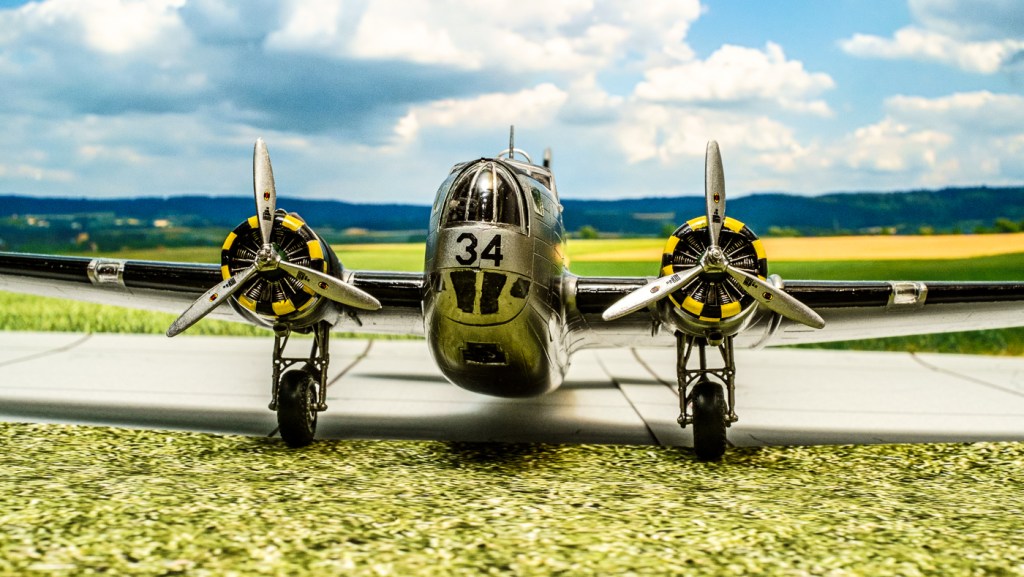
Is there any reason the US Army referred to their aircraft as ” ships “? I wondered at that – the US Navy referred to them as aircraft, and that’s not surprising as they would also have had to use the word ” ship ” in other ways…dealing with sea-going vessels. Why did they both…
 The Little World